The wheel
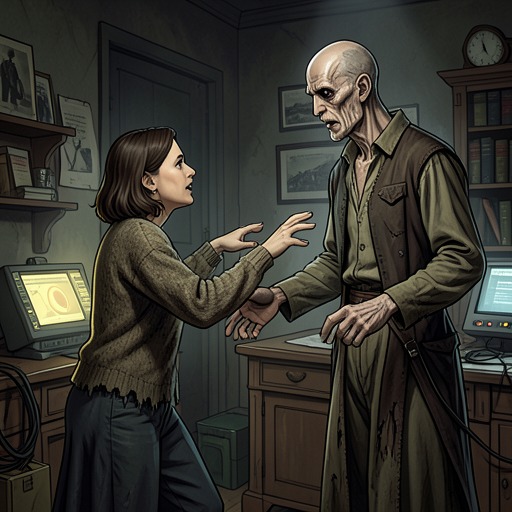
Doctor SleepThe wheel names the movement that makes psychic contact possible between Dan Torrance and Abra Stone, while its hub gives that movement a meeting place. In their encounter, the image links entry into another person’s mind with a shared room shaped from Dan’s memory: connection turns, but the hub is where the two can briefly be together. The image also recurs when Dan gets in touch with Abra, making the wheel both a way to describe their contact and a motif for its return.
Movement and Contact
Dan explains the wheel as something that turns when a person goes into someone else. His wording presents psychic contact as movement across a boundary, not simply as an exchange of information. The wheel gives that passage a form: an approach into another consciousness, with the possibility of arriving at a place the two can share.
A small exchange in the same sequence suggests that contact does not always require a question to be spoken. Abra knows better than to ask, and Dan wants her not to ask. The moment is quiet, but it belongs to the same relational logic as the wheel: understanding can pass between them without being made explicit. Their connection is shown not only as an act of entry, but also as tacit knowledge and restraint.
The Hub as Shared Memory
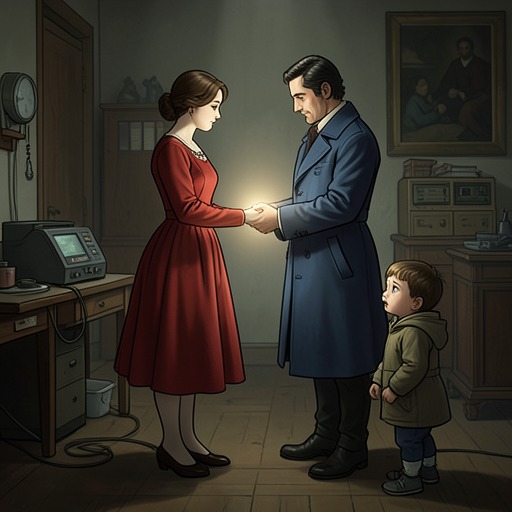
The wheel’s middle is a place Dan identifies as a memory. There used to be a hotel there, and the room was his when he was a child; now, he says, it is a place where he and Abra can be together. The hub therefore has a specific personal origin, but its present use is relational. Dan’s remembered room becomes a shared psychic setting rather than remaining only a scene from his past.
The distinction between turning and arriving matters. The wheel describes passage; the hub is the point of encounter. Dan calls it the middle, and Abra wishes they could stay there because it feels safe. That response gives the hub an emotional quality, but not the status of a permanent refuge: their presence in it depends on the psychic connection, and the scene soon requires them to leave.
The room also carries visible evidence of memory being altered. Abra notices that its French doors do not feel like the rest of the place and asks whether they were there when Dan was a child. They were not. His childhood room had no windows and only a door opening into the caretaker’s apartment; Dan changed it. The hub is thus not a literal recovery of an untouched past. It is a memory-space whose form has been modified, allowing the shared place to include a feature that did not belong to the original room.
Recurrence and Return
The wheel appears again when Billy Freeman goes into a Subway for a Buffalo Chicken and Dan gets in touch with Abra. The narration marks the contact with the concise observation that the wheel turned. This recurrence makes the image more than an explanation Dan gives once in the memory-room. It links a later act of reaching Abra to the same pattern of psychic movement and return.
That return is not presented as a guarantee that contact can continue indefinitely. In the shared room, Dan tells Abra to go back to New Hampshire if he tells her to; there is no time to discuss the warning before their time is up. He steps through the French doors, and Abra follows. The sequence ties the hub to a limited interval: it permits their meeting, but it does not abolish the need to withdraw from it.
The Threshold and Its Limits
Outside the room, Abra loses the solidity she had there and begins to flicker. Dan recognizes how much she has risked and worries about how tenuous her hold on her own body might be. The contrast makes the hub’s safety relative. Inside the memory-room, Abra feels secure enough to wish to remain; beyond it, her unstable appearance makes the cost of her participation newly apparent.
The wheel consequently holds together intimacy and danger rather than resolving one into the other. Its turning makes contact possible, and its hub gives Dan and Abra a shared point of orientation, but their passage has a limit and their return to the outside carries risk. The image’s force lies in that tension: a mind can become a place of meeting, yet the meeting remains temporary, dependent on movement, and vulnerable when its participants leave.