Tony
Doctor SleepTony is Dan Torrance’s invisible childhood friend, a guide and protector whose appearances connect Dan’s adult life to the dangers and injuries of his youth. First necessary to a frightened boy at the Overlook Hotel, Tony returns years later as Dan begins a sober life in Frazier and as buried memories surface during a new crisis. Dan eventually understands him not simply as a childhood companion but as a wiser, protective part of himself—one that can still help him recognize what has been forgotten.
Identity and Childhood Role
Tony was Dan’s friend when Dan was still a child, sometimes called Danny. Dan later recalls that Tony was invisible and could bring visions or warnings. The shining was one of the burdens Tony helped him bear, but Dan identifies his father’s alcoholism and violence as the greater burden. Tony’s importance therefore reaches beyond supernatural instruction: he offered companionship and protection inside a family life made frightening by an unpredictable, often-drunk father.
For the boy trying to survive at the Overlook Hotel, Dan imagines Tony as a protective older brother. That description gives their bond a double character. Tony was a playmate, but he also had the steadiness and foresight Dan needed when the adults around him could not keep him safe. In Dan’s later understanding, the apparent child-friend was also a deeper and wiser version of Dan himself, able to warn and comfort him when his conscious mind could not manage what was happening.
Return in Frazier
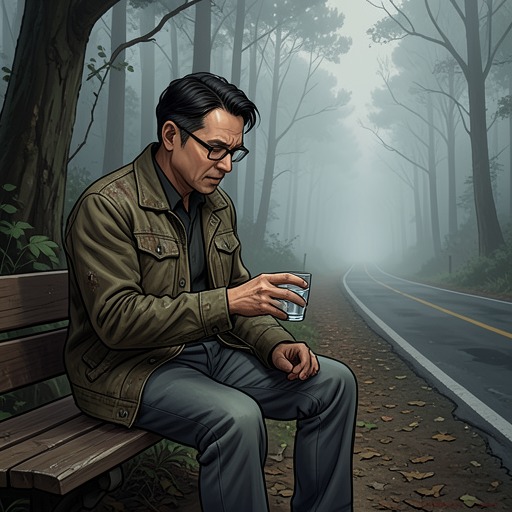
Tony reappears as Dan travels north to Frazier, where he intends to begin again. When the bus stops at the Frazier Community Center, Tony speaks from the empty seat beside Dan—the place where Dan’s bottle had rested for the first part of the trip. Dan recognizes the voice, and its unusual clarity stands out: Tony has not spoken so clearly in years. His short declaration, “this is the place,” marks Frazier as the destination Dan has reached, though Dan does not know whether the thought comes from the shining or ordinary intuition.
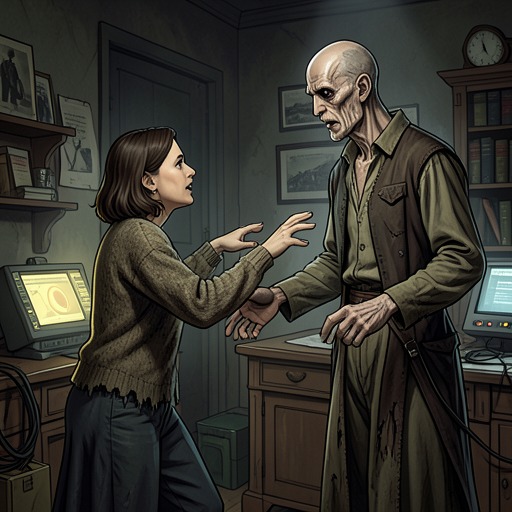
The voice is followed by a visual visitation. On Cranmore Avenue, Dan looks up at the turret room of Helen Rivington House and sees Tony at its window, waving with the same solemn gesture Dan remembers from childhood. Dan shuts his eyes and opens them again; Tony is gone, and the window is boarded up. The building’s physical evidence complicates the apparition without resolving it. Tony is both unmistakably present to Dan and apparently absent from the world around him, a return that unsettles Dan just as he considers applying for work at the hospice.
Protector, Memory, and Abra
Tony’s protective role is most vivid in Dan’s remembered nightmare of the Overlook Hotel. A hose on the carpet seems to become a rattlesnake, while the hotel’s other horrors and Dan’s father’s growing danger collapse into the child’s conviction that the family must escape. From somewhere, Tony calls, “Wake up, Danny!” and repeats the urgent appeal. The scene makes Tony’s warning more than a sign of supernatural perception: it is an intervention aimed at bringing a terrified child out of a world where ordinary objects and threats have become indistinguishable.
Years later, Tony’s protective function appears in Dan’s contact with Abra Stone. When a vision of Abra comes to him, Dan reaches from beneath the blankets and feels her small, warm hand slip into his. He recognizes her by name and by the nickname Abby, and the brief contact soothes him enough to sleep. The encounter reverses the old pattern without erasing it: Dan, once the child who needed Tony’s comfort, can now receive reassurance through a connection with a younger person whose abilities and fears recall his own.
Dan wonders whether Abra has come for Tony rather than for him. He cannot know that this is true, but the possibility leads him to imagine that she might be seeking someone her own age. He considers Tony both a playmate and a protector, roles that explain why an inner figure from Dan’s childhood might be the part of him most accessible to a child. His reflection also marks a change in his relation to Tony: Dan is no longer simply the frightened boy awaiting a warning. Sober and grown, he can consider what Tony meant and how the stages of childhood remain within adult life.
Recovery and the Return of the Past
Tony’s appearances accompany Dan’s return to memories he had sealed away. After the violent confrontation at Cloud Gap, the thought “You will remember what was forgotten” keeps returning to Dan, and he associates it with Tony. Later, as Dan tries unsuccessfully to reach Abra, the phrase rises from the back of his mind, where he keeps the lockboxes containing the terrible memories of the Overlook Hotel and its ghosts. What follows is Dan’s recognition that the forgotten memory concerns the boiler. Tony is not shown explaining the revelation; rather, his association with the recurring phrase links his childhood warnings to Dan’s present effort to recover knowledge buried with trauma.
Dan tells Abra’s family how a lost man rode a northbound bus out of Massachusetts, discarded what would be his last bottle just over the New Hampshire state line, and heard Tony speak as the bus reached Frazier. He then returns to the earlier life in which he was Danny and Tony was indispensable. The account places the sobriety milestone and Tony’s renewed voice in the same personal history: the journey into recovery does not erase the past but gives Dan a way to recount it, including the painful truth of his father’s violence and the help he needed as a child.
Meaning and Continuing Presence
Tony’s role is defined by recurrence rather than by a settled explanation of what he is. Dan remembers him as an invisible friend who brought visions and warnings, sees him at a boarded-up window, hears his voice at the moment of arrival in Frazier, and later associates him with a phrase that unlocks a buried memory. Dan’s own account interprets Tony as a wiser version of himself, while leaving the appearances’ supernatural status uncertain. The ambiguity preserves both sides of the bond: Tony can be understood as an expression of Dan’s inner life and as a presence whose timing feels independent of conscious thought.
The final remembered scene of comfort makes that bond especially consequential. In a dream, Abra sits beside Dan on a bench outside the Anniston Public Library and holds his hand. She tells him that before his father died, he turned the pursuing Shape out, and that Dan no longer has to fear it. The reassurance speaks to the childhood terror Tony helped Dan survive, even though Tony is not the speaker in this scene. Across Dan’s story, the protector first appears as the companion of a boy who cannot escape his fear; in adulthood, the returned friend helps connect memory, recovery, and the care Dan can extend to someone else.