Walnut
Doctor SleepWalnut, usually called Nut by the True Knot, is its doctor and a quiet practical presence in a group whose apparent longevity is increasingly vulnerable to illness. His role ranges from designing a safer way to sedate Abra to recognizing that Grampa Flick has measles. As the infection spreads, his medical knowledge becomes both a resource for the group’s predatory plans and a warning that its old assumptions about immunity may no longer hold.
Place in the True Knot
Walnut is introduced as a small man with a bald pate and tufts of gray hair above his ears, carrying a sheet of paper when Crow Daddy brings him to Rose the Hat. His appearance is unassuming, but the paper contains a complicated chemical diagram and a proposal the group considers important enough to interrupt Rose. She calls him the True Knot’s doctor and expects him to understand how to use the substance he has brought. The title gives him practical authority, though the evidence presents that authority through specific tasks rather than a broader account of his training or history.
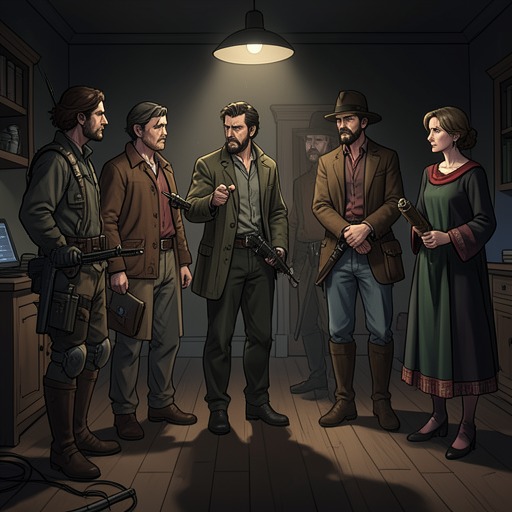
Walnut also functions inside the True Knot’s mobile operation. During the journey toward Anniston, he drives the Winnebago carrying the raiding party while Andi Steiner and Barry sleep and Crow Daddy reads in the parlor. His place behind the wheel is a concrete part of the group’s logistics: he is not only consulted about medicine but also helps move the people and plans on which its pursuit of Abra depends.
The sedative plan
The paper Walnut brings to Rose describes a powerful, new sedative. He presents it as clean and capable of putting Abra to sleep without an overdose, directly addressing the danger of incapacitating her by giving her too much. The proposal is operational rather than abstract: Rose is considering how to capture Abra, and a means of rendering her unconscious could make that plan possible while avoiding a fatal mistake.
Rose initially resents the interruption, but recognizes that the drug could be what the group needs. She directs Crow Daddy to send it by Express Mail along a route south, then into the Midwest, then into New England, with delivery in Sturbridge by Thursday. She warns Walnut that an overdose would earn him exile, invoking the punishment of the first True sent away since Little Big Horn. The warning establishes the stakes of his contribution: Rose expects him to make the drug useful without killing the captive. Crow says Walnut will know how to use it, but the available evidence does not show Walnut administering it or confirm what happens to the package.
Diagnosing Grampa Flick
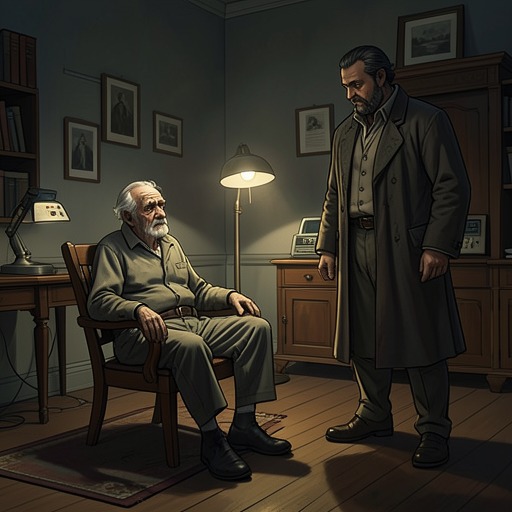
At Grampa Flick’s bedside, Walnut identifies the red marks on the old man’s body as possibly Koplik’s spots, then tells Rose that he thinks Flick has measles. Rose’s shock exposes how foreign the diagnosis seems to the group: she insists that the True Knot does not catch ordinary childhood diseases. Walnut does not treat that disbelief as certainty. He recalls that the baseball-playing boy from Iowa had spots too, though he had not connected them at the time, and suggests that the disease may have been carried in the Steam and lain dormant for years before breaking out.
His explanation remains a hypothesis, not a confirmed account of transmission. Walnut points out that the True Knot’s immunity from diseases common among ordinary people may have changed over time, and allows that the infection could be part of a natural process. He also cautions that a single case does not establish an epidemic, while warning that another case would require complete quarantine. In doing so, he gives the group a medical framework for uncertainty: Flick’s illness may be isolated, but it cannot safely be dismissed.
The later appearance of red spots on Big Mo’s arm makes the danger harder to contain. Rose displays them to the group as evidence that the disease is in them. The outbreak gives force to Walnut’s earlier warning about another case and quarantine, even though the evidence does not show him present for Rose’s confrontation or establish that his proposed precautions were adopted.
Care and vulnerability
Walnut’s medical role is not limited to the group’s plans for Abra. When Barry develops a bad sore throat, Walnut returns with apple juice, offering it as something cold that might soothe him. Barry has to be helped to drink from the small bottle, a sign of how dependent illness can make even a member of this long-lived group. The ordinary gentleness of the gesture contrasts with the sedative plan: Walnut attends to a companion’s immediate discomfort even as his expertise supports a scheme to incapacitate a child.
Across these episodes, Walnut is defined less by personal history than by what the True Knot asks him to know. Rose relies on him to assess illness and handle a dangerous drug; Crow relies on him to help keep the traveling party moving; and his own account of the possible measles infection forces the group to consider that its customary protections have weakened. He cannot promise that the outbreak will remain limited. His caution marks a shift from confidence in the group’s supposed immunity toward the possibility that its bodies, like those of ordinary people, can become vulnerable.