the shining
Doctor SleepThe shining is a psychic ability whose forms and strength vary from person to person, enabling thought-reading, distant perception, communication without speech, and, in some cases, effects on the physical world. It is never fully explained or mastered in the evidence presented: Dan Torrance has lived with it since childhood and still does not understand it completely. Its significance lies in that double condition. It can make perception more useful and relationships more intimate, but it can also expose its bearer to disturbing knowledge and make that bearer visible to predatory spirits and the True Knot.
Nature and Range
The shining is not an all-or-nothing gift. Dick Hallorann taught Dan that many people possess a faint degree of it, a small intuitive glimmer that might let someone anticipate a radio selection or a phone call. Dan later recognizes such a trace in Billy Freeman. Hallorann’s account gives the ability a spectrum: a modest intuition at one end, much stronger capacities at the other. Dan’s comparisons make the difference vivid without suggesting that the ability can be measured precisely. Abra Stone has far more of it than Billy or Dan; beside her, Dan says, his own power is like a flashlight beside a lighthouse.
Even those with substantial ability do not necessarily understand what they can do. Dan admits that, despite having lived with the shining all his life, he does not know how it works. He considers the possibility that it might be inherited, but resists reducing it to a simple explanation, treating it instead as something unquantifiable. Its capacities can also be uneven: what someone can perceive or accomplish may depend on the person, the circumstances, and whether a particular faculty happens to be available.
Forms of Perception and Communication
The shining can operate as an inward-looking sense. Abra can sometimes look into other people’s thoughts, though not everyone is accessible to her: some minds seem closed, while others yield only intermittent impressions. Many appear open enough for her to look in when she chooses. The knowledge can be unwelcome. Among the things she discovers is that Mrs. Moran, her beloved sixth-grade teacher, is having an affair. Abra mostly avoids using this ability because what she learns can be sad or shocking.
It can also transmit information about people and events beyond the immediate scene. Abra’s parents begin to take her dreams seriously after David Stone connects one of her images with a newspaper account of a fatal crash and Lucy Stone finds police reports that resemble other dreams about people fighting. John Dalton considers the possibility that Abra is receiving transmissions through what he calls the weird radio in her head. Her parents’ discussion distinguishes several possible faculties rather than treating every incident as the same phenomenon: her awareness of visitors and of Mrs. Judkins’s injury suggests telepathy, while an event in the kitchen at her birthday party provides strong evidence of telekinesis. Her forewarning experiences suggest precognition, though Dan and Lucy are less certain about how to classify them.
Other incidents make that classification still less straightforward. In spring 2002, while Lucy and David were in bed and Abra was believed to be asleep in her room, the piano break from the Beatles song Not a Second Time sounded downstairs. The account describes twenty-nine notes, played perfectly, but David says the sound did not come from the piano. Later, when considering Abra’s abilities, Dan also recalls a night when every television channel showed The Simpsons. The piano episode may not be ordinary telekinesis if no piano produced the notes; together, these events suggest that the shining can manifest in ways its witnesses cannot readily name.
Abra calls another faculty far-seeing. It comes and goes, but she can often summon it when she strongly wants to look at something and has an object on which to focus. The ability gives an object a practical role as a point of concentration: distant perception is not simply available at will, but may depend on intention and a physical anchor. Across these different forms, the shining is both receptive and, at times, active. Abra can read, perceive at a distance, and sometimes influence what another person does; she knows that this last capacity might grow with practice, but chooses not to cultivate it because it frightens her.
Dan Torrance and Hallorann’s Teaching
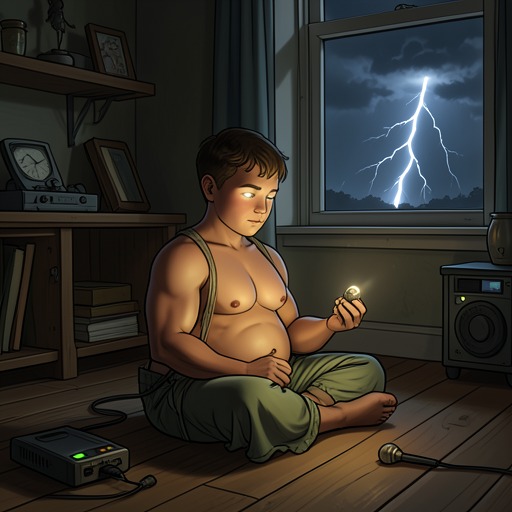
For Dan, the shining is bound to childhood and to what he learned at the Overlook Hotel. He understood early that intuition alone was not always enough: sometimes a person needed to see what was there. That lesson was sharpened by an experience in a second-floor room at the hotel. The woman he encountered there, and the ghost he later saw in his bathroom, were not ordinary apparitions; Hallorann helped him distinguish them from less dangerous spirits. Dan’s history with such presences made the shining not merely an extra sense but a way of perceiving threats that other people could not see.
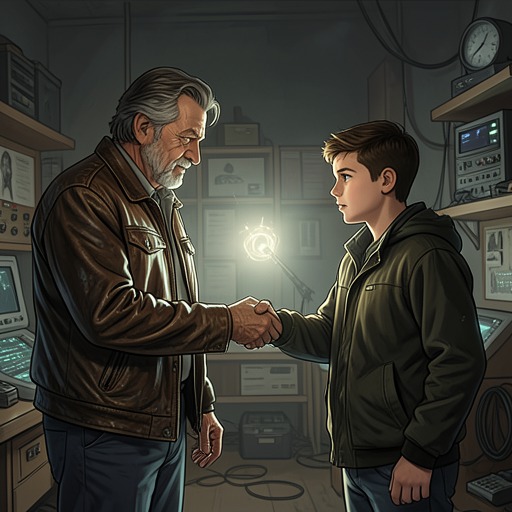
Hallorann became Dan’s first adult friend who understood the ability from the inside. The two spoke about it for years after their haunted winter at the Overlook, sometimes face to face and often mind to mind. Hallorann recognized that Dan shared his gift, explained that others possessed lesser degrees of it, and offered guidance about the spirits it could attract. He also described his own grandmother’s warning: some angry spirits refuse to pass on, and some find sustenance in the shining. A person may unintentionally feed such a presence, but the very ability that draws it can also be turned against it.
That instruction helps explain why Dan developed mental lockboxes for dangerous presences. Hallorann and Dan discussed placing the threats attracted by the shining into these imagined containers, though Dan’s attempts to use the method against his drinking were unsuccessful. The contrast matters: a technique that could help him contain particular spirits did not automatically control every danger within himself. The shining gives Dan ways to respond, not a general mastery over what it reveals or brings near.
In adulthood, the ability is quieter in Dan’s daily life but not absent. His volunteer work at Rivington House shows him that it is stronger than it has been since childhood, while also showing him that he has more control over it. Colleagues recognize something in him and tend to call it empathy; Dan prefers not to acquire a reputation as a psychic. When Billy’s thoughts come through with unusual clarity, Dan understands the experience through Hallorann’s teaching and recognizes in Billy a lesser degree of the same capacity. A later encounter with a dying man also shows Dan that he can know something simply through touch, even when he is managing his own feelings and has other demands on his attention.
Abra’s Power and Its Consequences
Abra’s relationship to the shining changes as she grows. Some capacities she possessed as a little child become less prominent, while others become more useful or stronger. She gains a clearer sense of what her abilities can do, but not the certainty that would make them uncomplicated. Her parents try to understand the evidence without forcing every incident into one category. Dan, by contrast, recognizes a scale of power immediately: Abra is not merely like him and Billy but far more powerful than either. He describes her as the lighthouse to his flashlight, a comparison that conveys both her reach and the imbalance between them.
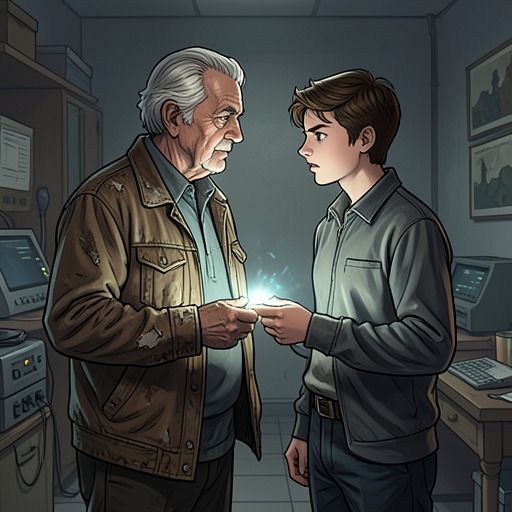
Their first meeting gives the ability a different emotional meaning. Dan and Abra can send as well as receive, and their contact makes a shared activity of something each had largely experienced alone. After years of possessing a remarkable capacity without someone who could meet it on equal terms, Abra can take pleasure in it. Sitting together outside the library for forty-five minutes, she finds joy in the talent that had puzzled and frightened her. Dan supplies a name for it, the shining, which replaces her sense that it is necessarily dark with the possibility of understanding and companionship.
That connection also lets Dan experience the ability from Abra’s side. Near the ethanol plant, her presence sharpens his vision and helps him become intensely responsive to what she perceives; he even experiences her tears as his own. Later, when Dan deliberately empties his mind so that Abra can fill it, her presence inside his head feels powerful enough to unsettle him. Their contact is therefore not a simple exchange of messages. It can carry perception and feeling across the boundary between them, even as each remains aware of the force involved.
Abra’s strength also draws the attention of the True Knot. The group is not interested in ordinary children but seeks children who possess the shining, and Abra’s unusual power makes her especially valuable to them. She detects Rose the Hat and sends her reeling, demonstrating that her ability can be used defensively as well as perceived by an opponent. Rose sees the encounter as evidence of an extraordinary potential; Dan understands it as a danger that must be answered. He tells Abra’s parents that she and he may be able to end the threat together, whereas either acting alone would not be enough.
Ghosts, Memory, and Meaning
The shining’s relation to ghosts makes perception consequential. Hallorann explains that some spirits remain in the world and that the shining can feed them, unintentionally strengthening their presence. Dan’s experiences with the woman at the Overlook and with the bathroom apparition give that warning a concrete history. The ability is therefore not just a private gift: what its bearer senses can become part of an encounter, and what the bearer possesses can attract what would otherwise remain unseen. Dan’s lockbox practice answers that danger, while Hallorann’s teaching insists that the answer begins with recognizing what is present.
The ability also creates continuity between generations and between people who might otherwise feel isolated. Hallorann recognizes the gift in Dan, and Dan later recognizes it in Billy and Abra. His conversations with Hallorann carry knowledge forward; his meeting with Abra turns that inheritance into a reciprocal bond, with Dan no longer only receiving but sending as well. The pattern does not imply that every bearer has the same powers or that instruction removes the risks. Instead, the shining links people through differences in strength and experience.
Near the end, Dan describes a remembered room where a hotel once stood and where he and Abra can now be together. He connects the place to the wheel that turns when one enters another person. The image gathers the shining’s central possibilities into a single idea: contact can cross distance, but it also draws one person into another’s experience. Throughout the story, the ability is at once a means of seeing, a source of vulnerability, and a way of forming relationships that ordinary speech cannot sustain.