
Cervantes and the Frame of History
Don QuixoteThis thread traces the novel’s shifting claims to truth through found manuscripts, translators, and competing accounts.
increasing Bearing strength in each event
 decreasing
Bearing strength in each eventdecreasingAn Incomplete Chronicle
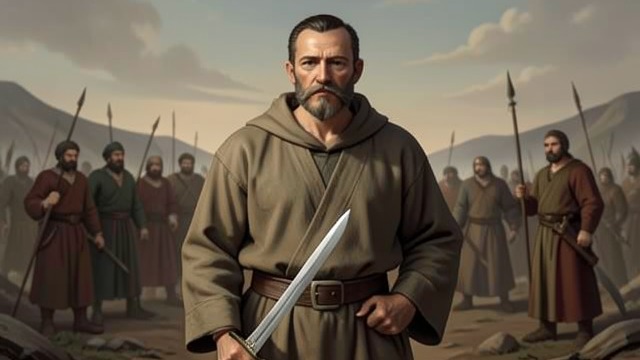
An Incomplete Chronicle
The battle stops
The narrator claims the account ends abruptly during Don Quixote's fight with the Biscayan. The missing conclusion turns a simple narrative into a problem of sources.
A reader becomes investigator
The narrator searches for written traces of the knight's history. The gap makes the authority of the tale part of its subject.
A Manuscript in Toledo
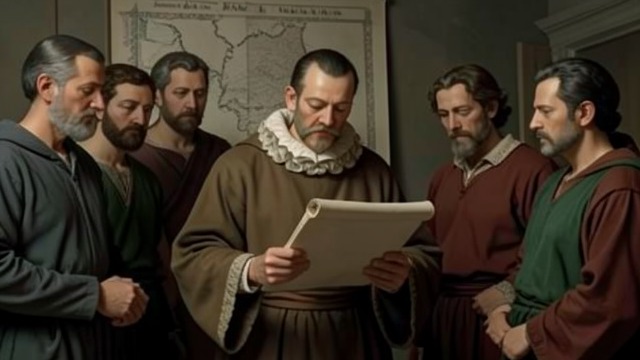
A Manuscript in Toledo
Recovery and translation
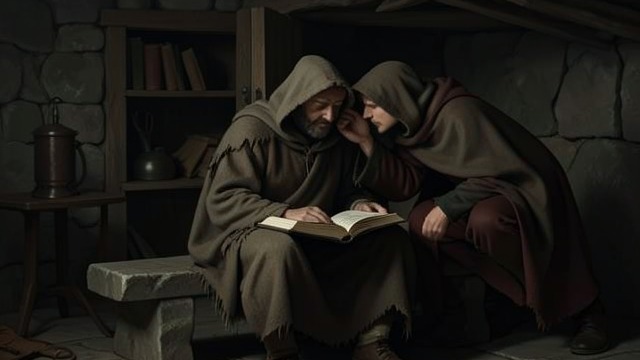
The narrator finds Arabic papers and engages a Morisco translator to render them into Castilian. The history becomes mediated rather than direct.
Doubt built in
Cide Hamete is introduced as the source, while the narrator jokes about Arabic truthfulness and possible omissions. The story asks readers to weigh competing claims.
Images and Evidence
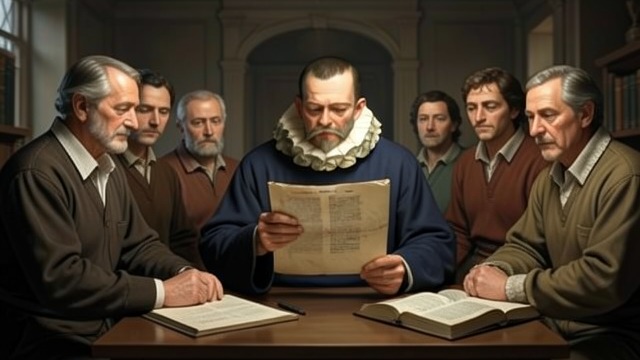
Images and Evidence
Manuscript details
The narrator describes illustrations and labels in the found papers, including names attached to Don Quixote and Sancho. Material evidence seems to support the story.
Truth as performance
The narrator's careful presentation is comic and uncertain. It invites the reader to question how histories gain authority.
The False Continuation
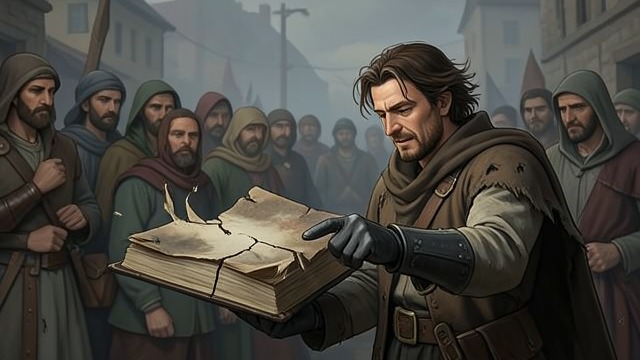
The False Continuation
A rival history appears
An apocryphal Second Part circulates under another author's name. Don Quixote and Sancho learn that their printed selves have been appropriated.
Fiction enters the plot
The false book becomes a source of anger and a force shaping Don Quixote's route, particularly his decision to avoid Saragossa.
The Book Ends Its Hero
The Book Ends Its Hero
A declared ending
Cide Hamete and the narrator present Don Quixote's death and insist that no future writer should revive him. The ending guards the character from further appropriation.
Authority contested
The work closes by distinguishing its own account from rival fictions. The frame makes authorship and ownership part of the final resolution.
At the first break in Don Quixote's story
In the Alcana of Toledo
At the opening of the recovered continuation
After news of Avellaneda's book
In the final pages
