
The Duel That Ends the Road
Don QuixoteThis thread follows the Knight of the White Moon's challenge, Don Quixote's defeat, and the enforced return home.
increasing Bearing strength in each event
 decreasing
Bearing strength in each eventdecreasingA New Challenge
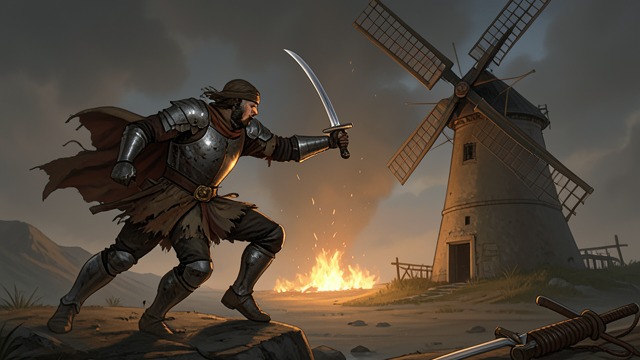
A New Challenge
The White Moon appears
A knight challenges Don Quixote to admit that his lady is not the world's fairest. The challenge also sets a year of retirement as the condition of defeat.
Honor binds the terms
Don Quixote accepts rather than concede Dulcinea's superiority. The duel turns his ideal into a concrete risk.
The Defeat
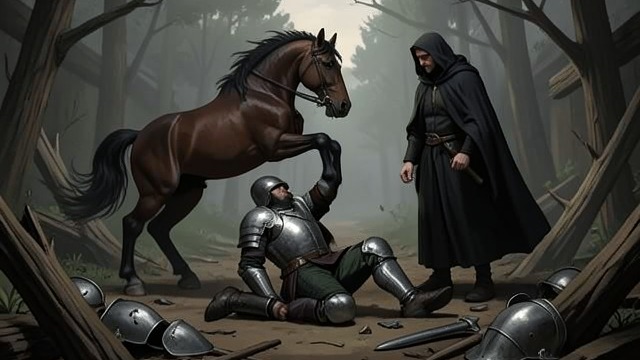
The Defeat
Rocinante goes down
The White Moon's charge brings Don Quixote and Rocinante to the ground. Don Quixote cannot continue the combat.
Terms enforced
He admits Dulcinea's beauty remains unsurpassed but accepts the required retirement. The defeat tests whether he will honor his word.
The Knight Unmasked
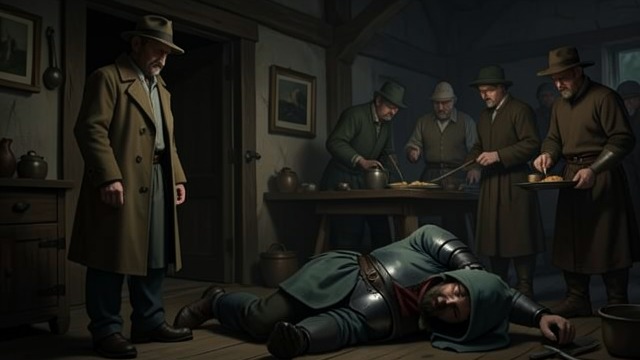
The Knight Unmasked
A hidden identity
The challenger is revealed as Samson Carrasco, seeking to end Don Quixote's adventures by defeating him. His earlier attempt as the Knight of the Mirrors had failed.
A changed motive
Carrasco now pursues the same goal with a different disguise. Don Quixote's defeat comes from a friend's intervention, not from a supernatural enemy.
The Road Home
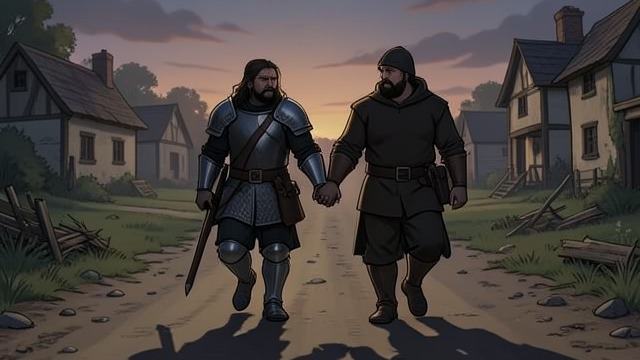
The Road Home
A promise kept
Don Quixote travels home rather than take up arms again. Sancho encourages him and tries to keep their partnership hopeful.
A different adventure
They imagine pastoral names and a future shepherd's life. The plan cannot undo the defeat, but it softens the return.
The End of Arms
The End of Arms
A year that ends early
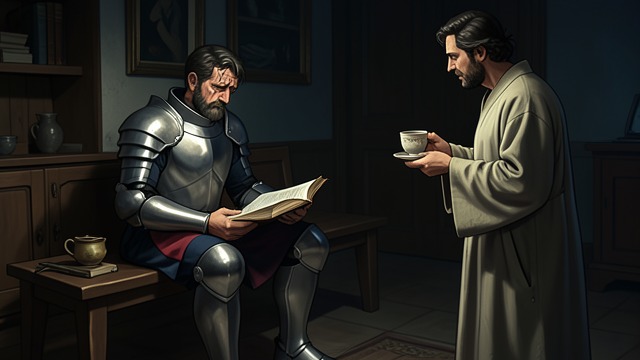
Don Quixote's illness and recovery bring his knight-errantry to a close before the retirement term can run its course.
Defeat becomes final
He recognizes his former delusion and dies as Alonso Quixano the Good. The duel's condition has ended the quest in fact as well as in promise.
In Barcelona
The next day on the Barcelona shore
Immediately after the duel
During the journey back to La Mancha
After Don Quixote reaches home
