
The Novel Questions Its Own Truth
Don QuixoteThis thread traces the novel's playful uncertainty about authorship, historical evidence, and the boundary between report and invention.
increasing Bearing strength in each event
 decreasing
Bearing strength in each eventdecreasingThe Search for a Source
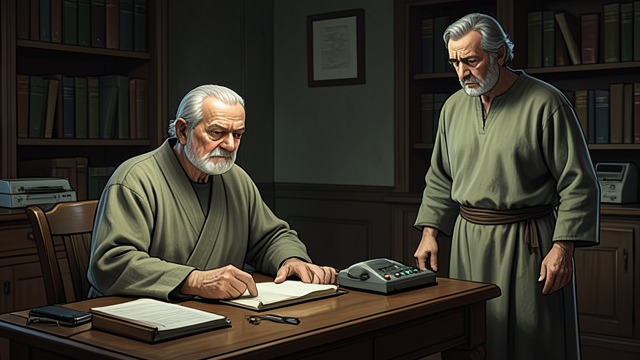
The Search for a Source
A lost ending
The narrator says the account of the duel stops because the source material has run out. The interruption makes the story's documentation visible.
History as construction
The narrator searches for records rather than simply continuing. The reader sees that narrative truth is assembled through acts of recovery and interpretation.
Cide Hamete Introduced
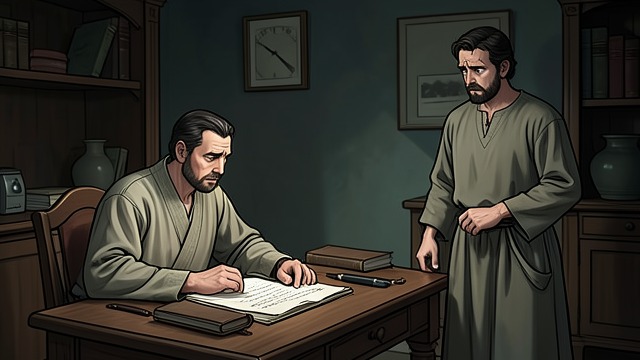
Cide Hamete Introduced
A named historian
The narrator finds a manuscript attributed to Cide Hamete Benengeli and commissions a translation. The source is presented as both evidence and comic device.
Reliability questioned
The narrator jokes about the supposed mendacity of Arabs while depending on a Morisco translator. Every claim to certainty carries an element of doubt.
A Translator Between Versions
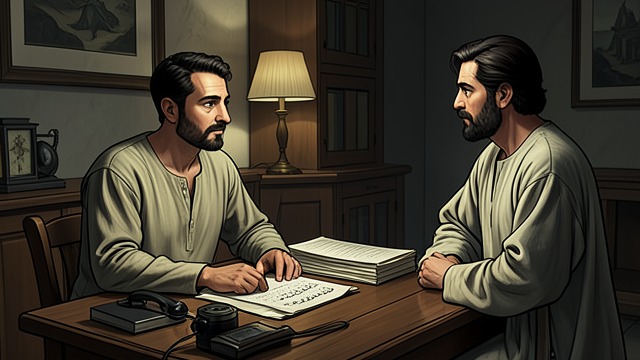
A Translator Between Versions
Translation mediates events
The Morisco turns Arabic papers into the Castilian account readers encounter. His work connects distinct languages and imagined authorities.
No unmediated history
The novel's story reaches its audience through a chain of narrators and translators. This structure makes the act of telling part of the fiction.
The Rival Book Enters
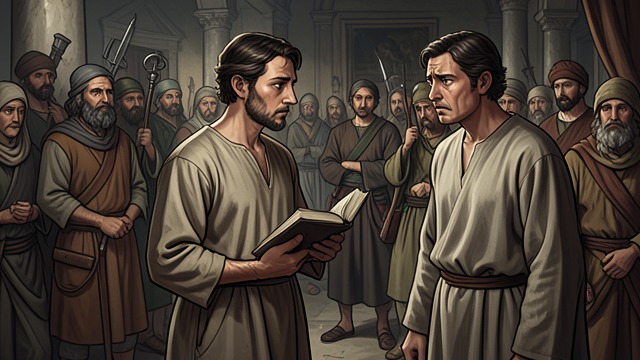
The Rival Book Enters
Characters encounter print
Don Quixote and Sancho learn that a false continuation has appeared under another author's name. Their lives are altered by a printed rival account.
Fiction claims authority
The narrative responds by distinguishing its characters from Avellaneda's versions. The contest over truth becomes part of the adventure itself.
A Final Boundary
A Final Boundary
Death fixes the ending
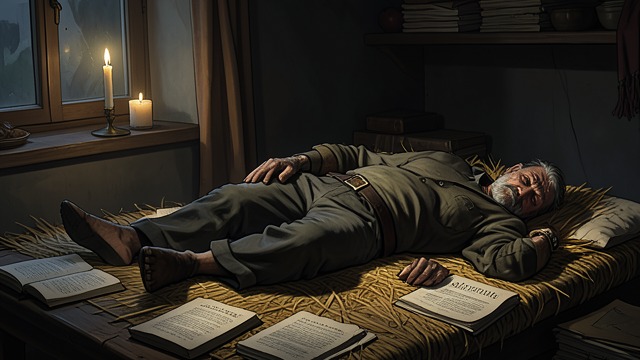
The narrator records Don Quixote's death and asks later writers not to revive him. The boundary prevents another invented continuation.
Truth and invention converge
The novel claims authority even as it exposes how histories are created. Its final word is both a closure and a challenge to rival storytellers.
After the Biscayan duel breaks off
At the discovery of the Arabic history
During the manuscript translation
During the third sally
At the novel’s close
