Alcana of Toledo
Don QuixoteThe Alcana of Toledo is the marketplace where an apparently accidental encounter transforms scattered papers into the source of Don Quixote’s history. Its importance lies not in any described architecture or civic function, but in the chain of reading, recognition, and translation that begins there: a boy’s bundle of old papers becomes the Arabic manuscript attributed to Cide Hamete Benengeli.
The Marketplace and the Papers
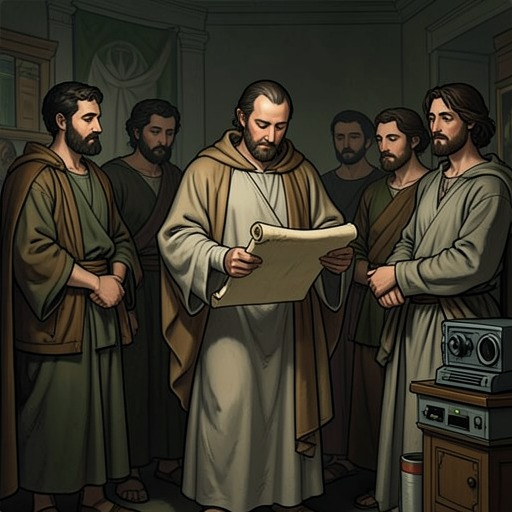
The narrator is in the Alcana when a boy offers pamphlets and old papers to a silk mercer. Fond of reading even scraps found in the streets, the narrator picks up one of them. He recognizes its characters as Arabic but cannot read them, so he looks for a Spanish-speaking Morisco who can interpret the writing. The scene gives the marketplace a specifically literary role: the history emerges not from an official archive but from material circulating among sellers and passersby.
Recognition and Translation
The interpreter opens the pamphlet at random and laughs at a marginal note about Dulcinea del Toboso, which says she had the best hand in La Mancha for salting pigs. The name startles the narrator; he immediately suspects that the papers contain Don Quixote’s history. Asked to read the beginning, the interpreter identifies it as a history of Don Quixote of La Mancha written by Cide Hamete Benengeli, an Arab historian. The marginal joke acts as the clue that turns an unreadable fragment into a recognizable part of the story.
The narrator buys all the papers from the boy for half a real. He then takes the Morisco to the cathedral cloister and asks him to translate the material into Castilian without additions or omissions. The Alcana is therefore the starting point, not the place where the translation is completed: the discovery leads away from the market and into the narrator’s effort to recover the history from its Arabic text.
Narrative Significance
The discovery makes the marketplace a threshold between chance and deliberate inquiry. A routine exchange of old papers supplies the narrator with the work he has been seeking, while the need for an interpreter establishes the story’s layered passage from Arabic manuscript to Castilian account. The Alcana’s narrative significance rests on this small sequence of concrete acts—picking up a pamphlet, recognizing a familiar name, purchasing the papers, and commissioning their translation—which presents the history as both found material and a text mediated by readers.