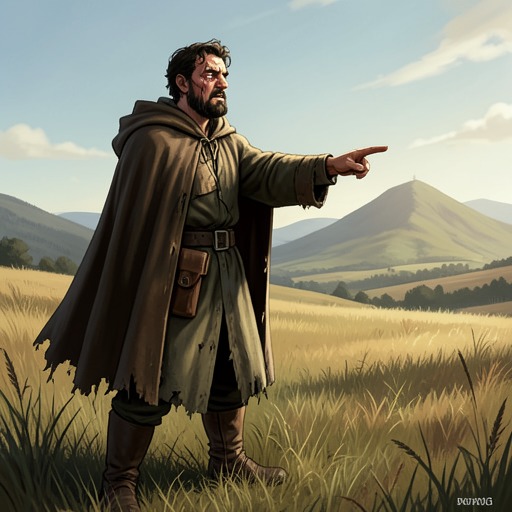
Antonia Quixana
Don QuixoteAntonia Quixana, Don Quixote’s niece, is a member of his household and the central beneficiary of his final will. Her brief appearance at his bedside gives her a practical role in the closing movement of the novel: she hears him announce that his reason has returned, and she inherits the property he leaves behind. The condition he attaches to that inheritance turns his last judgment on books of chivalry into a rule governing her future marriage.
Identity and Role
Antonia is identified as Don Quixote’s niece and is present in the household during his final illness. When she hears him speak of divine mercy and the sins of men, she asks whether something strange has happened and what he means. Her question prompts him to explain that he believes his reason has cleared and that he now recognizes the deceptions of the books of chivalry. He tells her to summon the curate, Bachelor Samson Carrasco, and Master Nicholas so he can confess and make his will; their arrival saves her the trouble of going to fetch them.
Witness to His Final Change
Antonia witnesses the contrast between her uncle’s former identity as Don Quixote and his restored self-understanding as Alonso Quixano the Good. He describes his recovery as a divine mercy and attributes his former delusions to his constant study of books of chivalry. His declaration is not presented to her as a private realization alone: he summons trusted friends to hear his confession and witness the will that follows. Antonia’s presence therefore places her at the intersection of his personal change and its consequences for the household.
Inheritance and Marriage Condition
In his will, Don Quixote leaves all his property to Antonia after the specified bequests have been deducted. Those include the housekeeper’s unpaid wages and twenty ducats for a gown; he appoints the curate and Bachelor Samson Carrasco as executors. The inheritance gives Antonia the principal claim on his estate, but it comes with a sharply defined restriction concerning her marriage.
If Antonia wishes to marry, her prospective husband must first be investigated to establish that he does not know what books of chivalry are. Should she marry a man who does know them, she is to forfeit the inheritance, which the executors are to devote to charitable works. The will thus makes her financial future answerable to the very literary influence her uncle blames for his madness. It does not say whether Antonia accepts this condition or what she herself wants from marriage.
Narrative Significance
Antonia’s part is small in action but consequential in the ending: she is the niece who hears Don Quixote explain his regained reason and the heir whose marriage is governed by his final testament. His condition extends his repudiation of chivalric books beyond his own life, making inheritance a means of trying to guard the next generation against their influence. At the same time, the restriction shows how completely his last concerns shape the terms on which Antonia may receive her family property.