Barcelona
Don QuixoteBarcelona is both the destination Don Quixote chose to distinguish himself from a counterfeit version in print and the place he leaves after the Knight of the White Moon defeats him. In retrospect, the city becomes inseparable from his fall: its memory holds the loss of his hard-won glory, while his insistence that he does not regret having seen it preserves a measure of value in the journey.
A destination chosen against a false account
Don Quixote explains to Don Álvaro Tarfe that he had never been to Saragossa. After learning that the imaginary Don Quixote in the printed Second Part had appeared at its jousts, he deliberately avoided the city and went straight to Barcelona, intending to expose the other figure’s falsehood. Barcelona thus enters his account not simply as a place on the road, but as the destination of a conscious effort to distinguish his own identity and deeds from those attributed to an impostor.
He praises Barcelona as a welcoming refuge for strangers and the poor, a home for the valiant and a champion of the wronged. These honors sit beside his admission that the adventures he experienced there brought regret rather than enjoyment. Still, he says that seeing the city itself was reason enough not to regret the visit: the city’s worth, in his telling, is not erased by the painful turn of his own fortunes there.
The place of defeat
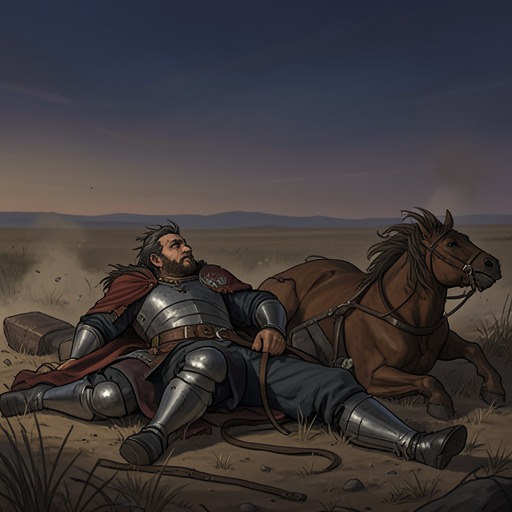
As he departs, Don Quixote turns to look back at the spot where he fell. He compares the scene to Troy and describes it as the place where ill luck, rather than cowardice, deprived him of glory. His language makes Barcelona a marker of irreversible change: the lustre of his achievements is dimmed, and he regards his happiness as fallen for good.
Sancho Panza answers by urging patience in adversity, comparing the change from governor to foot-traveling squire with his own rise and reversal. Don Quixote acknowledges the sense in Sancho’s counsel, but rejects the idea that Fortune acts by chance. He attributes events to heaven’s preordination and says that his own overconfidence made him pay dearly. More concretely, he recognizes that Rocinante lacked the strength to withstand the Knight of the White Moon’s much larger horse. The defeat at Barcelona is therefore, in his account, not just misfortune imposed from outside: it also exposes a failure of judgment.
The city in retrospect
Barcelona holds together two opposed meanings in Don Quixote’s recollection. It is the admired city he considered worth reaching even when its adventures proved painful, and the site from which he must carry away the consequences of defeat. His response does not collapse those meanings into simple triumph or simple rejection. He regrets the loss of glory, yet maintains that the city was worth seeing; he admits imprudence, yet insists on preserving his honor by keeping his word.
The journey’s purpose also gives the setting a connection to the novel’s contest over identity in print. In asking Don Álvaro to attest that he had never met this Don Quixote before, and that the real Don Quixote and Sancho Panza were not the pair described in the other Second Part, he seeks public confirmation that the printed imposture and the travelers before him are not the same. Barcelona is where he says he went to confront that false account, even as the city becomes the remembered setting of a defeat that limits what he can do next.