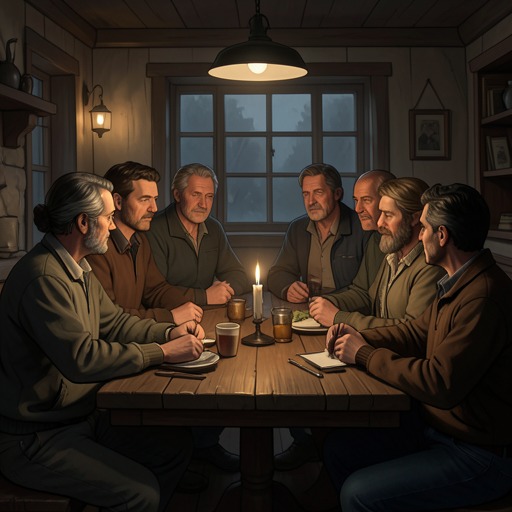
Doña Clara de Viedma
Don QuixoteDoña Clara de Viedma is The Judge’s daughter, and the quiet center of a romance revealed through a song at an inn. She and Don Luis have fallen in love without ever speaking; he follows her in disguise, while she fears that her father will discover him. Their sudden encounter brings their private attachment before The Judge, who postpones a decision about marriage rather than settling it at once.
Identity and Circumstances
Doña Clara is traveling with her father, The Judge. She says she is motherless and has never been able to confide in anyone about the young man who has made signs of his wish to marry her. Her story presents her not as a participant in the inn’s noisy disputes but as someone whose feelings have remained hidden even as her journey brings them close to exposure.
The Song at the Inn
Before dawn, while the women are in their chamber, a voice singing without accompaniment draws their attention. Dorothea wakes Clara so she can hear it. After only a few lines, Clara trembles, embraces Dorothea, and begs her not to make her listen: she recognizes the voice as that of the man she loves.
Clara explains that the singer is Don Luis, the son of a gentleman from Aragon who lives opposite her father’s house in Madrid. While studying, he saw her and communicated his wish to marry through gestures at their windows. Clara came to love him, though she says they had never spoken. When her father prepared to leave Madrid, Don Luis fell ill, and after the family had begun its journey she recognized him at an inn, disguised as a muleteer. He has continued to follow her, hiding from The Judge along the road and at stopping places. Clara is distressed by the hardship of his pursuit and afraid that her father will recognize him and learn of their attachment.
Love, Disclosure, and Parental Authority
Don Luis eventually tells The Judge that he left his father’s house and adopted the disguise to follow Clara, asking to marry her that very day if her father will consent. He presents himself as the sole heir of a wealthy, noble family. The Judge is astonished by the unexpected confession and asks Don Luis to remain at the inn while he considers what would be best. He recognizes the marriage as advantageous for Clara, but would prefer it to take place with Don Luis’s father’s approval, since that father hopes to obtain a title for his son.
Narrative Role and Unsettled Outcome
Clara’s story turns a mysterious voice into evidence of a relationship concealed in plain sight. Its romance is shaped by distance, disguise, and the authority of parents: she and Don Luis have loved one another through signs and observation, but the proposed marriage now depends on a decision by The Judge and, ideally, Don Luis’s father. In the events presented here, that decision remains pending; the song reveals the lovers’ attachment, but does not itself resolve their future.