Don Álvaro Tarfe's Declaration
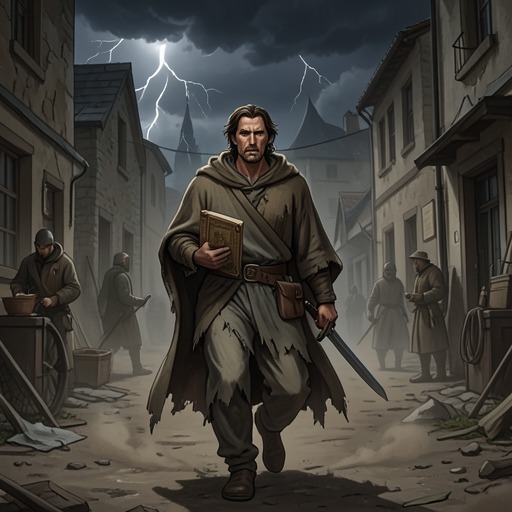
Don QuixoteDon Álvaro Tarfe’s Declaration turns a dispute over literary identity into a formal public act. When Tarfe, a character who has appeared in an apocryphal printed history, encounters Don Quixote of La Mancha and Sancho Panza, he recognizes their names but describes other people. Don Quixote answers not only by insisting on the difference, but by asking Tarfe to attest to it before the village authorities. The declaration gives the distinction legal form, even as the scene makes its deeper evidence visible in the contrasting conduct of the two pairs.
The encounter with a printed double
Don Quixote of La Mancha and Tarfe meet while travelling in opposite directions: Don Quixote is heading toward a village near his own, while Tarfe is bound for Granada. Asked for his name, the traveller identifies himself as Don Álvaro Tarfe. Don Quixote immediately connects him to the recently published Second Part of the history of Don Quixote of La Mancha, written by another author. The encounter therefore begins with recognition, but not the kind that establishes a shared past between the men in front of one another. Instead, Tarfe’s name carries with it a conflicting printed history.
Tarfe confirms that he is the person in that book and recalls the other Don Quixote as a friend. He says he had taken that figure from home, or induced him to go to jousts at Zaragoza, and had shown him kindnesses, including saving him from punishment after an act of rashness. These recollections make the difference more than a disagreement about names: Tarfe believes he has already travelled with a Don Quixote whose adventures and conduct belong to the rival account. Don Quixote asks whether he resembles that man, inviting Tarfe to compare the person before him with the figure he remembers.
The two pairs distinguished
The comparison extends to the squires. Tarfe says the other Don Quixote had a squire called Sancho Panza, but that this man, despite a reputation for wit, never made him laugh. The present Sancho answers by asserting his own identity and contrasting his plentiful jokes with the other squire’s supposed dullness and greed. His response is comic, but it also supplies the encounter with a direct test: Tarfe can hear the difference for himself rather than relying on the names printed in a book.
Sancho also identifies his master through a catalogue of chivalric qualities and commitments. He presents Don Quixote of La Mancha as famous, valiant, wise, devoted to Dulcinea of Toboso, and committed to righting wrongs and protecting vulnerable people. He rejects the alternative pair as dreams and mockeries. The declaration that follows will record Tarfe’s testimony, but Sancho’s energetic intervention has already made the encounter a performance of identity: each pair is distinguished not just by biography, but by speech and manner.
Tarfe accepts that the Sancho before him is unlike the one he knew. He describes the other as more greedy than eloquent and more dull than witty, then struggles to reconcile his recollection of leaving that Don Quixote shut up in the Casa del Nuncio at Toledo with the presence of another, markedly different Don Quixote. He even wonders whether enchanters have involved him in the confusion. His uncertainty shows the pressure exerted by the competing histories: his experience tells him that both accounts have a claim on the same names, while the people before him resist being absorbed into the other version.
From denial to legal declaration
Don Quixote gives Tarfe a concrete reason for the difference. He says he has never been to Zaragoza and explains that, when told the imaginary Don Quixote had attended its jousts, he deliberately avoided entering the city so that he could expose the false account. Instead, he travelled directly to Barcelona. He asks Tarfe to declare, on his honour as a gentleman, that he had never seen the present Don Quixote before, and that neither Don Quixote nor Sancho is the pair Tarfe knew in the printed Second Part.
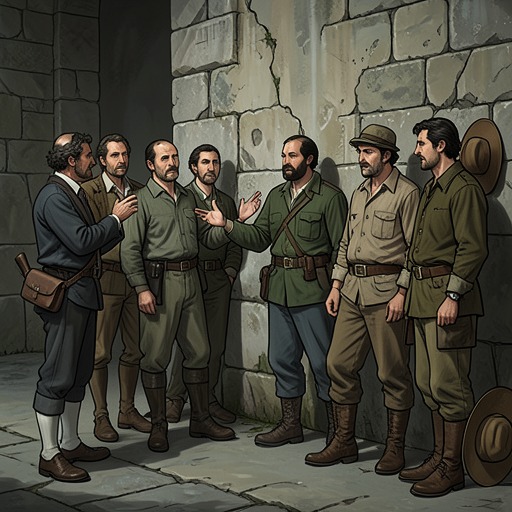
The request becomes an official act at an inn around dinner-time. By chance, the village alcalde arrives with a notary. Don Quixote submits a petition stating that his rights require Tarfe to declare before the alcalde that he does not know the Don Quixote present and that he is not the figure in the published history attributed to Avellaneda. The alcalde puts the declaration into legal form, and Tarfe makes it with the required formalities. The scene thus moves from recognition and argument to testimony: Tarfe’s words are no longer merely a private explanation but a recorded distinction between the two fictional histories.
Tarfe willingly makes the declaration, though the coexistence of two Don Quixotes and two Sancho Panzas still amazes him. He says that what he saw cannot have been what he saw and that what happened to him cannot have happened. The narrator notes the irony that Don Quixote and Sancho rejoice as if the document were essential, when their words and actions already demonstrate how unlike the other pair they are. Yet the legal form matters within the episode: it answers the challenge on the terms Don Quixote has chosen, making Tarfe an external witness to the separation between the accounts.
Parting and narrative consequence
After the declaration, Don Quixote and Tarfe exchange courtesies. Don Quixote’s good sense disabuses Tarfe of his error, while Tarfe remains convinced that his encounter with two such opposite Don Quixotes must involve enchantment. At a fork in the road, one way leads toward Don Quixote’s village and the other toward Tarfe’s destination. Before they part, Don Quixote tells Tarfe about his defeat and the enchantment of Dulcinea of Toboso, including the proposed remedy. Tarfe is astonished anew, embraces Don Quixote and Sancho, and continues on his way.
The meeting also resumes the unfinished business of Dulcinea’s disenchantment. That night Don Quixote gives Sancho an opportunity to continue his penance. Sancho protects his back by striking the bark of the beech trees more than himself; Don Quixote counts the strokes without detecting the deception. Together with the previous night’s count, they total 3,029. Sancho finishes the task during the night, to Don Quixote’s great joy, and the pair travel on expecting Merlin’s promise to be fulfilled. The declaration therefore closes one identity dispute while returning the travellers to the delusion and practical deception that shape their journey. Its formal testimony distinguishes the present pair from their apocryphal counterparts; its comic force comes from the fact that the distinction has been plain in their conduct all along.