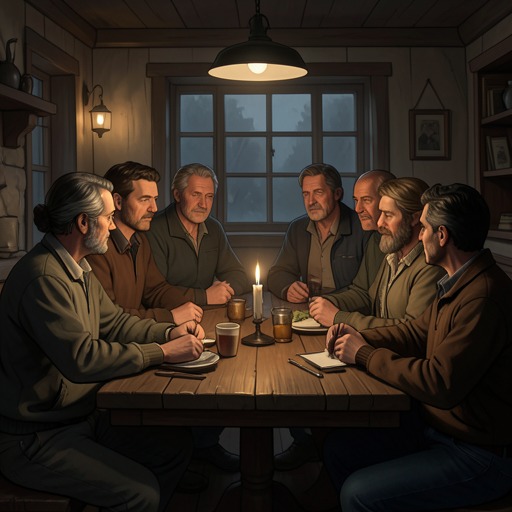
Don Fernando
Don QuixoteDon Fernando, the younger son of a Spanish duke, is presented first through Dorothea’s account of his pursuit of her, then through his consequential interventions at the inn. The contrast is important: his rank and resources initially magnify the pressure he brings to bear on a woman of lower birth, while later those same social advantages enable him to help resolve disputes and arrange safe passage for Don Luis.
Identity and Social Position
In Dorothea’s account, her parents are wealthy farmers and vassals of the duke whose title belongs to Don Fernando’s family. She describes Don Fernando as the duke’s younger son, set apart from his elder brother, who is heir to the family’s dignity. Her family’s wealth gives them standing and prospects, but Dorothea remains acutely conscious of the difference in birth between herself and the young nobleman.
That disparity shapes the warnings Dorothea says her parents gave her. They believed Don Fernando’s pursuit aimed at his own pleasure rather than her advantage, and offered to arrange a marriage with someone she chose. Dorothea recounts this as part of the conflict between his power and her judgment, not as evidence that she welcomed his suit.
Dorothea’s Account of His Courtship
Dorothea says that Don Fernando became passionately interested in her and pursued her through a sustained campaign: he won over members of her household, offered gifts to her parents, arranged nightly music, and sent repeated letters and promises. She acknowledges that being admired by a distinguished gentleman could please her, but says that her sense of right and her parents’ counsel kept her from encouraging him. In her telling, the persistence of his advances strengthened her resistance rather than changing her decision.
When Don Fernando learned that her parents were considering marriage for her, he appeared in her locked chamber. Dorothea says that he pressed his suit there and pledged himself to marry her, calling on Heaven and an image of the Virgin as witnesses. Her account emphasizes that his noble birth did not entitle him to dishonor her, and that she regarded marriage as the condition under which she might freely consent. The scene therefore turns not only on rank and desire, but on Dorothea’s insistence that her consent and honor remain her own.
Peacemaker at the Inn
At the inn, Don Fernando uses a very different kind of influence. When a quarrel over whether a barber’s basin is a helmet and whether a pack-saddle is a horse’s caparison threatens to flare up again, Don Quixote attributes the confusion to enchantment. Don Fernando treats the dispute as an opportunity to manage the room: he gathers the opinions of those present in private and then announces a result that favors the caparison rather than the ass’s pack-saddle. Those who understand Don Quixote’s humor are amused by the performance, while the barber is left to contend with the mock verdict.
The inn’s disorder requires more than a joke. After the Judge and the curate help pacify the company, Don Fernando joins their consultation about Don Luis, whose servants are urging him to return home. The group agrees that Don Fernando will disclose his identity and offer to take Don Luis with him to Andalusia, where Don Fernando’s brother, the marquis, can receive him according to his station. Three of Don Luis’s servants are to return to report the situation; the fourth is to remain with him until further instructions arrive. Don Fernando thus turns his position into a practical arrangement that allows Don Luis to remain with the company without leaving his servants wholly uninformed.
Settlement and Continuing Ties
Once the disputes are being settled, Don Fernando pays the innkeeper’s demand for Don Quixote’s reckoning and the damage and lost wine from the wine-skins. The Judge had also offered to pay, but Don Fernando makes the payment, helping bring the inn’s succession of quarrels to a quiet close. The curate receives credit for his persuasive work, while Don Fernando’s generosity is recognized as part of the settlement.
Before the company separates, Don Fernando and the others embrace and promise to exchange news. He asks the curate to write to him about Don Quixote and undertakes to send accounts of matters the curate would want to hear, including his marriage, Zoraida’s baptism, Don Luis’s affairs, and Luscinda’s return home. The narrative leaves those future reports unwritten, but his farewell establishes him as a continuing correspondent and a link among the people whose stories converged at the inn.