Don Quixote's Pastoral Shepherd Plan
Don QuixoteDon Quixote's Pastoral Shepherd Plan is his proposed answer to a year's enforced retirement: unable to continue as a wandering knight, he imagines becoming a shepherd instead. The plan converts a binding promise to stay in his village into a new literary adventure, complete with pastoral names, songs, companions, and an enduring place for Dulcinea del Toboso. It is an elaborate vision of life in the fields, but the scenes present it as a project to be undertaken, not as an already established change of occupation.
The Defeat and the Year at Home
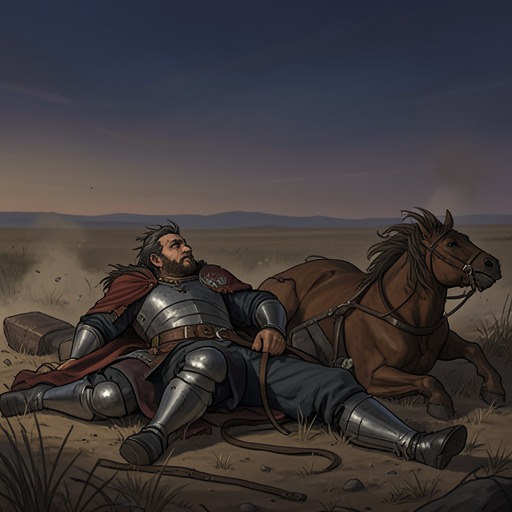
The proposal follows Don Quixote's defeat and the commitment he has made not to leave his village for a year. He tells Samson Carrasco and the curate that he intends to observe this condition exactly, in keeping with his understanding of a knight-errant's pledged word and the laws of chivalry. Rather than treating the year as empty waiting, he recasts it as an interval for the virtuous pastoral life, where solitude will let him give free rein to thoughts of love.
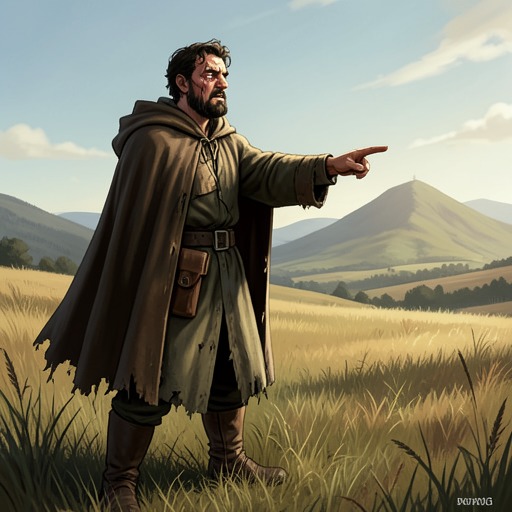
The idea first takes shape when Don Quixote and Sancho Panza reach the meadow where they had previously been trampled by bulls. The same ground now prompts a different kind of imagining: they recall shepherds and shepherdesses who had tried to revive the pastoral Arcadia there. Don Quixote regards that undertaking as both happy and novel, and proposes that he and Sancho imitate it during his retirement. The shift is pointed: the meadow associated with a rough physical reversal becomes the setting for a carefully composed rural future.
A Pastoral World in Detail
Don Quixote's plan is not merely to call himself a shepherd. He imagines buying ewes and the other necessities of the calling, then wandering through woods, groves, and meadows with Sancho. The landscape supplies the furnishings of their imagined life: oak trees offer fruit, cork trunks provide seats, willows give shade, roses perfume the air, and meadows become colorful carpets. Springs, brooks, and rivers provide water, while moon and stars light the nights. Songs and elegies will turn their wandering into a continuing poetic performance and, he hopes, make them famous beyond their own age.
The proposed roles follow the conventions of pastoral romance. Don Quixote will become the shepherd Quixotize, while Sancho is assigned a pastoral name, rendered in the discussion as Panzino and later Pancino. Don Quixote also imagines that Samson Carrasco, Master Nicholas, and the curate will join them. He supplies names for these companions too: Carrascon for Samson, Niculoso for Master Nicholas, and Curiambro or Curambro for the curate. The changing forms of some names belong to the playful, improvised quality of the conversation; naming the company is itself part of making the imagined fraternity feel ready to exist.
Sancho's Part in the Vision
Sancho does not simply receive the plan as another of his master's inventions. He says the life suits his own inclinations and predicts that Samson Carrasco and Master Nicholas will want to join once they see it. He also expects that the curate's cheerful nature may draw him in. His response gives the scheme a household and practical dimension alongside Don Quixote's literary landscape: Sancho imagines making spoons and pastoral accessories, and pictures Sanchica Panza bringing dinner out to the pasture.
That domestic picture also brings Sancho's anxieties into the pastoral world. He worries that Sanchica is attractive and that shepherds may be as susceptible to mischief and unlawful desire as people in cities or palaces. His concern punctures the convention that country life automatically means innocence. In the same exchange, he names Teresa Panza as the woman he would praise, proposing the rustic-sounding Teresona; Samson Carrasco later suggests Teresaina. Sancho insists that his imagined love should remain constant to his wife rather than seek another household's advantages. The plan thus accommodates his marriage and family, even as he tests the pastoral ideal against ordinary risks and obligations.
Poetry, Learning, and the Company
Don Quixote expects the proposed shepherds to make poetry together. He will lament separation and sing for Dulcinea del Toboso; Sancho will present himself as a constant lover; Samson Carrasco will take the role of a rejected suitor; and the curate may choose whatever part suits him. Don Quixote believes his own poetic ability will help the group, and credits Samson Carrasco with being an accomplished poet. He suspects that the curate and Master Nicholas also have some poetic aptitude, adding that barbers are often musicians and versifiers.
Even the instruments receive attention. Don Quixote imagines hautboys, Zamora bagpipes, tabors, timbrels, and rebecks, then explains the albogues as brass plates that make a sound when struck together. The instrument leads him into a digression on words of Morisco origin in Spanish, including words beginning with al. This moment makes the proposal more than a change of costume: Don Quixote turns practical questions about pastoral music into an occasion to display learning, while treating knowledge and poetry as resources for inhabiting the role.
A New Role, Not a Renunciation
When Don Quixote explains the plan to Samson Carrasco and the curate, both are astonished by his new enthusiasm. They nevertheless praise it and agree to accompany him, because they hope that keeping him in the village for the year may help him recover and prevent another departure in pursuit of chivalric adventures. Their assent therefore has a double significance: it supports the pastoral fiction, but it is also a practical attempt to keep Don Quixote close to home.
For Don Quixote, however, shepherding does not mean giving up his established devotion. Dulcinea del Toboso remains the central lady of the imagined company, and he says her name needs no pastoral alteration. The proposal also grows out of the conversation about the obligation Sancho is expected to fulfill to help disenchant her, an obligation Sancho treats skeptically and says he will meet only when he chooses. Pastoral leisure therefore sits beside the continuing demands of knight-errantry, not in place of them. In the available scenes, the plan's significance lies in this attempted redirection: Don Quixote gives a forced year of inactivity its own romance, with the countryside, poetry, friendship, and his ideal lady recast as the materials of a different adventure.