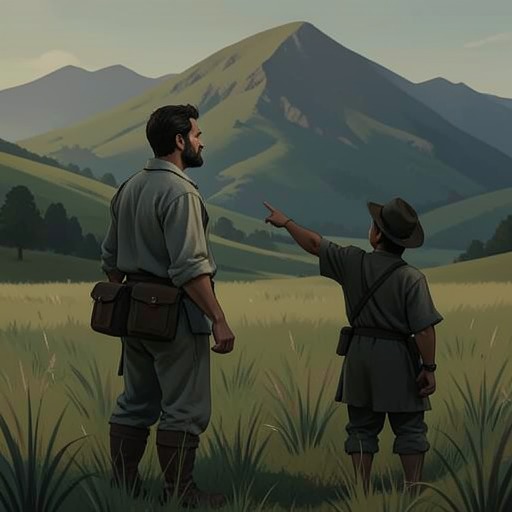
Sancho Falls into a Pit and Is Rescued
Don QuixoteSancho Panza Falls into a Pit and Is Rescued turns a roadside accident into a reversal of fortune: the former governor who had recently sat in authority ends up trapped underground with Dapple, dependent on the help of Don Quixote and the household that had appointed him. Sancho’s fall is frightening, but the episode also exposes the physical hardship behind his brief rule and the unfairness of judging a governor by whether he leaves office rich or poor.
Causes and the Fall
Sancho’s delay with Ricote keeps him from reaching The Duke’s castle before nightfall, although he is less than half a league away. Because it is summer, the darkness does not initially trouble him. He leaves the road to find a place to rest until morning, but while searching among very old buildings, he and Dapple tumble into a deep, dark pit. The accident follows an ordinary need for shelter; it is not a deliberate descent or an adventure Sancho has chosen.
The fall seems to Sancho at first as if it will continue into a bottomless abyss. Instead, Dapple reaches the bottom after a drop of little more than three times a man’s height, and Sancho lands sitting on the animal without injury. He checks his body carefully, expecting to have been broken into pieces, and is relieved to find himself whole. His survival, however, does not solve the immediate problem: the pit’s sides are smooth, offering no foothold by which either companion can climb out.
The Night Underground
Sancho’s fear turns quickly toward the prospect of abandonment. Hearing Dapple lament, he imagines that the two will die of hunger or injuries with no servant, vassal, or neighbor nearby to help them. He contrasts the pit with Don Quixote of La Mancha’s supposed experience in the Cave of Montesinos: where his master had imagined welcoming people, a table, and a bed, Sancho expects only vermin and darkness. The comparison makes the same kind of underground space signify wonder to Don Quixote and imprisonment to his practical squire.
He grieves that, if they perish, they will not die among their own people, where someone might mourn them and close their eyes. He also addresses Dapple as a faithful companion whose service he feels he has repaid poorly, promising a laurel crown and double feeds if Fortune brings them out. Dapple cannot answer, and Sancho’s lament continues through the night. At daylight he calls out repeatedly, but hears no response and concludes that no one is within reach. He helps Dapple stand, then shares with him a piece of bread that fell with their saddlebags. The small meal is a practical kindness amid their fear and hunger.
Finding a Way Through
Sancho then notices an opening in one side of the pit, large enough for a person to enter by stooping and squeezing through. Inside, it widens into a spacious cavity, dimly illuminated by a ray of sunlight entering through what serves as its roof. Sancho returns to Dapple and uses a stone to break away clay until the opening is wide enough for the animal to pass. Taking him by the halter, Sancho ventures onward through the cavern, sometimes in darkness and sometimes with light, but never without fear.
The journey also clarifies the difference between the companions’ ways of interpreting danger. Sancho imagines that Don Quixote would mistake these depths for gardens or palaces and expect to emerge into a meadow; Sancho himself anticipates another pit opening beneath him. He nevertheless keeps moving with Dapple. After what seems to him more than half a league, he sees a faint light resembling daylight and realizes that the passage leads toward an opening. The cavern has not provided an enchanted welcome, but it has given him a route toward rescue.
Discovery and Rescue
The narration leaves Sancho in the cavern and turns to Don Quixote, who is preparing for the next day’s encounter with the man accused of dishonoring Doña Rodríguez’s daughter. While exercising Rocinante, Don Quixote nearly rides into a pit, reins the horse in just in time, and hears someone calling from below. The man identifies himself as Sancho, explains that he has given up the governorship, and says that Dapple is there to confirm his account. Dapple’s loud braying carries through the cave; Don Quixote recognizes both the animal’s sound and Sancho’s voice.
Don Quixote leaves for the nearby castle to tell The Duke and The Duchess. They are astonished not only by Sancho’s fall but also that he has left his government without their receiving word of his departure. They understand how he could have fallen because the ancient cave has long existed there. Ropes and tackle are brought, and many people work together to draw Dapple and Sancho from the darkness into daylight. The rescue completes the passage from isolation to human company, while showing that Sancho cannot free himself by strength alone.
The Governorship in Retrospect
As Sancho emerges hungry and pale, a student remarks that this is how bad governors ought to leave office, suggesting that he is impoverished and has received nothing. Sancho answers that his governorship lasted only eight or ten days and that during that time he never had a full meal, while doctors pursued him and enemies battered him. He insists that he had no opportunity to take bribes or levy taxes. His explanation gives concrete grounds for his poverty: he has not left office empty-handed because he failed to exploit it, but because his brief rule brought hardship rather than profit.
Don Quixote counsels him not to be angered by the student’s slander and points out the trap in public judgment: a governor who leaves rich is called a thief, while one who leaves poor is dismissed as a fool. Sancho accepts that, in this instance, people will probably call him the fool. The episode therefore links the physical pit to the political predicament that follows him out of office. The rescue restores Sancho to daylight, but it does not end the scrutiny of his conduct; his account and Don Quixote’s reply expose how either outcome can be turned against a governor.