Sancho Resigns as Governor of Barataria
Don QuixoteSancho Panza’s resignation as governor of Barataria brings his brief rule to an abrupt end: a staged alarm of invasion makes his new authority seem less a prize than a trap, and he chooses to return to an unburdened life rather than keep the office. The episode moves from public command to helplessness, then from humiliation to a deliberate departure. Its final measure of Sancho’s time in power is not the title he held, but the freedom he reclaims and the modest provisions with which he sets out.
The Alarm at the End of the Seventh Day
The episode begins as Sancho lies in bed on the seventh night of his government, exhausted by the work of delivering judgments, offering opinions, and making laws and proclamations. A rising uproar of bells, shouting, drums, and trumpets interrupts his attempt to sleep. More than twenty people rush toward him carrying torches and drawn swords, declaring that enemies have entered the island and urging their governor to lead the defense. The noise and the claims of danger present the scene as a crisis, but its later disclosure as a joke changes the meaning of everything Sancho has been asked to do.
Sancho initially resists the role being assigned to him. He says that arms and military support are not his business and that his master, Don Quixote, would know how to settle such a conflict. When the others insist that command belongs to him as governor, however, he agrees to be armed. They place a large shield before him and another behind him, fasten them with ropes over his shirt, and put a lance in his hand. The protection that is supposed to equip him instead leaves him unable to bend his knees or take a step. The governor is made into a figure of authority in name, but the practical means of exercising authority have been taken away.
The Mock Defense
The assembled company urges Sancho to march and lead them. He points out that the boards prevent him from moving and asks to be carried to a postern, where he could hold the position with his lance or body. His protest is dismissed as fear, and, under further urging, he tries to advance. He falls under the weight and arrangement of the shields. The people around him do not end the performance; they extinguish their torches, renew the alarm, and continue their mock defense while he remains unable to move freely. One person uses his position atop the shields as a vantage point from which to call out military orders, turning Sancho’s predicament into part of the spectacle.
The alarm ends as suddenly as it began. Voices announce victory and invite the governor to rise and share the spoils. Sancho refuses the honor of a victory he did not win and asks instead for wine and help recovering from the ordeal. The shields are removed, and he sits on his bed, overwhelmed by fear and fatigue before recovering. The supposed invasion has produced no genuine military achievement: the decisive consequence is that Sancho has experienced the emptiness of being called a leader while others control both the crisis and the terms of his participation.
Dapple and the Choice to Leave
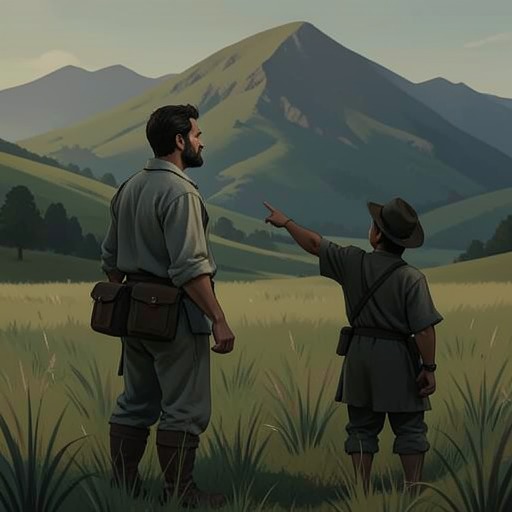
At daybreak, Sancho dresses slowly and makes his way to the stable, followed by the people who had staged the alarm. There he embraces Dapple and kisses the animal on the forehead. His farewell links the present moment to the simpler life he remembers before he left to pursue authority: then, he says, his concerns had been tending Dapple’s harness and feeding him. Since climbing toward ambition and pride, he has found himself beset by troubles and anxieties. The contrast is not between a life of ease and a life of work, but between familiar responsibilities he accepts and the burdensome dignity of office.
Sancho saddles Dapple and tells the majordomo, secretary, head-carver, Doctor Pedro Recio, and the others that he wants his former freedom back. He says that farming and ordinary agricultural labor suit him better than defending provinces or kingdoms. A reaping hook fits his hand better than a governor’s sceptre; he would rather have plain food, rest outdoors according to the season, and live freely than enjoy fine bedding and rich clothing under the restrictions of government. His rejection is grounded in particulars: the office has given him comforts he does not prize, while the doctor’s dietary restrictions have denied him the food he wants. Doctor Pedro Recio offers to remedy the diet and treat his bruises, but the promise comes too late to change his decision.
Departure Without Profit
Sancho also rejects the idea that holding office requires him to stay. When the majordomo says that a departing governor must first render an account, Sancho answers that he will give one to the person appointed by The Duke, whom he is going to meet. He adds that his departure without money is itself evidence that he has governed honestly. The exchange closes the question of whether he will remain: his account is deferred to the authority entitled to receive it, but his decision to leave is settled.
The company agrees to let him go. Its members offer to accompany and provide for him, and they express regret at losing a governor whose judgment and conduct they admire. Sancho asks for little: barley for Dapple, and half a cheese and half a loaf for himself, since the journey is short. The departure is therefore both affectionate and deliberately unceremonious. They embrace him; he embraces them in return, with tears, and leaves them impressed by his sensible resolve. He exits the governorship with no money or desire for its rewards, choosing his companion, modest provisions, and freedom over the office that had appeared to elevate him.