Sierra Morena
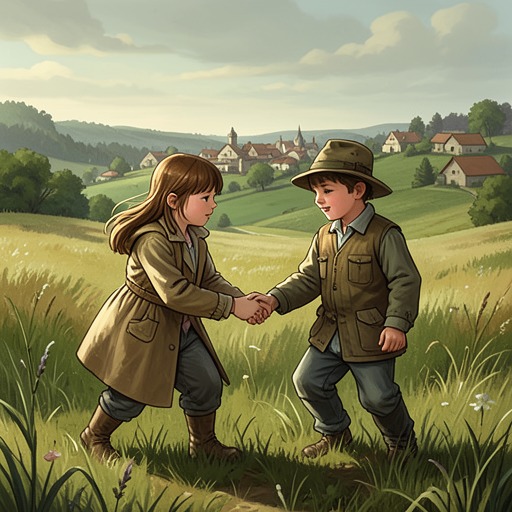
Don QuixoteSierra Morena becomes a refuge, a hiding place, and a stage for self-fashioned chivalry. Don Quixote and Sancho Panza enter its rugged country while escaping the Holy Brotherhood after the galley-slave adventure; there, Sancho loses Dapple, and Don Quixote searches for Cardenio before choosing a secluded spot for his own theatrical penance. The mountain’s role is not merely scenic: its terrain gives the pair temporary concealment, while its isolation brings them into contact with other people’s misfortunes and with the practical consequences of their adventures.
Refuge after the galley-slave adventure
As the Holy Brotherhood’s pursuit threatens to catch up with them, Sancho advises retreat rather than another confrontation. Don Quixote mounts Rocinante, and Sancho leads the way on his ass into the nearby Sierra Morena. Sancho intends to cross the range and emerge near El Viso or Almodovar del Campo, then remain hidden among the crags for several days. The plan is shaped by immediate necessity: the Brotherhood may search for them, and the mountain offers difficult country in which to lie low.
Their provisions have survived the encounter with the galley slaves, despite the looting that followed. Sancho takes this as a fortunate circumstance and calculates how long the stores might sustain them. That practical inventory sets the tone for his role in the mountain episodes. Don Quixote frames events through chivalric expectations, while Sancho repeatedly measures them against escape, food, shelter, and the safety of his animals.
The camp and the loss of Dapple
The two reach the heart of the mountain at night and settle between rocks and among cork trees. Their refuge is only temporary. Gines de Pasamonte, himself hiding from the Holy Brotherhood, comes upon the same place. He recognizes the sleeping travelers and takes advantage of their rest to steal Sancho’s ass, leaving Rocinante behind because the horse would be of little use as a prize to sell or pawn.
At daybreak, Sancho discovers that Dapple is gone. His lament presents the animal as far more than transport: Dapple had been born in his household, belonged to the family, relieved Sancho’s burdens, and helped support him through the money he earned each day. The loss therefore turns the mountain’s apparent shelter into a place of fresh hardship. The episode also exposes the unequal costs of their travels. Don Quixote’s adventures may be tests of honor in his imagination, but Sancho’s missing animal represents lost labor and a direct threat to his livelihood.
Sancho later recounts the theft in detail. He had fallen asleep on Dapple, and the thief propped him on four stakes beneath the corners of the pack-saddle, then removed the animal without waking him. When Sancho shifted at daybreak, the supports gave way and he fell; only afterward did he discover the ass was missing. He later saw Dapple again while traveling with Princess Micomicona, ridden by Gines de Pasamonte in the dress of a gypsy. The return of the animal does not erase the mountain episode: Sancho’s later account preserves both the theft’s humiliating trick and the loss that had prompted his lament.
Cardenio and the mountain’s other story
The Sierra Morena also draws Don Quixote into the search for Cardenio. A goatherd describes a man whose behavior changes between periods of apparent reason and madness: at times he asks shepherds for food courteously, and at other times he takes it by force. The goatherd and companions have considered bringing him to Almodovar so they can learn who he is and notify his relatives, if he has any. Don Quixote, already eager to find the man, resolves to search the mountain’s corners and caves.
Cardenio appears in a gorge near the group. He approaches in tattered clothing, greets them courteously, and is met by Don Quixote, who dismounts from Rocinante and embraces him as if they were old acquaintances. The meeting joins two very different forms of distress: Cardenio’s suffering has made him a figure whom shepherds seek to locate and help, while Don Quixote interprets the encounter through his own codes of courtesy and knightly fellowship. The mountain’s scattered shelters and ravines thus serve as both the setting for concealment and the means by which separate travelers’ stories intersect.
A chosen place for penance
Later, Don Quixote selects a secluded site for imitating the penance of Beltenebros. The setting is a high, isolated peak with a gentle brook at its foot; a green meadow, trees, shrubs, and flowers make the place seem suited to an elaborate lament. Its natural features become part of the performance he imagines: the brook is to receive his tears, and the trees are to witness his sighs and solitude.
Before beginning, Don Quixote dismounts and removes Rocinante’s saddle and bridle. He then releases the horse, turning a practical act into a gesture of knightly renunciation. In this scene the landscape seems to answer the conventions of romance, but the action remains Don Quixote’s deliberate imitation of a literary model. The mountain offers him the solitude he needs to enact that role, while Sancho is left to observe and remember what his master does.
Recollection and narrative significance
Sierra Morena continues to matter when its incidents are recalled later. Sancho explains that the purse he found in the mountain contained a hundred ducats, a windfall that helped draw him back into the dangerous life of a squire. His memory makes the range not only a place of escape and loss but also a source of hoped-for advancement: the imagined prospect of money and future reward competes with the discomforts he has endured.
Across these episodes, the mountain gathers together practical flight, accidental encounters, theft, remembered hardship, and a staged act of romantic suffering. Its rough terrain repeatedly frustrates any simple distinction between adventure and inconvenience. For Don Quixote, an isolated peak can become the ideal setting for a literary performance; for Sancho, the same country means keeping provisions safe, avoiding the Brotherhood, and trying to recover a working animal. Sierra Morena therefore gives physical form to the novel’s recurring contrast between chivalric interpretation and ordinary material need.