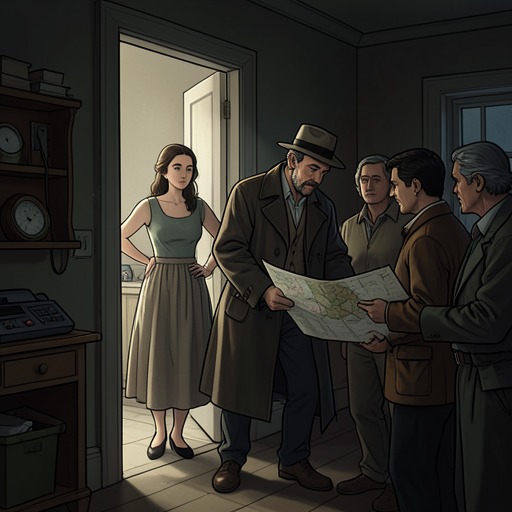
Teresa Panza
Don QuixoteTeresa Panza is Sancho Panza’s wife and the grounded center of the family life that his adventures repeatedly leave behind. She is neither simply a skeptic nor merely an eager beneficiary of his ambitions: she worries about their children, the risks of climbing beyond their station, and the household’s immediate needs, yet becomes keen to enjoy the advantages when Sancho’s promised advancement appears real. Through her questions, arguments, and letters, the distant prospect of governorship is brought back to food, clothing, work, marriage, and the opinions of neighbors.
Identity and Household
Teresa lives in La Mancha with Sancho and their children. At Sancho’s return from his first travels with Don Quixote, she runs to meet him and asks first whether the ass is well. Her practical priorities are plain: she wants to know what his service has brought home, including clothes for herself and shoes for the children. Sancho offers promises of future rank instead of such immediate goods, assuring her that another expedition might make him a count or governor. Teresa does not yet treat those titles as dependable provision; she asks what he means by islands and vassals, while he urges her to wait until his imagined elevation can be seen for itself.
The exchange exposes a household in which Sancho’s aspirations are shared only unevenly. He speaks of adventure as a route to consideration and wealth; Teresa measures it against the family’s material needs and her limited confidence in explanations that have not yet produced a visible return. Her attention to the ass, clothing, and children gives the story’s repeated promises of advancement a domestic scale. Rank matters to her, but it cannot substitute indefinitely for the ordinary benefits she expects a husband’s absence to bring.
Ambition, Marriage, and Social Station
When Sancho prepares to join Don Quixote on a third expedition, he explains that necessity and the hope of finding another hundred crowns pull him away, while leaving Teresa and the children makes him unhappy. He imagines the household’s future in terms of a governorship and a daughter elevated to a countess. Teresa counters with a specific alternative: their daughter should marry Lope Tocho, a sturdy young man they know, who belongs to their own social world. A familiar match, she argues, would keep the family close and avoid placing their daughter in a grand household where she might be treated as low-born and feel out of place.
Teresa’s resistance is not a denial of her daughter’s worth. It is a judgment about what social elevation might cost. She fears that a change from plain village clothes and speech to courtly dress and titles would leave the girl exposed to ridicule rather than secure her happiness. She also rejects the idea that Sancho should determine the marriage simply because he hopes for political success. Her preferred future is a connected family, with parents, children, grandchildren, and in-laws living near one another, rather than a spectacular ascent that could separate them from their community.
She extends the same caution to herself. Teresa is content with the name and standing she knows, and dislikes the prospect of adopting grand titles and clothing that would invite neighbors to say she was putting on airs. Her attachment to equality and village life is practical as well as moral: she does not want the family to become a spectacle, or to be mistaken for people entitled to a status they have not securely acquired. Sancho, by contrast, treats fortune as an opportunity that should be seized before it passes. Their disagreement turns the imagined governorship into a domestic conflict over who may choose their daughter’s future and what kind of life counts as success.
Letters and the Reality of Advancement
The news that Sancho has actually been made governor alters Teresa’s position. In her letter to The Duchess, she acknowledges receiving coral beads and a hunting suit, objects whose arrival makes the report more believable than village gossip alone. She notes that people in the village, including the curate, Master Nicholas, and Samson Carrasco, doubt that Sancho is suited to govern; their skepticism does not keep her from asserting that the appointment is real. She asks for money so that she and her daughter can travel to court in a coach, where their appearance might make Sancho better known. The letter marks a shift: the woman who feared that aristocratic display would expose the family to mockery now considers making that display work to their advantage.
Her delight remains tied to practical calculation. Teresa estimates the costs of provisions at court, asks that the money be substantial enough to meet them, and imagines recognition flowing through the family’s appearance in public. At the same time, she sends The Duchess about half a peck of acorns, gathered and selected by Teresa herself, although the village crop has been poor. The gift combines deference with the evidence of her own labor and local knowledge; even as she imagines a coach and courtly notice, she remains attentive to what the village can provide.
In her letter to Sancho, Teresa describes the news of his appointment as almost unbelievable despite the suit, beads, and correspondence before her. Her hopes now extend beyond the governorship to a future office involving the collection of revenue, because such work handles money. She also reports that their daughter earns eight maravedis a day making lace and saves the proceeds toward furnishing a home, while suggesting that her new position as a governor’s daughter may change what the girl needs to earn. The letter’s broader village report includes scarce olives and vinegar, a dry public fountain, and the departure of three local girls with passing soldiers. Teresa’s account keeps advancement in contact with the precarious circumstances of the community from which the family comes.
Marriage, Affection, and Everyday Knowledge
Teresa’s domestic presence reaches Sancho even when he is far from home. At Master Pedro’s show, Sancho pays to hear what his wife is doing. The showman claims she is hackling a pound of flax beside a jug with a broken spout containing wine. Sancho accepts the detail as credible and responds with affection, while teasingly noting her jealousy and her tendency to provide for herself even if that leaves less for her heirs. The episode gives their relationship a familiar, teasing intimacy: Teresa is not an abstract reward awaiting a governor, but a person whose work habits and household ways Sancho believes he knows.
The couple’s bond is also visible in their parting. Before the third expedition, Sancho describes his pleasure at returning to service with Don Quixote as mixed with sadness at leaving his wife and children. Teresa complains that his association with a knight-errant has made his speech difficult to follow, but she helps prepare for his absence by being asked to care for Dapple and ready the animal’s feed and gear. Their different temperaments do not erase mutual concern: Sancho goes, Teresa remains, and the practical arrangements of departure make their separation part of the adventure’s cost.
Return and Narrative Role
After Sancho leaves his governorship and returns home, Teresa again tests his claims against what she sees. She comes out to meet him with their daughter, but his tired, footsore appearance does not resemble her idea of a governor returning in state. Sancho assures her that he has brought money earned through his own effort and without wronging anyone. Her first response is characteristic: the money matters, while the precise method by which he acquired it seems less important than its usefulness. Their daughter embraces him, and the family goes home together, with Dapple led alongside them.
Even after the governorship ends, Teresa remains within Sancho’s plans for a different imagined future. When Don Quixote proposes that they become shepherds, Sancho chooses the pastoral name Teresona for his wife, linking it to her given name and stoutness and presenting his intended devotion as faithful. Samson Carrasco later suggests Teresaina as a possible shepherdess’s name. These comic transformations are made in Teresa’s absence: Sancho’s plans assign her a place in a new fantasy, but the narrative’s earlier scenes have already given her a distinct voice, preferences, and resistance to being remade as a grand lady. Her role is to keep the promise of social elevation answerable to family obligations, local reputation, and the tangible work of making a life.