The Apocryphal Second Part of Don Quixote
Don QuixoteThe Apocryphal Second Part of Don Quixote is a rival continuation that makes authorship and identity part of the adventure: its claims about Don Quixote and Sancho Panza are tested against the people they represent. First encountered as a book discussed and read nearby, and later recognized as a printed work in a Barcelona press, it provokes Don Quixote to defend his constancy and correct the record. Its most consequential error changes his route: rather than visit Saragossa, as the false history says he does, he resolves to go to Barcelona and thereby distinguish himself from its counterfeit hero.
A rival history enters the scene
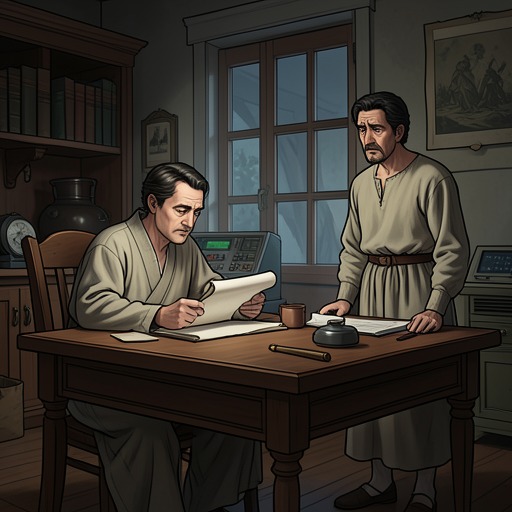
The book first intrudes during supper at an inn. From the room next to Don Quixote’s, separated from his by only a thin partition, he overhears Don Juan asking Don Jeronimo to read another chapter of the Second Part. Don Jeronimo objects that anyone who has read the First Part could find little pleasure in this continuation. Don Juan is willing to read it despite its faults, but identifies one claim as especially objectionable: the book represents Don Quixote as cured of his love for Dulcinea del Toboso.
The episode makes the disputed book present before Don Quixote has seen it. A statement about its hero reaches the hero himself through a wall, and he answers from the adjoining room. His indignant defense turns the question of literary representation into a personal test: the continuation has not merely described him inaccurately, but contradicted the constancy he regards as central to his identity. Sancho Panza immediately identifies the speaker, insisting that it is Don Quixote himself who will stand by what he has said.
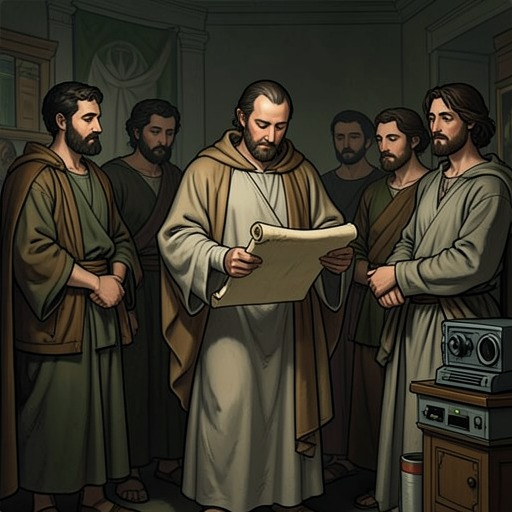
When two gentlemen enter, one embraces Don Quixote and recognizes the correspondence between his appearance and name. The gentleman calls him the genuine Don Quixote and presents the book as the work of an author who has usurped his name and nullified his achievements. The physical volume thus becomes evidence in a dispute over who may claim the character and whose account should count as his history.
Errors of identity and authority
Don Quixote reads only a little before returning the book, but he gives three specific grounds for censuring it. He objects to words in its preface, to its Aragonese language and occasional omission of articles, and, above all, to its account of Sancho Panza’s wife. The continuation calls her Mari Gutierrez, whereas Don Quixote insists her name is Teresa Panza. He treats this domestic detail as a test of the historian’s reliability: if the account errs on a point so important, its other claims also become suspect.
Sancho takes up the correction with particular force. He mocks the supposed historian’s knowledge of their affairs and asks the gentlemen to check whether the book has changed his own name as well. Don Jeronimo identifies him as Don Quixote’s squire; Sancho confirms the identification and says he is proud of it. Their exchange makes the challenge more than Don Quixote’s solitary indignation. The names and relationships the continuation mishandles are matters both companions can affirm, and Sancho’s confident response gives the correction its own comic authority.
The disagreement is therefore about more than whether the book is good or bad. Don Juan grants that even a poor book may contain something worthwhile, while Don Jeronimo rejects the continuation in comparison with the First Part. Don Quixote, in turn, judges it both as writing and as a history that has failed to get its people right. His limited reading matters: he bases his particular corrections on what he has seen, then declines to continue. The episode sets the rival account against personal testimony without suggesting that Don Quixote has examined every page.
A false itinerary changes the real one
The gentlemen ask where Don Quixote intends to travel. He names Saragossa and its annual harness jousts. Don Juan counters that the new history already depicts Don Quixote taking part in a tilting at the ring there, and disparages that episode’s invention, mottoes, and costume. Don Quixote draws a practical conclusion from the discrepancy: he will not go to Saragossa, so that his actions will expose the false history and show that he is not the Don Quixote it describes.
Don Jeronimo proposes that Don Quixote display his prowess at the jousts in Barcelona instead. Don Quixote accepts the destination. The rival narrative thus exerts an unusual influence over the plot without determining the action it claims to record. Its version of the hero’s Saragossa adventure becomes the reason the living Don Quixote avoids that city. The decision also makes the distinction between the two accounts visible through conduct: Don Quixote means to prove the divergence not by arguing further over the book, but by doing something different from what it reports.
The route change gives the dispute a consequence beyond the inn conversation. The book’s assertion becomes a constraint Don Quixote chooses to resist, and Barcelona offers an alternative setting in which his deeds can be distinguished from the printed account. The narrative presents this as his deliberate response to a specific false episode, not as a general rejection of travel or public display.
From read volume to printed sheet
Don Quixote later encounters the continuation in a Barcelona printing office, where a sheet is being corrected. He learns its title as The Second Part of the Ingenious Gentleman Don Quixote of La Mancha, by one of Tordesillas. He says that he had heard of it and had thought it would already have been burned as an intrusive work. His reaction links the earlier volume passed to him at the inn with the actual process of printing: the disputed account is not just spoken about but is being prepared for circulation.
At the press, Don Quixote offers a principle for fiction: the closer it approaches truth, or what looks like truth, the more merit and charm it possesses; true histories, he adds, are better the truer they are. The statement sharpens the standard by which he has judged the continuation. Its invented account is objectionable not simply because it differs from his self-image, but because errors in recognizable particulars compromise the appearance of truthful history on which such a work depends. He leaves the office visibly displeased.
Across these encounters, the book works as a counter-image against which the narrative tests names, loyalties, and actions. Its claim that Don Quixote has abandoned Dulcinea del Toboso meets his insistence on constancy; its mistake about Teresa Panza invites Sancho’s correction; its Saragossa episode sends Don Quixote elsewhere. When the printed sheet reappears, the question of representation has become inseparable from the material means by which a version of the story reaches readers. The rival continuation can claim his name, but the living characters answer it through correction and choice.