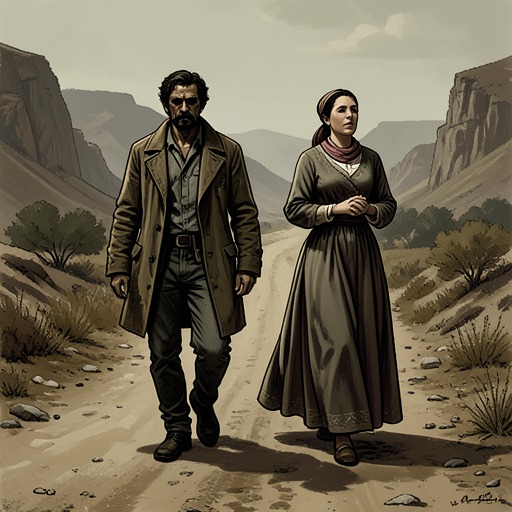
The Expulsion of the Moriscos from Spain
Don QuixoteThe Expulsion of the Moriscos from Spain emerges as a policy whose claims of collective security collide with the particular lives of Ricote, Ana Felix, and Don Gregorio. The episode gives the policy a public rationale through Ricote’s description of its enforcement, then turns to the uncertain efforts to protect his family from separation and exile.
Policy and Enforcement
In Barcelona, The Viceroy of Barcelona and Don Antonio Moreno consider how Ricote and Ana Felix might be allowed to stay in Spain. Ricote rejects the suggestion that influence or payment could settle the matter: he says that Don Bernardino de Velasco, Conde de Salazar, whom Philip the Third has entrusted with carrying out the expulsion, will not yield to entreaty, promises, bribes, or appeals to compassion.
Ricote describes Velasco’s policy as a severe remedy applied to an entire population. In his account, the official believes the Moriscos collectively tainted and fears that anyone concealed in Spain could become the source of future danger. Ricote praises Velasco’s vigilance and the king’s decision to entrust him with the task. This is Ricote’s own account of the policy and its rationale; the episode presents it as a forceful political judgment, not as an independently verified assessment of every Morisco.
A Family Caught in the Policy
The conversation is not abstract for Ricote. He is present while his daughter Ana Felix’s case is discussed, and his insistence that appeals will fail underscores the limits placed on her prospects by the general expulsion. Don Antonio nevertheless proposes to make efforts at the capital. Pending those efforts, he offers to have Ana Felix stay with his wife or in a monastery, while Ricote is to remain in the viceroy’s household.
The Viceroy of Barcelona agrees to this temporary arrangement. Don Gregorio, however, says he cannot leave Ana Felix. He accepts the plan only because he intends to visit his parents and seek a way to return for her. His departure therefore carries a promise of attempted reunion, not a settled resolution: Ana Felix remains with Don Antonio’s wife, Ricote with the viceroy, and Don Gregorio sets out separately.
Separation and Uncertain Outcomes
When Don Antonio leaves, Don Gregorio and Ana Felix part in a scene marked by tears, sighs, and sobs. Ricote offers Don Gregorio a thousand crowns for his journey; Don Gregorio declines the offer and accepts only five crowns lent by Don Antonio, which he promises to repay at the capital. The small sum accepted contrasts with the larger offer, while the parting makes the policy’s personal cost visible in the separation of the couple.
The episode does not establish whether Don Antonio’s efforts succeed or whether Ricote and Ana Felix are ultimately permitted to remain. Instead, it closes this portion of their story with provisional shelter, an intended journey, and a separation whose duration is unknown. The uncertainty is central to the event’s representation: individual attachment and apparent Christian commitment do not, in this scene, guarantee protection from a policy directed at an entire community.