The False Siege of Barataria and Sancho's Resignation
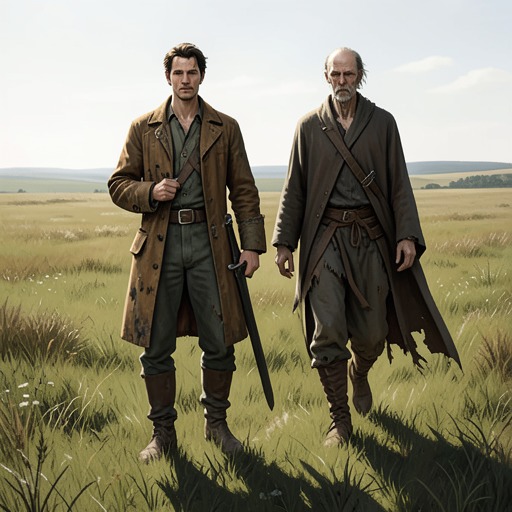
Don QuixoteThe False Siege of Barataria and Sancho's Resignation turns a staged emergency into the decisive end of Sancho Panza’s governorship. Called from bed to defend an island supposedly under attack, he is armed so awkwardly that he cannot move, knocked down, and trampled by the very people demanding his leadership. When the alarm ends in a proclaimed victory, Sancho does not claim credit or spoils: he asks to be released, embraces Dapple, and leaves Barataria with only modest provisions. The episode makes the governor’s title a cruel joke, but gives Sancho’s departure the force of a clear, self-chosen return to ordinary life.
The Alarm and Its Stakes
The episode begins with the narrator’s reflection on how worldly conditions turn in cycles while human life itself rushes toward its end. That meditation gives way to a more immediate vanishing: Sancho’s government, the narrator says, disappears like smoke and shadow. The contrast makes the abruptness of the ending part of the event’s design. Sancho has spent the day delivering judgments, offering opinions, and making laws and proclamations; at night, just as sleep begins to overcome him, bells, shouting, drums, and trumpets make it seem that the island is about to sink.
More than twenty people approach with lit torches and drawn swords, announcing that countless enemies have invaded and that the island depends on the governor’s skill and courage. Sancho, dazed by the commotion, refuses the idea that he knows anything about weapons or military support. He points instead to his master, Don Quixote, as the person who could settle such a crisis. The company answers that military command belongs to Sancho by virtue of his office. The sudden transformation of a sleeping judge into a supposed captain makes the governorship’s demands seem both inflated and absurd.
A Governor Bound for Battle
Sancho eventually consents to be armed, but the equipment makes action impossible. Two large shields are fixed over his shirt, one at the front and one behind; ropes bind them tightly around him, leaving him unable to bend his knees or take a step. A lance is put into his hand so that he can lean on it and avoid falling. The assembled men nevertheless urge him to march at their head and serve as their guide. Their confidence in his leadership is sharply at odds with the body they have immobilized.
Sancho explains that he cannot move and asks to be carried to a gate or postern, where he could defend the position with his lance or even his body. The others insist that fear, not the boards, is keeping him still, and press him to advance as the danger supposedly grows. When he tries, he crashes to the ground. The narrator compares him to a tortoise trapped in its shell, a side of bacon caught between kneading-troughs, and an overturned boat on a beach. These comic images register the physical indignity of a man made into a shielded, helpless object just as he is being addressed as commander.
The torches are extinguished, and the mock battle intensifies around the fallen governor. The jokers shout orders about defending a breach and shutting a gate; one climbs onto Sancho and uses him like a watchtower from which to direct the troops. Others stumble over him or fall upon him, while swords slash at the shields. Sancho curls inward and draws his head between them to protect himself, sweating and praying to be delivered from the ordeal. The supposed defense of Barataria is thus enacted over and upon its governor’s body, while he longs for the island to be lost so that his torment will end.
Victory, Injury, and Recognition
At last, voices announce that the enemy has retreated and been beaten, and invite Sancho to rise and share the spoils. He rejects both the victory and its rewards, asking instead for a drink of wine and someone to wipe him dry because he is parched and drenched in sweat. His response punctures the martial performance: the only immediate consequences he recognizes are thirst, exhaustion, and pain. The shields are removed, and he sits on his bed before fainting from fear, agitation, and fatigue. The people responsible for the joke regret having carried it so far; when he recovers, he asks the time and says nothing more.
At daybreak Sancho dresses slowly, badly bruised, and walks with difficulty to the stable. There he embraces Dapple and kisses the ass on the forehead, addressing him as companion and partner in his hardships. He remembers his earlier days as happier, when his cares were limited to mending Dapple’s harness and feeding him. Since leaving him and climbing toward ambition, Sancho says, miseries, troubles, and anxieties have entered his life. The stable-side farewell gives the cost of office a personal measure: the loss is not an abstract burden of power but separation from a familiar companion and a simpler routine.
Resignation and Return
After saddling Dapple, Sancho addresses the majordomo, secretary, head carver, Doctor Pedro Recio, and the others who have gathered. He asks them to let him recover his former freedom and go back to his past life. Ploughing, digging, tending vines, and pruning suit him better, he says, than defending provinces and kingdoms. He prefers a reaping-hook to a governor’s sceptre, plain gazpacho to the deprivation imposed by the doctor’s meddling, and the freedom of shade in summer and a sheepskin jacket in winter to fine bedding and luxurious clothes under the constraints of government. The physical details make his rejection concrete: comfort and rank cannot compensate for hunger, injury, and lost autonomy.
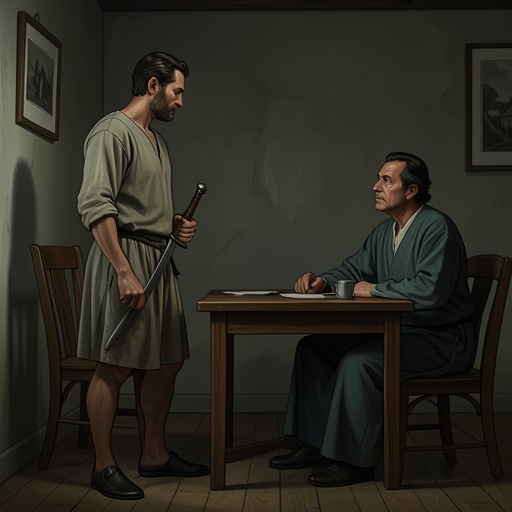
Sancho also declares that he entered the governorship without a farthing and leaves it without one. His empty-handed departure is his answer to the familiar suspicion that office is a route to enrichment. Doctor Pedro Recio offers a remedy for his bruises and promises that he will be allowed to eat what he likes, but the offer comes too late. Sancho refuses to stay for another term or accept another government, likening the ambition that raised him to wings that have lifted an ant into the air, where birds may devour it. He insists on returning to level ground and ordinary means of living.
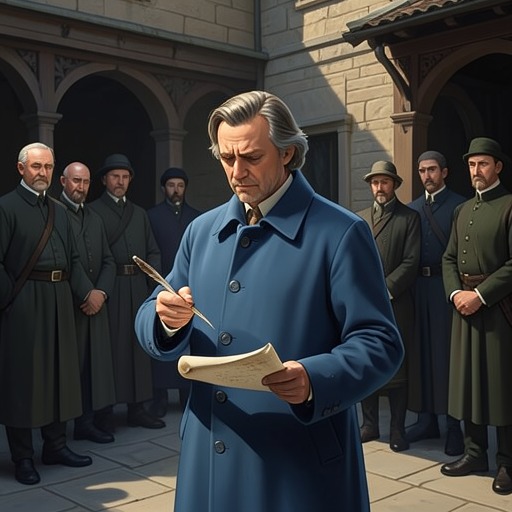
The majordomo says that governors are expected to render an account before leaving and refers to the ten days Sancho has held office. Sancho answers that he will give an exact account to the person appointed by The Duke; in any case, he argues, leaving without possessions shows that he has governed like an angel. Doctor Pedro Recio agrees that he should be allowed to go, and the company accepts the decision. They offer to accompany him and supply what he needs, but Sancho asks only for a little barley for Dapple, half a cheese, and half a loaf, since the journey is short. After the company embraces him, he embraces them in return with tears and rides away. The departure closes the false siege’s reversal: the man pressed into command chooses freedom over the title, carrying no spoils from Barataria and no wish to prolong its rule.