The Viceroy of Barcelona
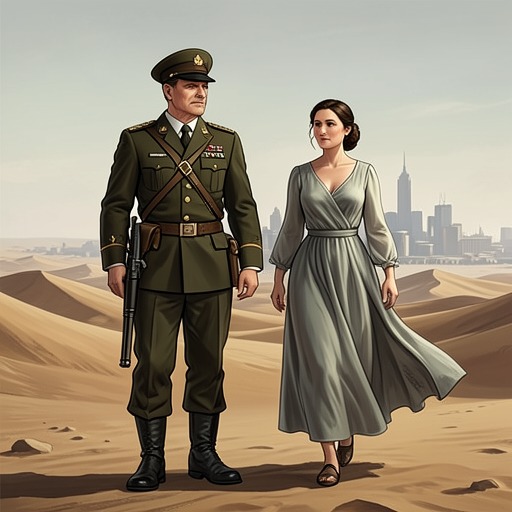
Don QuixoteThe Viceroy of Barcelona is a public authority figure whose decisive appearances in Barcelona put him between spectacle and consequence. When Don Quixote prepares to fight the Knight of the White Moon, the viceroy tries to establish whether the challenge is a serious contest or another joke at the knight’s expense; when Ricote and Ana Félix face the consequences of the expulsion of the Moriscos, he agrees to a temporary arrangement that keeps them under protection. In both episodes, he responds to uncertain circumstances with practical intervention, though neither encounter gives him power to settle every outcome.
Identity and Place in the Narrative
The narrative gives little personal background for the Viceroy of Barcelona; his role is defined by the authority he exercises in the city and by his responses to people whose immediate circumstances demand a decision. He is not the instigator of the White Moon challenge, nor the person who devised the plan to help Ricote’s family remain in Spain. Instead, he enters events already in motion and must judge what action is possible: whether a public combat should proceed, and how a family threatened by expulsion might be sheltered while others seek a more lasting solution.
That position makes him a hinge between private stories and public power. Don Quixote treats the challenge as an affair of knightly honor, while the viceroy sees two armed riders about to charge and asks what has brought them to combat. Later, the private distress of Ricote and Ana Félix is discussed in terms of the state’s policy and the prospects of securing permission for them to stay. The viceroy’s interventions do not erase these different frames; they make room for action where the characters’ own resources are limited.
The Challenge on the Beach
The viceroy learns that the Knight of the White Moon is speaking with Don Quixote and hurries to the beach with Don Antonio Moreno and other gentlemen, suspecting that a fresh adventure may have been arranged. There, he sees Don Quixote turning Rocinante to gain distance while his opponent prepares to do the same. The sight of an imminent charge moves the viceroy to place himself between them and ask what has prompted their sudden combat. The Knight of the White Moon explains that the question is the precedence of beauty and summarizes the challenge and its agreed conditions.
Uncertainty persists even after this explanation. The viceroy asks Don Antonio whether he knows the challenger’s identity or whether the confrontation is a joke being played on Don Quixote. Don Antonio can confirm neither who the knight is nor whether the challenge is in earnest. The viceroy is therefore left to decide without resolving the essential doubt. He believes the encounter may be a jest, but Don Quixote remains inflexible and the Knight of the White Moon more so; the viceroy ultimately permits them to proceed rather than force an end to the contest.
The fight turns quickly against Don Quixote. The Knight of the White Moon meets him after traversing two-thirds of the course and knocks him and Rocinante to the ground without striking him with the lance. The viceroy and the others hear the victor demand that Don Quixote accept the challenge’s conditions. Don Quixote refuses to concede anything against Dulcinea’s beauty, but agrees to the remaining condition: he must return home and refrain from taking up arms for a year, or for the period his opponent specifies. The viceroy has allowed the combat, but its terms—not the viceroy—determine the immediate consequence.
After the Knight of the White Moon rides away, the viceroy tells Don Antonio to follow him and discover who he is. Meanwhile, those present raise Don Quixote and uncover his face; Rocinante cannot yet move, and Sancho Panza is left dejected, fearing for both his master and his hopes of reward. The viceroy has Don Quixote carried into the city in a hand-chair and returns there himself, eager to learn the challenger’s identity. His response shifts from managing an imminent public danger to investigating the unknown person who has imposed a year of retirement on Don Quixote.
Ricote, Ana Félix, and Temporary Shelter
Two days later, the viceroy discusses with Don Antonio what can be done to let Ricote and Ana Félix remain in Spain. The question is not merely personal: Ricote says that the official entrusted with the expulsion will not be moved by entreaties, promises, bribes, or appeals to compassion. Don Antonio nevertheless offers to make efforts at the capital, while proposing that Don Gregorio travel with him to relieve his parents’ anxiety, that Ana Félix stay with Don Antonio’s wife or enter a convent, and that Ricote stay with the viceroy until the attempt has been made.
The viceroy agrees to this arrangement. Don Gregorio objects that he cannot leave Ana Félix, but accepts the plan because he means to see his parents and find a way to return for her. Ana Félix stays with Don Antonio’s wife, while Ricote is lodged in the viceroy’s house. This is shelter rather than a settled right to remain: the proposed appeal still lies ahead, and Ricote himself has explained why influence and bribery may not overcome the expulsion policy. The viceroy’s house nevertheless becomes part of a practical network of care, alongside Don Antonio’s household and the proposed journey to the capital.
When Don Antonio departs, the separation of Don Gregorio and Ana Félix is marked by tears, sighs, swooning, and sobbing. Ricote offers Don Gregorio a thousand crowns, but Don Gregorio accepts only five lent by Don Antonio and promises repayment at the capital. The viceroy’s agreement has helped prevent an immediate separation of father and daughter and has provided Ana Félix and Ricote with places to stay; it has not yet reunited the lovers or secured the family’s permanent future. Don Quixote and Sancho Panza leave later, delayed because Don Quixote cannot take the road sooner after his fall, while the arrangements for Ricote and Ana Félix remain dependent on Don Antonio’s efforts.