The captive’s escape from Algiers with Zoraida
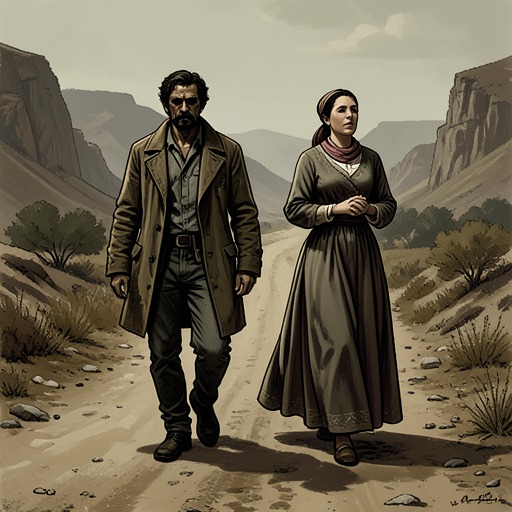
Don QuixoteThe captive’s escape from Algiers with Zoraida is a story of collective flight shaped by covert communication, ransom negotiations, and divided loyalties. Captain Viedma recounts how Zoraida, the wealthy daughter of Hadji Morato, secretly aided a group of Christian captives and chose to leave her home with them. Their departure frees the prisoners from Algiers, but it does not end their dangers: the escape places Zoraida between her devotion to her father and the future she seeks, and leaves the fugitives to face a hazardous voyage with little certainty about what awaits them in Spain.
Captivity and the possibility of escape
Captain Viedma’s account begins with his capture during a naval battle. He had joined the fighting as a captain of infantry and was taken after boarding an enemy galley in an effort to aid another Christian vessel. First carried to Constantinople, he was later brought to Algiers, where he remained a prisoner under Hassan Aga. Because Viedma was a captain, he was classified among those expected to be ransomed and held in a prison for captives. This status offered a possible route to release, but captivity still meant confinement and uncertainty; prisoners without an individual master could face especially difficult prospects for ransom.
The first sign of a different possibility came from a small barred window overlooking the prison courtyard. While Viedma and three companions were on the terrace, a reed bearing a cloth appeared at the window and was repeatedly lowered and raised. The others tried to approach it, but the unseen sender dropped it only when Viedma stood beneath it. Inside the cloth were ten gold coins. A small cross made from reeds followed, suggesting to the prisoners that the sender was a Christian woman living in the house.
A written message soon explained the gesture. The woman described having learned Christian prayers as a child from a captive who had served in her father’s household. She wanted to reach Christian territory and proposed that Viedma help her, offering money and the prospect of marriage if they could escape together. Viedma and his companions enlisted a renegade who could read and write Arabic. He translated her message and agreed to assist them, both in the escape and in the hope of returning to the Christian Church.
A plan funded through the window
The woman identified herself as Zoraida and disclosed that her father, Hadji Morato, was wealthy and that she had access to his money. In a further message, she proposed a practical plan: prisoners could be ransomed, one of them could obtain a vessel, and the vessel could return for the others. She also named her father’s garden near Babazon Gate as the place where she expected to stay. The renegade advised against sending a freed captive away to buy a boat, warning that captives who regained their liberty did not always return as promised. Instead, he proposed secretly purchasing a vessel in Algiers and bringing the group out together.
That plan carried its own risks. The authorities restricted renegades from owning small vessels, fearing that they would be used to escape to Christian territory. The renegade therefore arranged to buy a boat with a Tagarin Moor, presenting the venture as a trading enterprise. Zoraida supplied the means: over successive exchanges through the reed and cloth, she sent money, including a later gift of two thousand gold crowns. Five hundred crowns went to the renegade for the vessel. Viedma used eight hundred crowns to arrange his own release through a Valencian merchant, whose security for payment avoided drawing suspicion by presenting the ransom money openly. The other three companions were also freed through the merchant, without being told the full plan.
Before she left for her father’s garden, Zoraida sent a further thousand crowns and asked Viedma to find an opportunity to visit her there. He did so, learning the garden’s approaches and exits while pretending to look for herbs. When they met, he and the renegade discussed what would happen to Hadji Morato. Zoraida insisted that her father not be harmed and that nothing be taken from the house beyond what she herself chose to carry away. Her condition set a limit on the escape plan: she would leave, but would not consent to treating her father or his household as spoils.
The night departure from Algiers
The renegade’s vessel was ready within fifteen days. He made several trading voyages to Shershel to make its presence seem ordinary, anchoring near the garden on each passage. On the appointed night, the released captives and their companions gathered near the vessel. Some expected to win their freedom by force and did not know the renegade’s plan. He persuaded the group to secure the boat first, then go for Zoraida. The men on board submitted, and the Christians tied them up to prevent them from raising an alarm.
The party reached the garden quietly. Zoraida recognized them, came down to meet them, and brought a trunk filled with gold crowns. Hadji Morato woke during the escape and called out for help. The renegade and several men went to him and brought him to the vessel, while Viedma stayed beside Zoraida. Once on board, Zoraida asked that her father and the other bound Moors be released. The renegade argued that doing so immediately would give them the opportunity to raise the alarm and bring pursuit. The group agreed instead to free them on the first Christian ground they reached. Zoraida accepted this explanation, though her concern for her father would remain central to the flight.
The vessel initially aimed for Majorca, the nearest Christian land, but a rising Tramontana wind and rougher sea forced it toward the coast in the direction of Oran. During the journey, Hadji Morato threw himself into the sea. Zoraida called for him to be saved, and the fugitives pulled him back aboard. They later sheltered at Cape Cava Rumia, where, at Zoraida’s request, they set her father and the other Moors ashore. The place provided a temporary haven from the sea, but not a safe conclusion to their escape.
Corsairs, landfall, and the aftermath
As the vessel continued toward Spain, a French ship crossed its course. The renegade suspected that the strangers were corsairs and instructed the group not to answer their questions. The French vessel fired on them, damaging their mast and hull and forcing the fugitives to abandon ship. The corsairs took the survivors aboard and robbed them, including taking Zoraida’s anklets. The renegade managed to drop the trunk containing her wealth into the sea without being noticed. The French crew eventually gave the fugitives a boat, water, and biscuit as they approached the Spanish coast; the captain also gave Zoraida forty gold crowns and allowed her to keep her clothes.
With the land in sight, the group rowed toward shore. They chose a place beneath a high mountain and landed shortly before midnight, then climbed away from the water because they were still unsure where they had arrived. At dawn they continued onward, with Viedma guiding Zoraida over the rough ground. They encountered horsemen who recognized Viedma as a relative of one of their party. The townspeople of Velez Malaga welcomed the former captives, and the group went to a church to give thanks. Zoraida, seeing images of the Virgin Mary there, understood them through the explanation of the renegade.
The party stayed in Velez Malaga for six days. The renegade then set out for Granada to return to the Church through the Holy Inquisition, while the other freed captives departed separately. Viedma and Zoraida remained together with only the money the French captain had given her; he bought a beast for her journey. He describes himself as accompanying her as her father and squire, not yet as her husband. Their immediate purpose was to discover whether his father or brothers were still alive, and he remained uncertain whether his family would have a place for Zoraida. The escape thus ends in freedom, but not in security or settled domestic life: the pair leave Algiers together, carrying their commitment forward into an unknown future.
Narrative significance
The escape unfolds inside Captain Viedma’s tale, where the route to freedom depends not on a single rescue but on a network of help: Zoraida’s money and messages, the renegade’s translation and planning, the merchant’s guarantee, and the captives’ coordination. Its repeated changes of fortune—the concealed funds, the successful boarding, the storm, the corsair attack, and the Spanish welcome—make liberation a process with costs rather than a clean reversal from captivity to safety.
Zoraida’s actions also give the episode its emotional and ethical tension. She initiates the plan and provides its resources, yet her departure does not erase her ties to Hadji Morato. She insists that he be spared, asks for his release, and grieves at the prospect of leaving him behind. Viedma’s account presents their escape not simply as the recovery of liberty, but as a choice whose consequences travel with them: Zoraida and her father are separated, the fugitives lose much of what they carried, and Viedma and Zoraida reach Spain without knowing whether his family can receive them.