Demons
Don't Leave God Alone: How to Get God's Attention, Remain in His Presence, and Even Change His Mind to Make a Difference in Your WorldDemons are portrayed as organized spiritual adversaries whose principal aim is to separate people from God and leave them vulnerable to destruction. They operate through fear, distraction, oppression, bondage, accusation, and delay, but the book repeatedly presents prayer, worship, faith, and the authority of Jesus as practical means of resistance and deliverance.
Identity and Spiritual Strategy
Demons appear in the book under several related descriptions, including evil spirits, unclean spirits, prison spirits, and forces of darkness. Their defining strategy is separation. The enemy wants people to leave God alone, because when God and humanity are separated, Satan gains access to kill, steal, and destroy. This makes prayer more than a devotional habit: it is described as a direct interruption of demonic purpose.
The book also links demonic influence to collective conditions. Ezekiel 28 is used to identify six destructive effects that persistent prayer can confront in cities and nations: violence, profanity, corrupt wisdom, defiled sanctuaries, iniquities, and terrorism or fear. In this framework, demons are not limited to private spiritual experiences. They are treated as an explanation for patterns of social disorder and as opponents that believers may challenge through determined intercession.
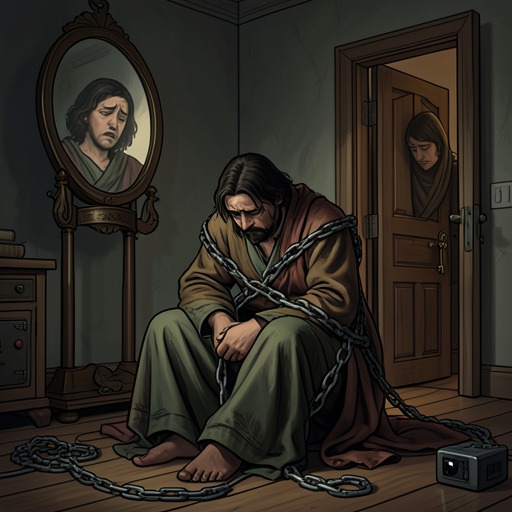
A related image is the “prison spirit.” Such a spirit is said to keep a person in a cell of defeat, bondage, oppression, and torment. The proposed spiritual jailer may be attached to a sin habit, a demonic stronghold, a generational curse, private sin, or an unhealthy human attachment. The analogy draws on Peter’s imprisonment between two guards and two chains, distinguishing inward bondage that remains hidden from others and outward bondage that is publicly visible.
Encounters, Manifestations, and Threats
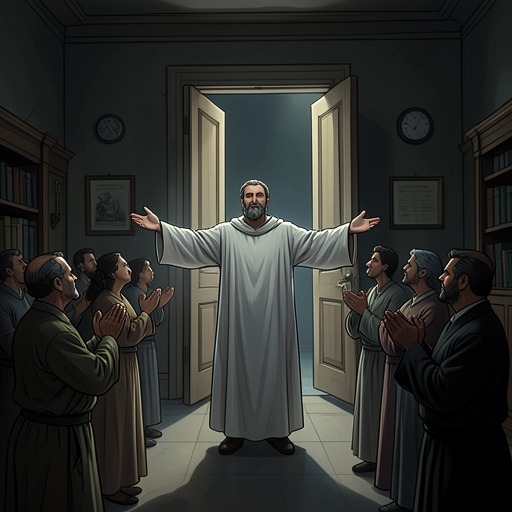
The book describes demonic activity through both biblical examples and reported ministry experiences. In one vision, large angelic beings stood at the doors of a church auditorium with drawn swords, while hooded, druidlike evil beings entered, mocked the congregation and prayer room, and announced that they would divide the church within a year. The vision was later said to correspond to an actual church division, followed by successive splits and changes of pastors. Its stated lesson is that angels are present to deliver, but their activity is connected to human prayer and determination; when prayer is lacking, the enemy is granted access.
Another account concerns a man who attacked the narrator outside a restaurant. The man’s punches failed to make contact, but he later seized the narrator, lifted him, and threw him into a front window. As the attack reached its apparent climax, the narrator spoke the words “The blood of Jesus,” then rebuked the demon in the name of Jesus. The account says that demons began coming out of the man, who was subsequently shaken by the anointing and told that Jesus loved him. The scene casts demonic power as an engine of intimidation, while presenting verbal spiritual authority as the decisive reversal.
The book also refers to Herod’s persecution of the church and his being struck by an angel and dying, using that biblical episode to support the claim that angelic deliverance can answer persecution. The emphasis is not merely that demons are dangerous, but that their apparent authority is subordinate to divine power when believers pray and act with determination.
Bondage, Temptation, and Delay
Demons are associated with forms of bondage that people may knowingly continue to tolerate. The phrase “one more day with the frogs” develops this idea from the plague of frogs in Egypt. Pharaoh agreed to release the Israelites if the plague ended, but the story is used to represent people who want relief from the pain of bondage without surrendering the stronghold itself. In the book’s application, a person may prefer one more day of an unhealthy relationship, habit, or spiritual compromise rather than accept immediate deliverance.
A reported counseling encounter illustrates the cost of that postponement. A woman admitted to an unhealthy relationship after the narrator described it as spiritually and personally damaging. Although she agreed that ending it would be best, she hesitated and wanted another day to decide. Years later, she was described as addicted to drugs and suffering pain and abuse. Her continued bondage is therefore presented not as a harmless delay but as a choice whose consequences deepened over time.
The frog imagery is reinforced by Revelation 16:13-14, where three unclean spirits are described as resembling frogs and as going forth to gather earthly rulers for battle. Demons thus function in the book both as personal oppressors and as agents moving through larger systems of deception and conflict.
Demonic forces are also said to delay answers, prayers, and dreams. Daniel’s prayer is presented as having been delayed for twenty-one days by the prince of Persia before Michael was sent. From this example, the book argues that a delayed answer does not necessarily mean that God has refused to respond; spiritual barriers may obstruct manifestation. Believers are therefore urged to use their authority to command dreams to come forth and to bind the influence of obstructing spirits.
Means of Resistance and Deliverance
Prayer is the central countermeasure. The book says that demons hate hearing a person call on God, and that prayer causes enemies to turn back because God fights on behalf of those who trust Him. Satan is described as using harassment and distraction to break a person’s prayer focus, so refusing to surrender that focus becomes an act of spiritual resistance. The same principle is extended to cities, churches, and nations: persistent intercession is presented as a way to confront destructive demonic influence rather than merely endure it.
The book distinguishes empty emotional outcry from a cry of faith and determination. Loudness, screaming, or distress alone does not move God; what matters is believing that God exists, trusting what Scripture says about Him, and seeking Him diligently without accepting an empty outcome. Importunity is defined as continual asking, seeking, and knocking that does not quit when an answer seems delayed. In Luke 11, the persistent friend who continues knocking at midnight becomes the model for refusing to retreat from prayer.
Worship is another major means of deliverance. Paul and Silas prayed and sang praises at midnight while imprisoned, after which an earthquake opened the doors and released the prisoners’ bonds. Their praise is interpreted as placing God above their failures, pain, and bondage. The book similarly invokes David’s worship before Saul, when evil spirits left the king, and argues that a lifestyle of worship can help people become free and remain free.
The recommended practices are concrete: refuse to leave God alone, use the Word of God and the name of Jesus, believe that the Lord wants freedom, stand one’s ground, refuse to abandon deliverance, and remain connected to a church with an anointed pastor. Isaiah’s command to shake off the dust and loose the bonds of the neck is joined to the claim that the anointing destroys yokes. The book presents freedom as requiring both divine power and persistent human participation.
Narrative and Theological Significance
Demons occupy the role of recurring antagonists in a larger drama of separation and reunion. Their power grows where darkness, compromise, prayerlessness, and passivity are permitted to remain. The book compares the devil’s development from a snake in the Garden of Eden to a dragon in Revelation, humorously suggesting that someone has been feeding him; beneath the humor lies the serious warning that choices can nourish the very forces that later dominate a life.
At the same time, demons are never granted final control. Jesus’ public power is connected to private prayer, and the healing and deliverance of multitudes follows His solitary times with God. The book therefore makes prayer the dividing line between a church that fulfills the name “house of prayer” and one that becomes a “den of thieves,” because competing priorities have stolen its spiritual center. Demons thrive in the vacancy created by neglected prayer, while worship, Scripture, faith, and disciplined persistence restore that space to God.
The resulting worldview is sharply oppositional: demonic influence is treated as a real enemy, but deliverance is repeatedly made available through repentance, authority, worship, and refusal to give up. The believer’s decisive act is not passive fear but continued contact with God. In that recurring pattern, the demons’ apparent victory is provisional, and the sustained cry of faith becomes the instrument by which bondage is broken.