Don't Leave God Alone (DLGA)
Don't Leave God Alone: How to Get God's Attention, Remain in His Presence, and Even Change His Mind to Make a Difference in Your WorldDon't Leave God Alone (DLGA) is the book's central discipline of persistent prayer and spiritual pursuit. It does not mean that God is literally unwilling to listen; it names a deliberate refusal to withdraw when prayer feels empty, answers seem delayed, circumstances worsen, or shame urges a person to hide. Its decisive promise is that continued prayer can become a channel of relationship, transformation, deliverance, and public spiritual power.
Definition and Spiritual Logic
DLGA begins with the experience of apparent absence. The book describes prayer that becomes boring, repeated disappointment, falling asleep while praying, and the discouragement of not sensing God's presence or seeing answers. Against the impulse to give up, the concept calls believers to remain engaged with God rather than interpreting silence as rejection. The expected response to failure is not avoidance but renewed approach.
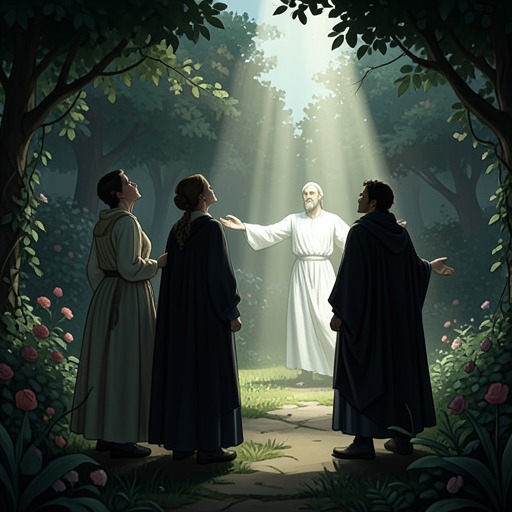
This logic is illustrated through Adam and Eve, who sinned, hid from God, and covered themselves. Their hiding is presented as another way of leaving God alone: shame converts broken fellowship into distance. DLGA reverses that movement. Even after failure, the believer is to run toward God, seek forgiveness, and continue cultivating fellowship instead of allowing embarrassment or fear to become a permanent barrier.
The book connects this persistence with the threefold command to ask, seek, and knock. Asking means coming to God with a request; seeking means continuing to pursue Him and building a daily friendship; knocking means pressing against a door that appears closed because the answer is understood to be just beyond it. The related idea of importunity describes prayer as shameless, bold, determined, pressing, entreating, and persistent. Its defining attitude is refusal to treat an apparent no as the end of the conversation.
Private Prayer and Personal Transformation
DLGA treats private prayer as the hidden source of visible authority. Jesus is presented as withdrawing into solitude before appearing in public power, and His wilderness testing is linked to the strength that followed His time alone with God. The book applies the same pattern to contemporary ministry: before a conference, extra fasting and prayer preceded a gathering in which thousands experienced what the author described as the power of God. The principle is summarized as private prayer producing public results.
The practice is deliberately portable rather than tied to one approved room. The author describes praying in fields, forests, garages, tents, wood cabins, sheds, and a car. What matters is the intentional shutting off of distraction and the decision to keep pursuing God in a private place. In this account, solitude is not retreat from ministry but preparation for it; hidden persistence is what makes public ministry effective.
The same pattern appears in an evangelistic encounter involving an intimidating biker at Burger King. After praying earlier in the day, the author accepted an arm-wrestling challenge and connected the unexpected sensation of power in the contest with the anointing. When the biker stopped, the author was able to ask everyone to listen, and nearly the entire establishment, including workers, gathered to hear the gospel. The episode is interpreted as a sign and wonder produced by prayerful preparation rather than natural confidence.
DLGA also requires action. A choice to change without corresponding action cannot produce the desired result, and the book uses Bartimaeus's discarded garment as an image of removing an old life. The garment represents old mind-sets, habits, choices, and actions. In a church service, a skeptical man was confronted with a prophetic reference to the cigarettes in his pocket and was invited to quit smoking and allow God to change his life. By getting up and relinquishing the familiar lifestyle, he enacted the book's claim that spiritual change requires an active, repeated commitment.
Persistence in Crisis and Deliverance
The concept is applied to sickness, marriage, dreams, temptation, and demonic opposition. Silence about sickness is said to leave the condition unchallenged, while the louder cry of faith can overcome the voice of hopelessness. The book therefore frames persistence not as passive waiting but as sustained resistance: believers are to hold on until blessing comes, refuse to surrender deliverance, stand their ground, and remain in a church with an anointed pastor who can help them.
The book's deliverance instructions combine spiritual practice and perseverance. Believers are told to refuse to leave God alone, use the Word of God and the name of Jesus, believe that the Lord wants them free, stand firm, refuse to give up, and remain connected to supportive church leadership. The promise attached to these steps is freedom through Jesus Christ and the breaking of the devil's strongholds.
DLGA is also presented as a way to keep dead dreams from remaining buried. The story of Lazarus becomes a pattern for refusing to accept finality: believers should expect a dream to live rather than surrender to unbelief while the stone is being rolled away. A medical testimony intensifies this image. After a man endured septic shock, multiple organ failure, and a medical coma, Brenda prayed that doctors would call him a miracle man. Staff gradually adopted that language, his medicines and machines were reduced, and he eventually awakened. The author interprets the recovery as a work of faith and prayer and uses it to urge readers to continue pursuing what appears to be dead.
The principle also includes resistance to the enemy. In the discussion of Luke 11, binding the strongman represents taking authority over forces of darkness that seek to separate believers from God. Persistence therefore has an adversarial dimension: it means resisting temptation, fighting for time with God, and refusing to let spiritual opposition dictate the limits of prayer.
Collective Prayer and Public Consequences
DLGA expands from individual need to collective action. The book argues that persistent prayer can affect churches, cities, and nations, and it portrays the righteous cry as needing to become louder than the cry of evil. In a personal prayer for the United States, the author describes sensing God's presence and receiving the message that the nation was being given another chance, as Nineveh had been spared, because God's work was not finished. This experience leads to a call for intercession rather than anticipation of national destruction.
The civic application is defined through six destructive influences associated with Ezekiel 28: violence, profanity, corrupt wisdom, defiled sanctuaries, iniquities, and terror or fear. The book claims that believers can confront these influences by refusing silence and praying persistently about the conditions of their communities. Crime, murder, church decline, and fear are not treated merely as subjects for complaint; they become targets for organized spiritual persistence.
A hurricane testimony supplies the book's clearest example of collective escalation. In 2004, while ministering at a conference in Jacksonville, Florida, the author prophesied that Florida would face two back-to-back hurricanes and said prayer could keep them away. People prayed during the first threat, yet the hurricanes still came, which the account treats as evidence that their prayers had not risen to the necessary level. The following year, the author again named a storm and identified the month in which it would arise. Hundreds prayed fervently and determined that the storm would not enter as before; according to the testimony, it never hit them. The difference is attributed to collective refusal to accept no for an answer.
The claim is extended to 2006, when the author says that people prayed and declared peace over storms after record hurricane seasons. No major hurricane is said to have struck the United States that year. The story thus makes persistence measurable through a claimed change in public circumstances, presenting individual and collective prayer as mutually reinforcing forms of action.
The early church in Acts 12 supplies the biblical model for this communal practice. After Herod killed James and imprisoned Peter, the church did not rely on political persuasion or natural tactics; it prayed. DLGA interprets the church's diligence as the reason the Acts community experienced power that many churches lack. The church's response to danger becomes a pattern of organized persistence in which prayer protects, intervenes, and creates the conditions for miraculous release.
Final Invitation and Narrative Function
The concept culminates in direct invitation. Readers who have never known Jesus Christ personally are urged to begin a new life of daily fellowship, asking for God's presence and deeper relationship. The concluding prayer asks the reader to dedicate life to pursuing God, believe that Jesus Christ died on the cross and rose from the dead, seek forgiveness, repent, receive the Holy Spirit, and identify publicly as a Christian and follower of Jesus Christ.
The prayer ends by converting DLGA from a teaching into a personal vow: the new believer chooses not to leave God alone until blessing comes. The closing slogan, “DLGA! Don't Leave God Alone!” functions as a mnemonic and a mobilizing command. Throughout the book, the concept moves from private disappointment to disciplined persistence, from individual transformation to church and civic intercession, and finally from explanation to decision. Its governing premise is that withdrawal preserves bondage and discouragement, whereas persistent pursuit opens the believer to relationship, power, freedom, blessing, and the possibility of changed circumstances.