Shirin dōrai shōsō kōkai kyōryoku
Don't Leave God Alone: How to Get God's Attention, Remain in His Presence, and Even Change His Mind to Make a Difference in Your WorldPrivate prayer produces public power is presented as a governing principle of spiritual life: the unseen decision to pursue God, especially when circumstances are dry, difficult, or distracting, becomes the source of visible power in ministry and crisis. Prayer is not treated as empty speech but as active connection with God, a relationship whose hidden formation later appears in healing, deliverance, blessing, endurance, and public witness.
Definition and Theological Basis
The principle begins with the conviction that prayer is the essential meeting place between human need and divine power. A disciple asked Jesus to teach the disciples to pray because he recognized that prayer disclosed the secret of effective connection with God. Jesus’s many hours with the Father showed that prayer was more than a religious duty; it was an intimate relationship in which God was never left alone. The book therefore links private prayer with fellowship, not merely with requesting benefits.
This understanding also explains why the book repeatedly urges readers not to abandon God when prayer feels difficult. Christians who believe they have failed may retreat from prayer out of shame, embarrassment, or fear that God is angry. The book reverses that response: failure is presented as a reason to run toward God rather than away from Him. Adam and Eve are used as the negative pattern, since after sin they hid from God instead of remaining in fellowship. Prayer restores the movement toward divine presence.
The principle is also connected to the identity of the church. Jesus called His house a house of prayer, not merely a house of evangelism, praise and worship, teaching, deliverance, prophecy, apostleship, programs, or public appearance. These activities may have value, but prayer is identified as the defining priority. The book treats the name as a declaration of purpose: a church that loses its commitment to prayer risks losing the setting in which spiritual power is formed.
Jesus as the Pattern
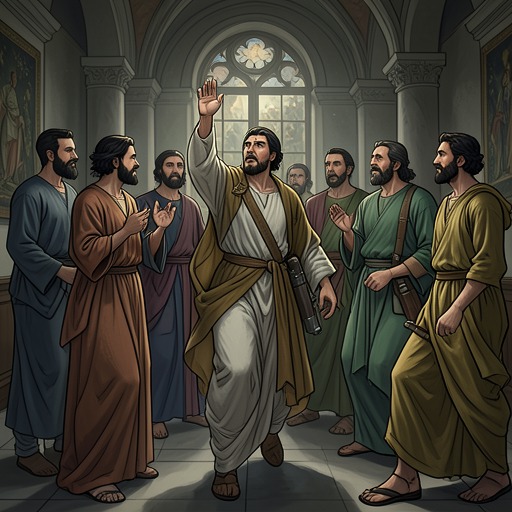
Jesus’s life supplies the clearest biblical model. After withdrawing into the wilderness to pray, He returned to public ministry in circumstances where people were healed and delivered. The sequence is crucial: solitude comes first, and public manifestation follows. In another example, Jesus went to a mountain and continued all night in prayer; afterward, people troubled by unclean spirits were healed, and the whole multitude sought to touch Him because power went out from Him and healed them all.
The book describes this rhythm as recurring rather than exceptional. Jesus withdrew from crowds and distractions, gave extended attention to God, and then emerged into ministry marked by power. The wilderness could represent a dry season, a valley, or even a period following a mountain-top experience, yet the instruction remains the same: continue praying through each condition because God meets needs and manifests His power in response to determined pursuit.
The same pattern appears when Jesus entered the wilderness and was tempted by the devil. Having spent time alone with God, He came out of the wilderness in the power of the Spirit and gained public recognition throughout Galilee. Private prayer is therefore portrayed not only as preparation for miracles but also as preparation for confrontation. The hidden life teaches a person how to withstand temptation before the resulting strength becomes publicly evident.
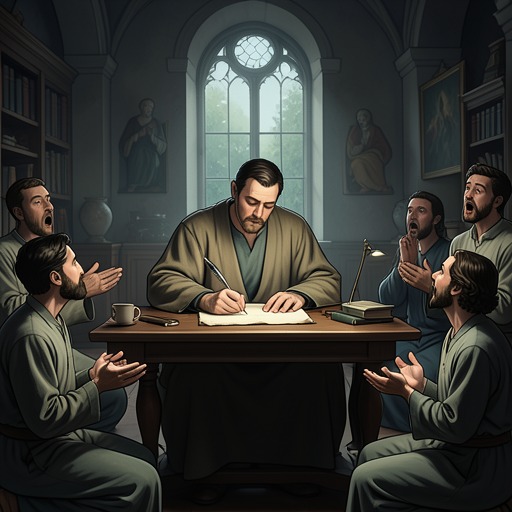
Jesus also taught that secret prayer receives an open reward. The person who enters a room, shuts the door, and prays to the Father in secret is promised visible recompense. In this framework, secrecy does not mean that prayer has no outward consequence. It is the very condition through which supernatural power and other blessings become publicly recognizable.
Ministry Testimony and Visible Power
The author applies the principle to his own ministry. Before preaching at a conference attended by thousands, he spent additional time fasting and praying. During the public meeting, the power of God was experienced throughout the auditorium: ushers in the hallways fell under the power, and entire sections of people fell and shook with the anointing. The account interprets the public intensity not as an isolated spectacle but as the consequence of the earlier private preparation.
The testimony establishes a causal pattern the book wants readers to imitate. Public ministry may be the scene where people notice power, but the decisive work has already occurred away from the crowd. Prayer functions as a hidden source, while the gathering is the visible outlet. The repeated conclusion is that the power appeared because of prayer, not because public activity could manufacture it by itself.
The author’s prayer practice is deliberately concrete. He has prayed in fields, forests, garages, tents, wood cabins, small sheds, and his car. Even when people looked at him strangely while he prayed in the car, he remained determined to continue. These locations show that a prayer closet is not confined to one formal room; it is any place where distractions can be shut off and sustained attention can be given to God.
The book distinguishes genuine prayer-supported ministry from outward religious performance. The prophets of Baal dressed their offering, leaped, cried aloud, and prophesied, yet no power or answer came. Their actions resembled religious intensity, but they called on a false god and lacked the faith, obedience, sacrifice, and prayer-centered life the book considers necessary. External activity alone cannot substitute for communion with God.
Persistence, Testing, and Crisis
Private prayer produces public power only as believers remain in prayer through testing. The book joins the principle to importunity, defined as shameless, bold, determined, pressing, entreating, and persistent requesting. Jesus taught people to pray and not faint, and the story of the friend who kept knocking becomes a test of whether a petitioner will accept apparent refusal or continue pressing toward an answer.
This persistence is applied to deliverance as well. Readers are told to refuse to leave God alone, use the Word of God and the name of Jesus, believe that God wants them free, stand their ground, refuse to give up on deliverance, and remain in a church with an anointed pastor who can help them. The promised result is freedom from spiritual strongholds. Prayer is thus both relational and confrontational: it draws the believer toward God while opposing the forces understood to resist liberation.
The principle is tested most dramatically in accounts of illness. A newborn girl in the author’s church had an extremely low blood-platelet count and an incurable disease attacking her liver and blood. Her liver was failing, and doctors gave her an 11 percent chance of living. The church prayed, but for days the condition grew worse and the child lay almost lifeless in an incubator. Instead of interpreting the delay as a reason to stop, the author, the parents, and others continued speaking God’s promises of healing until determination displaced fear and shock.
A second crisis involves the author’s father-in-law, whose undiagnosed fever returned months after an apparent recovery. Exploratory surgery revealed diverticulitis and a ruptured bowel, followed by septic shock. His body swelled to three times its normal size; his temperature reached 105 degrees; nineteen intravenous bags supplied medicines, fluids, blood, and food; eight physicians treated him; and his liver, kidneys, and lungs began shutting down. He required dialysis, a ventilator, and a medical coma. The family responded with prayer around the clock, treating the hidden discipline of prayer as the means of confronting an apparently overwhelming medical crisis.
The book also uses the woman with the issue of blood to portray persistence when every ordinary avenue seems exhausted. She had suffered through many physicians, spent everything she had, and was “nothing bettered, but rather grew worse.” Her worsening condition narrowed her hope until she fixed her attention on Jesus and reached toward Him. The author’s own prolonged cough follows the same interpretive pattern: after doctors supplied medicines without identifying the ailment, he and Brenda became determined, spoke God’s Word over the condition, and commanded the coughing to stop in Jesus’s name. The account presents victory as following a period of refusing to abandon prayer when the situation appeared to deteriorate.
Practice and Final Appeal
The book treats sustained prayer as a discipline that must be built rather than improvised during crisis. A person should establish a foundation in the Word, prayer, and worship while circumstances are favorable, so that a later storm does not become the first setting in which faith is expected to mature. Prayer may feel boring, and its practice cannot be governed solely by emotion. Worship music, a written list of requests, and creative bodily expressions such as singing, dancing, lifting the arms, or praying aloud are suggested as ways to resist stagnation and remember answered prayer.
The duration of prayer should also grow gradually. Someone who prays only for minutes cannot expect to begin praying for hours immediately; the book recommends setting a time and building from that point. Jesus’s example is presented as progressive persistence, continuing a little farther after prayer seemed complete. The eventual goal is a relationship in which an hour with God no longer feels excessive, because the person has learned to hunger for His presence rather than merely complete an obligation.
The principle culminates in direct evangelistic invitation. Readers are encouraged to begin a personal relationship with Jesus Christ, spend quality time with Him every day, ask for His presence, repent of wrongdoing, receive forgiveness, and seek deeper fellowship. The model prayer dedicates the believer’s life to pursuing God, affirms belief in Jesus Christ’s death and resurrection, asks Jesus to enter the heart and life, and requests filling by the Holy Spirit. Its final commitment is to continue seeking God until blessing comes.
In this closing movement, private prayer produces more than public ministry power. It produces a publicly declared identity: the reader becomes a Christian, a lover and follower of Jesus Christ, whose hidden devotion has been turned into an open decision. The principle therefore ends where it began, with relationship. God is described as waiting for the believer to respond, walk and talk with Him, and include Him in every part of life. Freedom and blessing are located not in a single dramatic performance but in refusing to leave God alone.