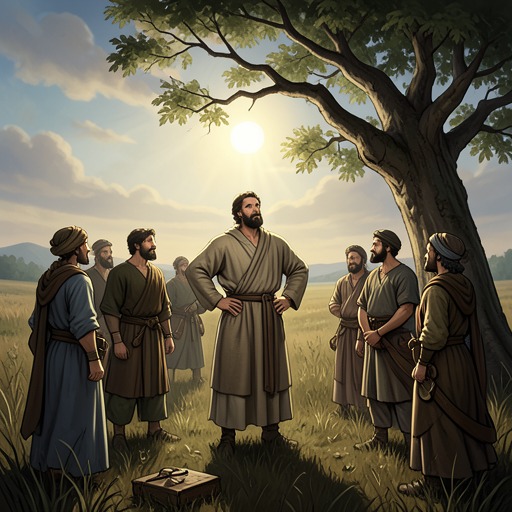
The Twelve Apostles
Don't Leave God Alone: How to Get God's Attention, Remain in His Presence, and Even Change His Mind to Make a Difference in Your WorldThe Twelve Apostles are presented as the foundational apostolic body of the church and as a decisive sign of spiritual maturity: the power associated with Jesus Christ is not meant merely to be received, but carried outward through a community that touches the world.
Identity and Symbolic Meaning
The book links the number twelve with the kingdom of God because the church began with the twelve apostles of the Lamb. This numerical pattern gives the Twelve Apostles more than a historical function. They become a symbolic representation of the church itself, connecting the ministry of Jesus Christ with the continuing work of believers.
The significance of the number twelve is drawn out through the paired stories of the woman with the issue of blood and the dying twelve-year-old girl. The woman had suffered for twelve years, while the girl was twelve years old; the repeated number is treated as a kingdom message about the church. One figure represents believers who have been part of the body of Christ for years yet remain hindered by recurring issues, while the other represents a younger life that receives help through mature ministry.
From Receiving Power to Carrying It
The Twelve Apostles occupy the middle position between receiving power from Jesus Christ and transmitting that power to others. The woman with the issue of blood initiated contact with Jesus Christ’s garment and was healed, while the young girl was healed when she received a touch from the mature ministry of Jesus Christ. The contrast establishes two necessary forms of encounter: believers may press toward God’s power, and mature ministry may bring that power to those unable to reach it themselves.
The book then extends the pattern into the sending of the Twelve Apostles. In the continuation of the Gospel accounts, the twelve disciples receive power and are sent out with it. They are no longer portrayed only as people waiting for a touch or seeking one for themselves; they become bearers of the power they have received. Their movement outward marks a transition from personal deliverance to ministry.
Ministry and Transmission
The Twelve Apostles illustrate the claim that spiritual virtue is still available and must be taken into the lives of others. A mature church is described not as one that continues to hemorrhage from unresolved issues, but as one capable of touching the world. The apostles therefore function as a model for a church that has moved beyond dependence on repeated personal intervention and has become an active channel of divine power.
This transmission is described in practical ministry terms: believers may lay hands on the sick, see people recover, prophesy, operate in the gifts of the Spirit, cast out devils, minister the Word of God, and perform the works of ministry. The Twelve Apostles stand at the point where the power of Jesus Christ becomes a commission shared with the church, allowing people who approach the church to encounter the same power and, in turn, pass it on to others.
Persistence, Prayer, and the Church
The apostolic body is also situated within the book’s larger teaching on refusing to leave God alone. The church is urged to use the Word of God and the name of Jesus, believe that the Lord desires freedom, stand its ground, refuse to abandon deliverance, and remain connected to an anointed pastor. These instructions frame spiritual power as something pursued through persistence rather than passive waiting.
Jesus Christ’s teaching on importunity is used to define this persistence as shameless, bold, determined, pressing, entreating, and continual requesting. The Twelve Apostles therefore represent not only delegated power but a community formed by prayerful endurance. Their role joins inward pursuit with outward mission: the church seeks God persistently, receives what God gives, and carries that power to people who need healing, freedom, and salvation.
Narrative and Doctrinal Significance
The Twelve Apostles are significant because they turn an individual healing pattern into an ecclesial vocation. The woman with the issue of blood shows the initiative of a mature believer; the dying girl shows the need of someone who must receive ministry; the Twelve Apostles show what happens when the church accepts responsibility for carrying power beyond itself. The sequence moves from contact, to reception, to commission.
At the end of the book, this movement becomes an appeal for readers to enter a personal relationship with Jesus Christ and to pursue God continually. The invitation to begin a new life of knowing Jesus Christ is paired with the expectation that believers will become active participants in God’s purposes. Within that framework, the Twelve Apostles are both the church’s foundational pattern and its continuing challenge: spiritual life must not terminate in private experience, but mature into a ministry that touches someone else.