Worship as Deliverance
Don't Leave God Alone: How to Get God's Attention, Remain in His Presence, and Even Change His Mind to Make a Difference in Your WorldWorship as Deliverance presents worship not as a decorative religious response but as a practice through which bondage is confronted and freedom becomes possible. The principle joins bodily surrender, persistent prayer, moral choices, and confidence in God’s power: the worshiper refuses to bow to an idol, refuses to remain imprisoned by shame or sin, and refuses to leave God alone in the darkest hour.
Worship Under Pressure
The clearest biblical image is the fiery furnace. Shadrach, Meshach, and Abednego were pressured to bow before a man-made statue, yet their convictions did not change when the heat intensified. Their apparent fall into the flames became a different kind of act: instead of prostrating themselves before the king’s image, they fell down before the Son of God in the middle of the furnace. Their worship therefore expressed allegiance rather than defeat.
The deliverance was complete. Although the soldiers who threw them into the furnace were killed by its heat, the three Hebrew youths were supernaturally unharmed. The fire did not touch them, their hair was not singed, their clothing was not scorched, and they did not even smell of smoke. The contrast gives the principle its dramatic force: the same trial that destroyed those enforcing idolatry did not destroy those whose worship remained directed toward God.
The book connects this scene with Jesus Christ’s temptation in the wilderness. Satan offered Jesus Christ the kingdoms of the world in exchange for falling down and worshiping him. The demand was not merely for an outward gesture; bowing and worship expressed complete devotion and commitment. Worship becomes spiritually decisive because it reveals whom a person treats as sovereign.
Praise as a Cry for Freedom
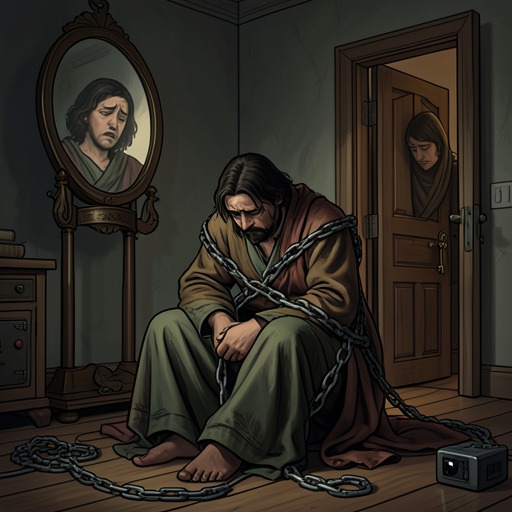
The principle is applied directly to spiritual bondage. “Prison spirits” are described as forces that keep people in cells of defeat, bondage, oppression, and torment. Such captivity may appear as an outward condition, but it may also be hidden in a sin habit, a demonic stronghold, a generational curse, or a private sin. The book distinguishes two symbolic chains: one represents inward bondage that others may not see, while the other represents outward bondage visible to everyone.
Freedom begins with praise and worship because worship changes the position of the heart. Rather than allowing failure, shame, or sin to occupy the highest place, the worshiper exalts God above those conditions. In that sense, worship is itself a cry for deliverance. It does not deny the pain of captivity; it refuses to let captivity define the worshiper’s highest loyalty.
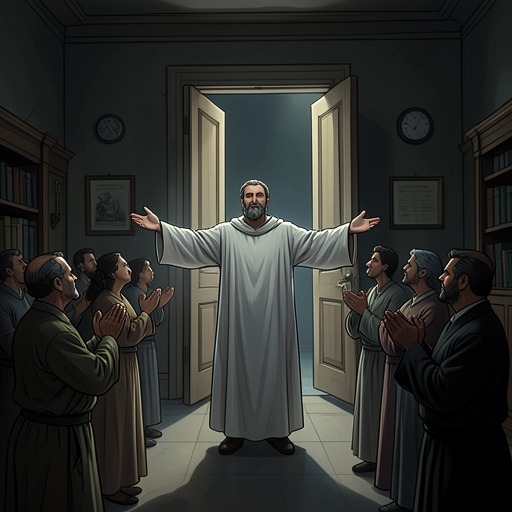
Paul and Silas provide the central example. At midnight, when they were in prison and conditions were at their darkest, they prayed and sang praises to God while the other prisoners listened. A great earthquake shook the foundations of the prison, every door opened, and everyone’s chains came loose. Their release is presented as the consequence of worship offered when they did not feel like worshiping. Had they abandoned God in that hour, they would not have enacted the pattern through which the narrative describes freedom coming.
The book emphasizes that the difficulty of praise is greatest precisely when bondage is most painful. People who feel like failures and cannot break free may be tempted to wait until they feel better before worshiping. Paul and Silas reverse that order: they worshiped in the darkness, and worship became the atmosphere in which the prison was opened. The same pattern is extended to readers who are urged to close their eyes, enter worship, and expect entrenched burdens to begin breaking off.
Worship and the Return to God
Worship as deliverance is inseparable from the refusal to hide. After Adam and Eve sinned, they hid from God and covered themselves with fig leaves. The fig leaf represents human effort to appear righteous or justified, a substitute covering that stands between the sinner and God’s presence. Shame produces distance, and distance leaves a person alone with the very failure from which deliverance is needed.
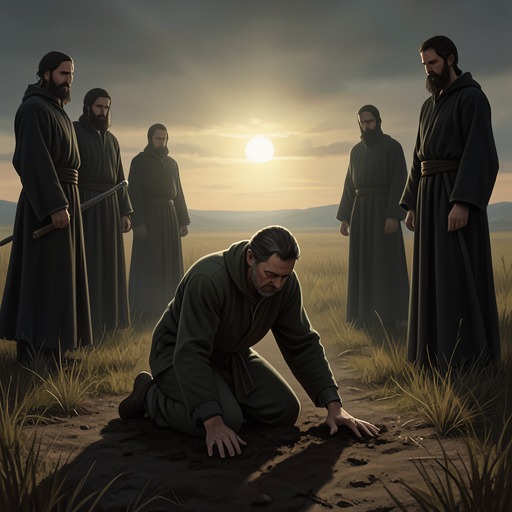
The corrective is to run toward God rather than away from Him. The book argues that those who fail in prayer often avoid prayer because they feel embarrassed, fear that God is angry, or expect another disappointment. Yet the blood of Jesus Christ is presented as the true covering, making a self-made fig leaf unnecessary. A person who has failed is instructed to return openly, ask for help, and continue making prayer part of life rather than allowing shame to become another form of bondage.
This return also requires moral discipline. Worship is not treated as permission to continue feeding the forces that oppress a person. Prison spirits gain influence when people give them darkness and allow them to rule through their choices. The book therefore joins worship with clean living, Christian identity, and godly decisions. Freedom is received through God’s power, but it is also guarded by refusing to nourish the habits that recreate captivity.
The same tension appears in the teaching about daily righteousness and repentance. A repeated apology without an intention to change is distinguished from repentance, which means turning away from sin and changing direction. Daily choices of right living, right thinking, right attitudes, and right actions are described as seeds whose eventual fruit is a changed life. Worship thus reaches beyond a moment of singing or prostration: it becomes a sustained pattern in which devotion is embodied through conduct.
Persistence, Prayer, and Deliverance
Worship is placed within a larger discipline of refusing to leave God alone. The book’s program for freedom includes refusing to abandon prayer, using the Word of God and the name of Jesus Christ, believing that the Lord wants people free, standing firm, refusing to give up on deliverance, and remaining connected to a church with an anointed pastor. The promised freedom is therefore pursued through repeated acts rather than a single emotional experience.
Persistence appears in the example of Elijah. He prayed for rain seven times, placing his head between his knees until a cloud appeared, initially no larger than a man’s hand. The small cloud became the sign of abundant rain. In the book’s interpretation, continued prayer turns the first small sign of blessing into an outpouring, just as persistent worship turns a cry from captivity into an opening for deliverance.
The same pattern is associated with Elisha’s determination to follow Elijah from Gilgal to Jordan. Those four places of testing gradually formed in Elisha a capacity to seize the power of God and never let it go. The journey suggests that spiritual power is connected with submission, commitment, testing, and endurance. Persistence is not portrayed as attempting to force God mechanically; it is the posture by which the believer remains present, expectant, and available to divine intervention.
Jesus Christ’s teaching on importunity gives this persistence a relational shape. Importunity means being shameless, bold, determined, pressing, entreating, and persistent in requesting. The disciple is told to pray and not faint, continuing to press in rather than interpreting delay as a final refusal. In this framework, worship and prayer share the same refusal: neither accepts discouragement as the last word.
Scope and Significance
Worship as Deliverance explains freedom through a recurring reversal. The furnace becomes the place where the faithful meet the Son of God; midnight becomes the hour of songs and opened doors; a fall becomes prostration before the right object; and failure becomes an occasion to return rather than hide. The decisive issue is not the absence of pressure but the direction of devotion under pressure.
The principle also places personal deliverance within a moral and communal order. God’s power is sought through prayer, worship, Scripture, the name of Jesus Christ, steadfast belief, church fellowship, and daily choices that resist the habits of bondage. Praise is therefore both protest and practice: it protests against the authority of idols, prison spirits, shame, and sin, while practicing dependence on God.
Its final promise is that believers can be free and remain free by refusing to leave God alone in worship and by making godly choices. The examples of Shadrach, Meshach, and Abednego, Paul and Silas, David, Elisha, and Elijah turn that promise into a chain of biblical precedents. Across each example, deliverance follows a stubbornly maintained orientation toward God, especially when circumstances make worship seem least reasonable.