
The Theology of Seeds
Don't Leave God Alone: How to Get God's Attention, Remain in His Presence, and Even Change His Mind to Make a Difference in Your WorldThis flow traces the book’s use of seed imagery to explain spiritual growth, financial stewardship, repentance, and harvest.
increasing Bearing strength in each event
 decreasing
Bearing strength in each eventdecreasingCreation’s Reproductive Pattern
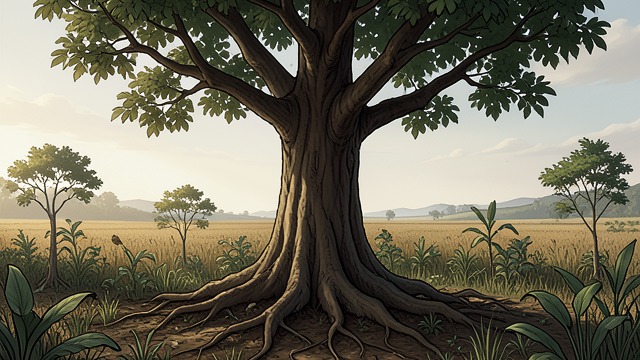
Creation’s Reproductive Pattern
The book begins its seed theology with plants, trees, and human life reproducing according to their kinds.
Built-In Continuity
Creation is not static. It carries the capacity to generate future life.
Spiritual Application
The believer’s choices likewise contain reproductive power. What is planted in thought and conduct tends toward a corresponding harvest.
Seed Time
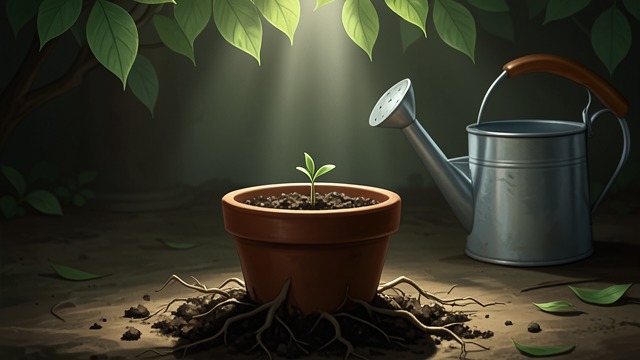
Seed Time
The interval between planting and harvesting becomes the book’s explanation for many delayed answers.
Growth Invisible
The seed may appear unchanged while roots develop beneath the surface.
Patience Required
The believer must continue watering through praise, obedience, and prayer without constantly disturbing the process through anxious checking.
The Classroom Cup
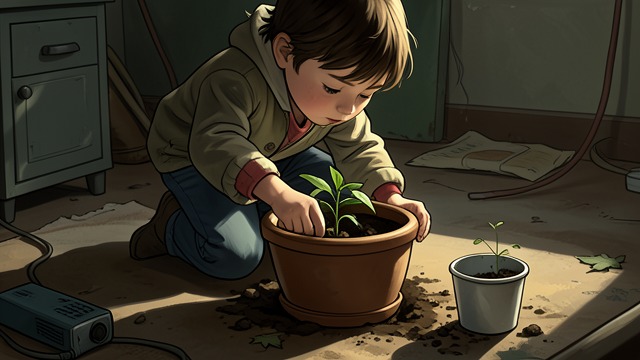
The Classroom Cup
Hank remembers digging into his planted cup to see whether anything was happening, only to prevent the plant from growing.
Curiosity as Interference
His impatience becomes an image of anxious believers repeatedly disturbing their own spiritual process.
Trusting Hidden Work
The lesson is not inactivity but patient care. Growth requires attention without destructive control.
Financial Seeds
Financial Seeds
The book applies sowing imagery to tithes, offerings, generosity, and responsible enjoyment of material provision.
Heart Before Wealth
Money is not treated as inherently evil; the love of money and misplaced trust are the dangers.
Harvest with Purpose
Blessing is meant to support enjoyment, good works, generosity, and kingdom priorities rather than self-indulgence.
Repentance as Planting
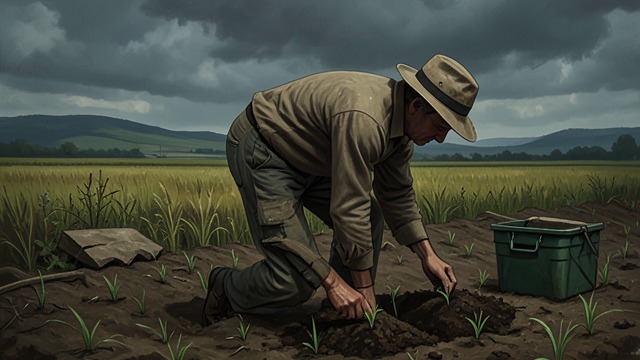
Repentance as Planting
Daily righteous choices are presented as seeds that eventually produce a changed life.
Beyond Apology
Repeatedly saying sorry without changing direction is distinguished from repentance.
Fruit of a New Course
The believer cultivates new habits until the fruit of righteousness becomes visible. Transformation is slow, practical, and cumulative.
during the teaching from Genesis 1
during the teaching on delayed harvest
during Hank’s childhood seed experiment
during the teaching on money
during the teaching on daily repentance
