Captivity
Don't Leave God Alone: How to Get God's Attention, Remain in His Presence, and Even Change His Mind to Make a Difference in Your WorldCaptivity is the condition of being held in bondage, unable to move freely into the life and promises associated with God. In the book, it is not limited to a physical prison. It includes Israel’s four hundred years under Egyptian bondage, Peter’s imprisonment, Samson’s chains and blindness, destructive sin habits, demonic strongholds, generational curses, private sin, debt, marital strife, and other harmful circumstances. Its decisive significance is that captivity is treated as real but not final: persistent prayer and active faith are presented as means by which God breaks confinement and restores freedom.
Definition and Forms of Bondage
Captivity appears first as an outward historical condition. The Israelites had been in bondage for four hundred years when God began delivering them from Egypt. During their departure, Pharaoh pursued them, and the approaching chariots made deliverance seem impossible. The Red Sea stood before them while their former captor closed in from behind, turning liberation into a crisis that required more than passive waiting.
The book also distinguishes captivity that is visible from captivity that remains concealed. Psalm 107 is used to describe people confined behind bars who cry out to God and are led from their dark cell when the prison doors are shattered. This imagery becomes a broad description of human bondage: some people are held in an obvious external condition, while others live in an inward cell of defeat, oppression, or torment that outsiders may not recognize. Psalm 126 is invoked to present God as one who turns captivity, whether it is hidden or outward and unmistakable.
Captivity may also be connected to circumstances that are not directly attributed to evil spirits. Debt and marital strife are identified as possible forms of harmful entanglement that may arise more from human choices than from demonic activity. Even so, the book maintains that God’s power applies to both spiritual bondage and destructive situations, refusing to make freedom dependent on a single explanation for the source of suffering.
Spiritual Prison and Its Jailers
The concept of “prison spirits” gives captivity a spiritual vocabulary. These forces are described as keeping people in a cell of defeat, bondage, oppression, and torment. Peter’s imprisonment supplies the governing image: he slept between two soldiers, bound with two chains, while guards stood before the prison door. The soldiers were literal jailers in Peter’s case, but the book uses them metaphorically for spiritual agents that keep people from freedom.
The supposed jailer may be a sin habit, a demonic stronghold, a generational curse, or a private sin. The person is often said to know what bondage has been assigned to them and which recurring behavior keeps them captive. The image of Peter’s two chains is then divided into two forms of captivity: inward bondage that is difficult for others to see and outward bondage that everyone recognizes. The distinction emphasizes that hidden suffering is no less restrictive merely because it lacks public visibility.
Deliverance begins with praise and worship. Worship is portrayed not as a decorative religious response but as an active refusal to remain isolated inside the prison. By bowing before God and calling on the Creator, the captive turns away from the power that has held him and toward the source of liberation. The book links this posture with the conviction that God is for the person who cries out to Him and will fight on that person’s behalf.
Biblical Patterns of Release
Several biblical figures demonstrate that captivity is confronted through refusal to surrender. Jacob would not leave God until he received a blessing, and the struggle became associated with the formation of the nation of Israel. Moses refused to leave God alone when judgment threatened Israel after the people made and worshiped a molded calf. His pleading led God to relent from the harm He had announced, and the nation was spared.
Hezekiah provides another pattern of release from an apparently fixed sentence. When he was told that he would die, he turned to prayer, put his face to the wall, and refused to quit until he heard from God. His life was extended by fifteen years. The point is not merely that captivity can be physical; a declared future can itself function as a prison when it seems to close every possibility of change.
The contrast with Abraham and Sodom and Gomorrah shows the danger of abandoning intercession. Abraham spoke with God about the cities, but eventually stopped pressing the matter and returned home. Sodom and Gomorrah were then destroyed. The book interprets the ending as evidence that persistent prayer can affect the destiny of communities, while leaving God alone can allow destruction to proceed without further intervention.
Elijah is described as a normal human being who prayed earnestly for drought, and the rain ceased for three and a half years. His example makes captivity part of a larger conflict between ordinary human limitation and extraordinary divine response. The church of Acts likewise prayed under persecution, and great miracles accompanied its refusal to give up. The Syrophoenician woman continued seeking healing for her daughter despite an apparent insult from Jesus, and blind Bartimaeus kept calling to Jesus despite being ignored and restrained by others. Their persistence is presented as the behavior that refuses to accept captivity as the final word.
Action, Authority, and Deliverance
The account of the Exodus shows that prayer must be joined to movement. When Pharaoh pursued the Israelites and the Red Sea blocked their way, God told Moses to stop crying out in desperation, tell the people to move forward, raise his staff, and divide the water. Moses had already told the people not to fear and to expect the Lord’s rescue. The required response was therefore action grounded in confidence rather than paralysis grounded in terror.
The rod becomes a symbol of authority in the confrontation with captivity. The book describes God’s Word of promise in the mouth as a rod of authority that must be extended against the obstacle. The Red Sea represents the barrier between Israel’s past and its future, while Pharaoh represents the pursuing past that seeks to reclaim the liberated people. Crossing the sea therefore becomes a model for leaving captivity behind: the captive must move forward, speak with confidence, and act on the expectation that God will intervene.
This principle is applied to a church boy injured in a highway accident on the Fourth of July. The boy was strapped to a hospital bed in a neck brace while doctors prepared him for an MRI. In a driveway lit by neighborhood fireworks, the pastor prayed for the child’s deliverance, comparing it with the way God had delivered America and asking for a miracle. The family and church continued praying and declaring that there would be no broken bones or permanent damage. The doctors eventually reported no internal injuries or broken bones, only a slight concussion, and the episode was interpreted as miraculous protection obtained through sustained prayer.
The same determination is applied to a newborn girl whose platelet count was extremely low and whose incurable disease attacked her liver and blood. Her liver was failing, doctors were deeply negative, and they gave her only an 11 percent chance of living. The church prayed for days while the situation appeared to worsen and little visible change occurred. Instead of treating the silence as defeat, the pastor and the child’s parents resolved that the miracle would not be abandoned; the next Sunday, the Holy Spirit was said to direct the pastor to rock the baby in her chair. The narrative turns the child’s medical crisis into a test of whether faith will continue acting when circumstances appear to confirm captivity.
From Captivity to Freedom
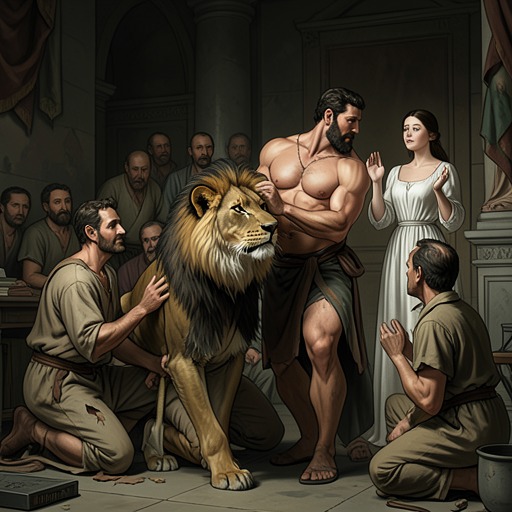
Samson’s story demonstrates how captivity can grow through repeated compromise. He began breaking his vows and lying about it, and his final compromise with Delilah cost him his anointing and strength. The Philistines then bound him in chains and put out his eyes, making physical confinement a picture of spiritual blindness. His captors displayed him at a celebration of his defeat, inviting public laughter at the condition of his bondage.
Yet Samson’s ending also prevents captivity from being treated as irreversible. Although he had failed the Lord completely, he determined to correct what he had done wrong and did not give up. The book presents God’s honoring of that determination as hope for people whose past choices have carried them into bondage. Deliverance is therefore available even after compromise, though it requires a deliberate turning away from the condition that has held the person.
The same refusal appears in the story of a young man tormented by frogs. When the pastor spoke with him, the man said that he wanted to be free and displayed such determination that the evil spirits left immediately. His rejection of “another day with the frogs” becomes a compact image of the decision required for release: freedom must become an urgent desire rather than a distant preference.
Isaiah’s command to shake off dust, arise, and loosen the bands around the neck is used as a direct summons to captives. The book insists that hopelessness does not determine the outcome. Darkness cannot remain with light, and the anointing is said to destroy the yoke and remove the burden. Captivity is thus placed within a recurring pattern of confinement, recognition, refusal, and release. Whether the prison is Egyptian slavery, a literal jail, a hidden sin, a spiritual stronghold, a compromised life, or a seemingly impossible circumstance, the prescribed response is to seek God persistently, praise Him, speak His promises, and move toward freedom rather than remain still before the bars.