Daniel
Don't Leave God Alone: How to Get God's Attention, Remain in His Presence, and Even Change His Mind to Make a Difference in Your WorldDaniel’s significance in the book lies in the twenty-one-day delay attached to his prayer. His experience is used to argue that an apparently unanswered request may already have been heard by God and may be undergoing opposition before its answer becomes visible. Daniel therefore becomes a figure of persistence, spiritual conflict, and confidence in divine response rather than a portrait of prayer that receives an immediate result.
Prayer Heard Before the Answer Appears
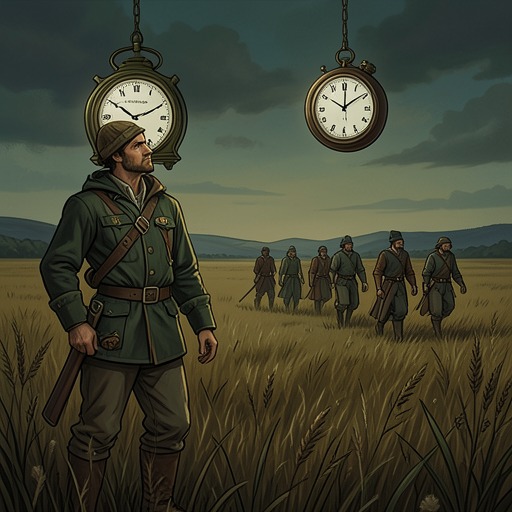
The account states that Daniel’s prayers were delayed for twenty-one days, but the delay did not mean that God had ignored him. The answer had been heard in Heaven from the first day he prayed. This distinction is central to the book’s teaching: the interval between asking and receiving can conceal activity that the petitioner cannot yet see.
The narrative turns apparent silence into a problem of timing and resistance. Daniel’s continued prayer occupies the space between the initial request and its visible answer, making persistence not a way of persuading an unwilling God but a way of remaining engaged while the answer is contested.
Spiritual Opposition and Michael’s Intervention
According to the account, a spirit called the prince of Persia delayed Daniel’s answer. The obstacle is therefore described as demonic rather than as evidence that Daniel had prayed wrongly or that God had refused him. God then sent the angel Michael to tell Daniel that the prayer had been heard on its first day, exposing the hidden conflict behind the delay.
This episode establishes a spiritual geography in which prayers are brought before God and answers return into the earth, while evil spirits may stand as barriers to their manifestation. The book uses Daniel’s experience to encourage believers to exercise authority over such influences, binding their interference and continuing to expect the answer to come forth.
Daniel Among the Book’s Models of Persistence
Daniel’s twenty-one-day delay is placed beside other accounts in which persistence precedes breakthrough. Elijah prayed seven times before a cloud appeared, and Paul and Silas prayed and sang praises at midnight before an earthquake opened the prison doors and released their chains. These examples differ in circumstance, but they share the book’s recurring pattern: prayer continues through the interval when circumstances suggest that nothing is happening.
The comparison also distinguishes Daniel’s delay from other kinds of postponement. Some delays are attributed to the timing represented by Jesus’s delayed arrival before the raising of Lazarus; others arise from a person’s own choices, as in Joseph’s movement through the pit and prison before reaching the throne. Daniel’s case specifically illustrates opposition from an evil spiritual power, while still supporting the broader insistence that delay must not be mistaken for divine forgetfulness.
Theological and Narrative Function
Daniel is not developed here through a full biography or a sequence of personal relationships. He appears instead as a recalled biblical witness whose single preserved circumstance carries doctrinal force. His story supplies the book with a concrete number, a definite duration, a named opposing spirit, and the intervention of Michael, turning an abstract claim about delayed prayer into a narrated conflict.
His role is consequently exemplary. Daniel’s experience teaches that faith must account for what cannot yet be seen: a prayer may have been received, an answer may be moving toward the earth, and resistance may still need to be confronted. The lasting lesson is not that every delay has the same cause, but that believers are urged to continue praying, trusting that God has heard, and refusing to let hidden opposition define the outcome.