Frogs
Don't Leave God Alone: How to Get God's Attention, Remain in His Presence, and Even Change His Mind to Make a Difference in Your WorldFrogs are presented as more than creatures in the plague upon Egypt: they become the book’s governing image for bondage that a person dislikes but is nevertheless unwilling to relinquish. Their decisive significance lies in the delay attached to them. Pharaoh is offered immediate relief, yet chooses another day, and that postponed deliverance becomes a pattern for people who remain near destructive habits, relationships, or spiritual strongholds even while suffering under them.
The Plague in Egypt
The expression “one more day with the frogs” comes from the period when the Israelites were enslaved in Egypt and God sent a plague of frogs against Pharaoh and the land. The frogs invaded Pharaoh’s territory and homes, producing a crisis severe enough that Pharaoh summoned Moses and Aaron and promised to let the Israelites go if the plague would end. Moses gave Pharaoh control over the timing of the prayer, asking when he should pray for the officials, the people, and their houses to be rid of the frogs.
Pharaoh’s answer exposed the irrationality at the center of the episode. He did not request relief immediately; he chose tomorrow. The delay was not forced upon him by Moses, by the plague, or by any stated obstacle. He was offered an end to the affliction and voluntarily retained it for another day. The frogs therefore function as a visible sign of a deeper refusal: Pharaoh preferred a short extension of familiar bondage to an immediate act of liberation.
A Metaphor for Chosen Bondage
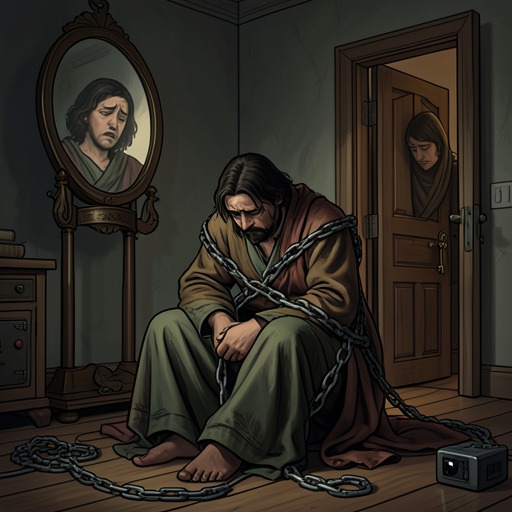
The book applies Pharaoh’s response to people who want freedom from bondage but do not want to surrender the stronghold producing it. Such people may dislike the pain, suffering, and consequences of their condition while still preserving the condition itself for a little longer. “One more day with the frogs” names that divided attitude: distress is acknowledged, but deliverance is postponed.
The metaphor is made urgent by its consequence. Pharaoh’s decision to keep the bondage a little longer contributed to the downfall of his kingdom, so postponement is not treated as harmless hesitation. What is deferred today may become the cause of collapse tomorrow. The frogs thus turn time into a moral pressure: the longer destructive bondage is tolerated, the more deeply it can shape and damage a life.
The image also belongs to a wider pattern of spiritual avoidance in the book. After sin, Adam and Eve felt exposed, sewed fig leaves together, and hid from God; the fig leaves represented human efforts to appear righteous rather than returning openly to God. In the same way, people who skip prayer or are caught in distraction may construct excuses instead of seeking help. The recommended response is not concealment or delay, but returning to God through the covering of Jesus’s blood and continuing in persistent prayer.
Demonic Association and Deliverance
Frogs acquire an explicitly supernatural meaning through Revelation 16:13-14, where three unclean spirits “like frogs” come from the mouths of the dragon, the beast, and the false prophet. They are described as spirits of devils working miracles and going out to gather the kings of the earth for battle. Within the book’s framework, this scriptural comparison allows the plague image to signify demonic activity rather than merely physical nuisance.
That association connects the frogs with prison spirits and demonic strongholds. The book argues that people do not have to remain in such bondage and can be free when they refuse to leave God alone until deliverance is manifested. The contrast is between Pharaoh’s postponement and determined spiritual persistence: one attitude asks for another day of captivity, while the other presses toward release now.
A personal deliverance account illustrates the latter response. A young man was locked in a basement while manifesting a demon, moving his head back and forth amid demonic screams. The narrator commanded the evil spirits to come out, and after several minutes the man was restored to himself. In a later conversation, the young man explained that he wanted to be free and possessed a strong determination to be free; the narrative presents that refusal to accept another day of bondage as part of why the spirits left.
The Cost of Delay
The book reinforces the metaphor through the story of a dating couple who attended the narrator’s church. The narrator repeatedly received dreams indicating that the couple was compromising sexually and using drugs. When confronted with specific details, the woman admitted what had happened, while the man refused to repent or acknowledge the truth. The narrator advised that the relationship was unhealthy and should end.
The woman agreed that ending the relationship would be best but could not commit to doing so immediately. She wanted another day to think about it, repeating Pharaoh’s posture in a personal setting. That additional day became costly: she remained with the man, and years later the narrator saw her transformed by drug addiction, pain, and abuse. The episode gives the frogs a concrete human consequence. Tolerated bondage is not static; continued consent can intensify it until the original temporary delay becomes a destructive way of life.
Narrative and Spiritual Significance
Frogs operate as an embodied metaphor within the book’s broader language of authority, prayer, and release. They make bondage visible, noisy, and difficult to ignore, yet the decisive issue is not simply the presence of the affliction. It is whether the afflicted person will accept deliverance or preserve the familiar condition. The image therefore joins spiritual diagnosis to a demand for action.
The recurring contrast is between hiding and approaching God, silence and intercession, intimidation and authority, apology without change and repentance that produces new fruit. The book urges readers not to remain with the frogs, not to postpone freedom, and not to let shame separate them from God. Frogs finally signify the moment when a person must choose between another day of captivity and persistent faith that seeks deliverance until it is manifest.