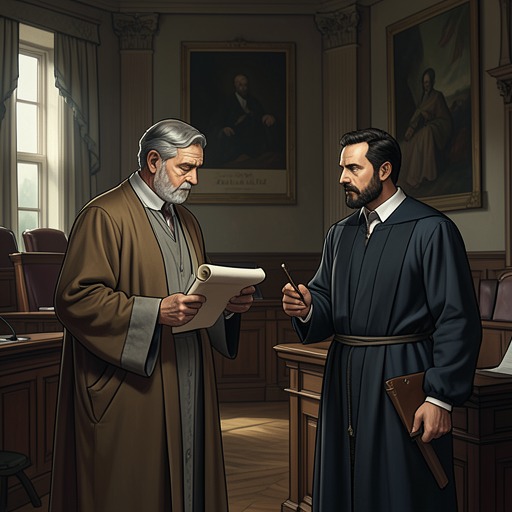
Moses' intercession after the Golden Calf
Don't Leave God Alone: How to Get God's Attention, Remain in His Presence, and Even Change His Mind to Make a Difference in Your WorldMoses' intercession after the Golden Calf transforms a moment of apparent separation between God and His people into a decisive encounter with persistent prayer. After the Israelites corrupt themselves through idolatry, God tells Moses to leave Him alone and threatens judgment; Moses refuses to retreat, appeals to God's covenant, and the Lord changes His mind about destroying the people. In the book's central pattern, intercession is not passive consolation but determined action that interrupts catastrophe.
Causes and Background
The crisis begins when the Israelites turn aside from the command they had received, make a molded calf, worship it, and sacrifice to it. Their apostasy follows the exodus from Egypt and violates the relationship established through God's deliverance and instruction. In response, God describes the people as stiff-necked and tells Moses to go down from the mountain because they have corrupted themselves.
God's statement is stark: He asks Moses to leave Him alone so that His wrath may burn hot against the Israelites and consume them, while offering to make Moses into a great nation. The proposal creates a direct conflict between threatened judgment and the future of the people Moses leads. The narrative emphasizes how shocking the request sounds because the God who desires fellowship with His people appears, for a moment, to seek separation from them.
Moses' Plea
Moses does not accept the command as the final word. He pleads with the Lord his God and asks why divine wrath should burn against the people whom God Himself brought out of Egypt with great power and a mighty hand. His appeal therefore begins by recalling God's action and responsibility in the people's deliverance rather than treating Israel as a disposable failure.
He then invokes the Egyptians' likely interpretation of the exodus. If Israel is destroyed in the mountains, Moses argues, the Egyptians may say that God brought the people out only to kill them and consume them from the face of the earth. The threatened judgment would thus damage the public meaning of God's saving act and give Egypt grounds to misread God's purpose.
Moses' strongest appeal is covenantal. He asks God to remember Abraham, Isaac, and Israel, the servants to whom God swore by His own self that their descendants would be multiplied like the stars of heaven and inherit the promised land forever. Moses places the present crisis inside the larger continuity of God's promise, insisting that the molded calf cannot erase the relationship and future God has declared.
Reversal and Consequences
The book interprets Moses' pleading as the interruption of an impending disaster. The imagined celebration of Hell is cut short when Moses refuses to leave the Lord alone; the enemy's plan depends on separation between God and humanity, whereas intercession restores connection and creates the possibility of intervention.
The decisive reversal is stated in Exodus 32:14: the Lord changes His mind about the harm He had said He would do to His people. The text therefore presents Moses as an intercessor whose persistence affects the course of events. The author explicitly draws the conclusion that Moses changed God's mind and that such prayer remains possible for believers.
The stakes are described in national as well as personal terms. Without Moses' intervention, the author imagines that God might have started over with Moses and that the newly formed people could have become the children of Moses rather than the children of Israel. This speculative contrast underscores what Moses' plea preserves: not merely individual lives, but the identity and continuity of the people brought out of Egypt.
The Pattern of Persistent Prayer
The episode becomes the governing example for the book's teaching on refusing to leave God alone. Christians who fail repeatedly in prayer may feel ashamed, assume that God is angry, and run away from prayer rather than face another perceived failure. The account of Adam and Eve hiding after sin is offered as a parallel, but Moses provides the opposing response: he moves toward God in the middle of crisis instead of covering failure with avoidance.
The same principle is later stated as importunity, meaning prayer that is shameless, bold, determined, pressing, entreating, and persistent. Jesus' teaching in Luke 11 and His command to pray and not faint in Luke 18 are read as calls to continue pressing in rather than treating an apparent refusal as a reason to stop. Moses' intercession supplies the biblical model for this posture: he will not accept no for an answer when the lives and future of Israel are at stake.
The principle is also connected with deliverance. Believers are urged to refuse to leave God alone, use the Word of God and the name of Jesus, believe that the Lord wants them free, stand their ground, refuse to give up on deliverance, and remain in church under an anointed pastor. Moses' action becomes part of a wider claim that persistent contact with God breaks the enemy's access and prevents separation from becoming the final condition.
Continuing Significance
The episode is not confined to ancient Israel in the book's application. It is used to encourage readers to approach God even after failure, to appeal to His promises, and to continue praying until circumstances change. The death of Jesus Christ on the cross is said to have removed the separation between God and humanity, while prayerlessness can recreate that separation in lived experience; bold access to the throne of grace is therefore treated as both privilege and responsibility.
The book further develops Moses' example through the language of a holy attitude of victory. David's challenge to Goliath and the angel's declaration to Zerubbabel that the great mountain would become a plain are presented as parallel forms of determined faith. The recurring claim is that believers should address obstacles rather than simply accept them, expecting God's grace to meet what they cannot overcome.
This logic extends to spoken words and prophetic declaration. Elijah says that there will be neither dew nor rain according to his word, and the author recounts a ministry occasion in an overseas region suffering months of drought in which he commanded the drought to stop within twenty-four hours. Although no rain appeared immediately and the next day's sun seemed to contradict the prophecy, clouds formed later that afternoon, heavy rain fell, thunder shook buildings, and the drought ended. The episode is offered as a contemporary parallel to the book's larger conviction that persistent, faith-filled speech and prayer can precede a visible reversal.
The final application turns directly toward personal devotion. Readers are urged to spend quality time with God every day, seek a more intimate relationship with Jesus Christ, and begin a new life of refusing to leave God alone. The closing prayer asks God to forgive sins, fill the believer with the Holy Spirit, draw the believer closer, and establish a lifelong commitment to pursue Him until blessing is received. Moses' intercession thus functions as both a historical act of mercy for Israel and the book's foundational image of prayer that refuses withdrawal when judgment, shame, delay, or apparent silence presses in.