Paul and Silas’s prison earthquake
Don't Leave God Alone: How to Get God's Attention, Remain in His Presence, and Even Change His Mind to Make a Difference in Your WorldPaul and Silas’s prison earthquake is the book’s clearest biblical demonstration that worship can become an instrument of liberation. Their imprisonment does not end through escape, negotiation, or a change in visible circumstances first; it ends after they continue praying and praising God at midnight, when bondage is most painful and freedom least apparent. The event therefore turns a prison into a test of spiritual persistence and makes their worship the decisive movement from confinement to release.
Causes and Background
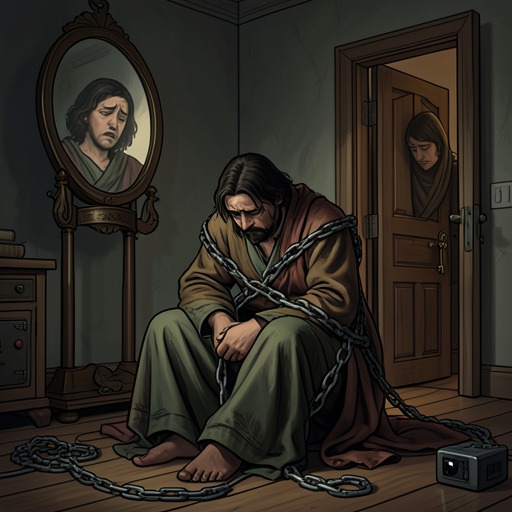
Paul and Silas are presented as imprisoned people confronting both outward captivity and the inward pressure associated with bondage. The discussion distinguishes two symbolic chains: one represents hidden inward bondage that others may not see, while the other represents an outward form of bondage recognizable to everyone. Their natural prison experience thus becomes a framework for understanding spiritual captivity, in which visible circumstances and concealed habits can reinforce one another.
The crucial condition of the event is its timing. Paul and Silas praise God at midnight, the darkest hour of their imprisonment, rather than waiting for evidence that conditions have improved. The book emphasizes that praise is hardest when people feel pain, failure, and helplessness, precisely because bondage seems to contradict the promise of freedom. Their choice to worship under those conditions establishes persistence, rather than emotional ease or immediate results, as the event’s central cause.
What Happens
The account describes Paul and Silas praying and singing praises to God while the other prisoners listened. Their worship is not private in its effect: the prisoners heard them, so the act of praise became a public testimony within the prison. The quoted biblical account states, "at midnight Paul and Silas prayed, and sang praises unto God: and the prisoners heard them."
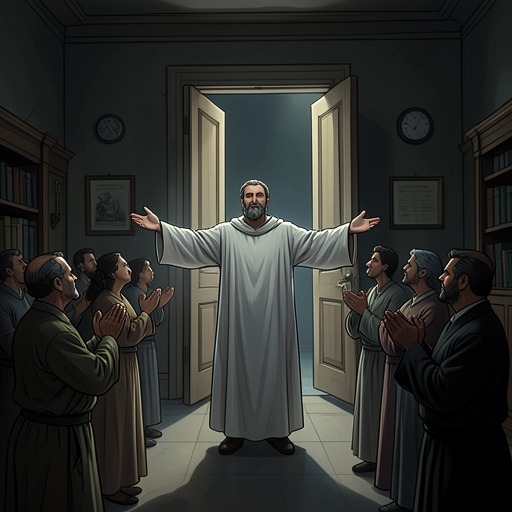
The response is sudden and physical. A great earthquake shakes the foundations of the prison; immediately, all the doors open and every prisoner’s bands are loosened. The release is wider than the two apostles’ personal deliverance. The earthquake does not merely create an opportunity for Paul and Silas to leave; it breaks the restraints of everyone in the prison, making the event a communal reversal from confinement to open possibility.
The narrative presents worship as the spiritual action that precedes this reversal. Paul and Silas do not remain bound while waiting passively for rescue. Instead, their praise places God above their own failures, pain, and sins. The book interprets that worship as a cry for deliverance and freedom from bondage and slavery, giving the earthquake meaning beyond its physical force.
Consequences and Aftermath
Paul and Silas’s freedom becomes a pattern for people who feel trapped by prison spirits or recurring sin habits. The book argues that freedom begins with praise and worship, especially when a person does not feel like praising. Their midnight worship supplies the model: remaining engaged with God in the moment of greatest pressure prevents bondage from becoming the final definition of the person’s condition.
The event also establishes worship as a means of both gaining and retaining freedom. The book connects it with the deliverance of the three Hebrew boys, who worshiped rather than surrendering to the power of the fiery furnace, and with David’s worship before King Saul, when evil spirits left Saul in the atmosphere of praise. These comparisons extend the prison earthquake from a single release into a recurring biblical pattern in which worship confronts oppressive spiritual power.
The book’s practical conclusion is that worship must become a lifestyle rather than an emergency response. Prison spirits are said to be fed when people allow them to rule through their choices and give them darkness in which to operate. Paul and Silas therefore represent the opposite posture: they refuse to leave God alone in worship, and their persistence creates the setting in which chains are broken and doors open.
Narrative and Thematic Significance
Within the book’s larger argument, the event supports the principle that regular communion with God is safer and more powerful than seeking Him only during crisis. The same argument is applied to public dangers: after the September 11 attacks, people filled churches and prayer meetings but soon returned to ordinary patterns; during war, prayer was treated as urgent at first and later became less central. Against this temporary crisis response, Paul and Silas offer a midnight model of sustained dependence.
The event also supplies a theology of value reversal. Prison signifies restriction, shame, and helplessness, while praise appears outwardly powerless; yet the apparent order is overturned when worship is followed by an earthquake, opened doors, and loosened bonds. The prison becomes a place where spiritual freedom is displayed before physical circumstances change. Its significance lies not only in the miraculous release but in the claim that the darkest hour can become the setting in which persistent worship most clearly demonstrates God’s liberating power.