Elisha
Don't Leave God Alone: How to Get God's Attention, Remain in His Presence, and Even Change His Mind to Make a Difference in Your WorldElisha is presented as the prophet who turns steadfast attachment into inherited spiritual power. As Elijah’s spiritual son and successor, he refuses every invitation to remain behind, follows his mentor through successive tests, and receives the mantle only after his commitment has been unmistakably proved. His story gives the book’s central exhortation—do not leave God alone until His power comes—a visible human form.
Identity and Spiritual Formation
Elisha appears within a biblical company of people who refused to give up in their pursuit of God. Alongside Jacob, Moses, Hezekiah, the church of Acts, the Syrophoenician woman, and blind Bartimaeus, he is treated as evidence that persistent faith is not reserved for extraordinary beings. The book emphasizes that Elijah was “a man just like us,” and Elisha likewise becomes a model through whom ordinary believers are encouraged to expect divine intervention.
His identity is inseparable from his relationship with Elijah. He is not portrayed as someone seeking power merely for personal advancement, but as a spiritual son who loves his father, honors the ministry he carries, and desires the God who works through him. The mantle matters because it represents the anointing resting on Elijah’s life; Elisha wants not simply an office or a public reputation, but the presence and power that made his mentor faithful and effective.
The Pursuit of Elijah
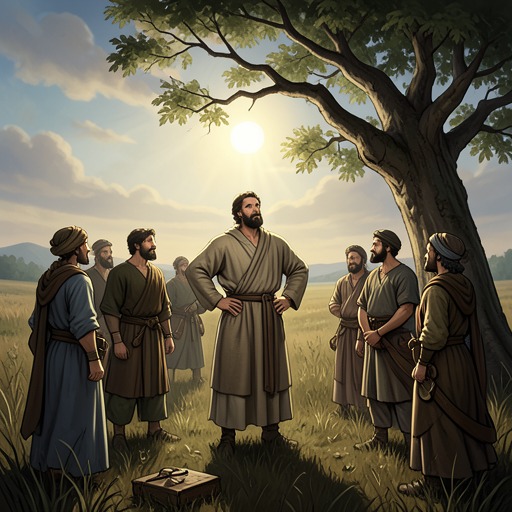
Elijah repeatedly tells Elisha to remain behind while he goes onward, first from Gilgal toward Bethel and then through the continuing stages of the journey. Each time, Elisha refuses. His oath is summarized in the declaration, “As the LORD liveth, and as thy soul liveth, I will not leave thee.” The repetition is crucial: his persistence is not a single dramatic gesture but a pattern sustained across several opportunities to quit.
The book interprets Elijah’s apparent efforts to dismiss him as a test rather than a genuine rejection. Elijah is testing Elisha’s resolve, commitment, and motive. If Elisha follows only to obtain supernatural power for self-promotion, the pursuit will fail at the level of the heart. If he continues because he loves his spiritual father and values the God whom Elijah serves, his persistence will demonstrate that he is ready to receive the ministry being passed on.
Elisha’s route runs through four places of testing: Gilgal, Bethel, Jericho, and the Jordan. These locations form a progression in which determination is gradually built into him. The journey is therefore more than travel between towns. It is a process of formation, with each stage examining whether he will continue when the road becomes difficult, when the promise is delayed, or when the visible evidence seems to suggest that God’s power has moved elsewhere.
The Mantle and the Transfer of Power
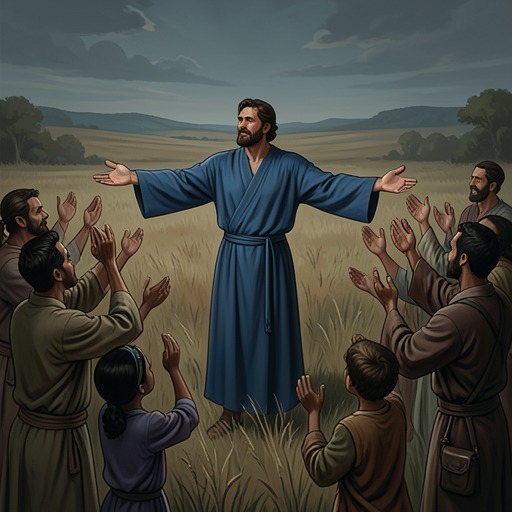
At the Jordan, the test reaches its climax. Elijah is taken up in a whirlwind between a chariot and horses of fire, and Elisha watches his spiritual father disappear. In grief, he tears his own robe. What remains is Elijah’s cloak, the mantle that symbolizes the anointing Elisha has pursued through the entire journey.
Elisha picks up the mantle and strikes the Jordan. His cry, “Where is the LORD God of Elijah?” expresses both uncertainty and expectation: he wants the God who empowered Elijah to be present with him now. When the river divides and he walks through, the answer is enacted rather than explained. Elisha discovers that his refusal to leave Elijah has positioned him to receive the same mighty anointing. The power did not vanish with the departing prophet; it has been entrusted to the successor prepared to carry it.
This moment establishes Elisha’s change from devoted follower to active minister. He must now use the power he sought rather than merely admire it in another person. The book presents this transition as a responsibility. Elisha has passed the tests, but the inheritance becomes meaningful only when he walks in it himself and continues the work of God.
Miracles and Ministry After the Inheritance
The book links Elisha’s persistence directly to a wide range of miracles. First, the Jordan parts when he strikes it with Elijah’s mantle, marking his crossing into the inheritance of prophetic power. He then heals the bad water with salt, showing power over what is cursed or corrupted. The account of the children and the two she-bears is treated more darkly, as an example of the force carried by prophetic words and the grave consequences that can follow their misuse.
At the valley of ditches, Elisha becomes the source of a promise that water will appear without wind or rain, turning an apparently hopeless military situation into one in which provision arrives supernaturally. He also helps a widow whose creditors threaten her by instructing her to borrow vessels; her oil multiplies until her needs can be met. Through his word, a barren woman receives a son, and when that son later dies, Elisha raises him back to life.
His ministry extends to the neutralization of poisoned stew, the restoration of an axe head that has fallen into the river, and the opening of his servant’s spiritual sight when Israel is surrounded by an enemy army. In the latter episode, the servant is enabled to see that a heavenly army is greater than the forces threatening them. Elisha also joins the hands of the king of Israel and directs him to strike the ground with arrows, making the king’s repeated action a sign of the extent of the coming victory.
Even after Elisha’s death, the anointing associated with him remains potent. A dead man thrown into Elisha’s grave comes back to life when he touches the prophet’s bones. The event extends Elisha’s influence beyond his earthly ministry and becomes, in the book’s interpretation, a promise that God’s power can be imparted to future generations.
Example, Encouragement, and Narrative Role
Elisha’s story is repeatedly applied to present needs. When a newborn girl in the church community is diagnosed with an incurable disease affecting her liver and blood, her platelet count is extremely low and doctors give her only an 11 percent chance of living. Prayer continues even while the situation appears to worsen. The church keeps speaking God’s promises of healing, and the child begins to recover dramatically the following day. She is later described as healthy and full of life. The account is explicitly compared with Elisha’s uncertainty at the Jordan: persistence continues until divine power is manifested.
The book also uses Elisha to interpret its exhortation to readers. His refusal to quit becomes a pattern for anyone facing delayed answers, dying dreams, or seemingly immovable obstacles. The appeal is not merely to admire a biblical figure but to imitate his determination by making prayer a priority and pursuing God through every place of testing. In this framework, Elisha functions as a mentor-hero: he receives an inheritance, survives a separation, and returns from the threshold with an enabling power intended for others.
His narrative significance finally rests on the union of love, endurance, and succession. Elisha does not seize the mantle; he remains close enough, long enough, and faithfully enough to receive it. The power he inherits is then measured by service—healing waters, supplying oil, restoring life, revealing protection, winning battles, and reaching beyond his own lifetime. His character therefore embodies the book’s claim that persistent pursuit can transform a disciple into a bearer of God’s power.