Healing of blind Bartimaeus
Don't Leave God Alone: How to Get God's Attention, Remain in His Presence, and Even Change His Mind to Make a Difference in Your WorldHealing of blind Bartimaeus is presented as a decisive example of persistence overcoming apparent rejection. In the book’s account, blind Bartimaeus does not treat silence, social obstruction, or delay as a final answer; he continues seeking Jesus Christ until his determination leads to healing and a transformed direction of life.
Identity and Circumstances
Blind Bartimaeus appears as a person in urgent need of a miracle, defined in the narrative by blindness and by an unusually forceful response to that condition. The account does not develop his family, occupation, or earlier life, but it makes his physical limitation the immediate obstacle through which his faith becomes visible. His need is not treated as a reason for passivity. Instead, the severity of his condition intensifies his pursuit of Jesus Christ.
The book places Bartimaeus alongside other figures who press toward divine help when ordinary circumstances appear to close the way. The woman with the issue of blood presses through a crowd to touch Jesus Christ; the Syrophoenician woman persists in requesting healing for her daughter; and Zacchaeus climbs a sycamore tree in order to see Jesus Christ. Bartimaeus belongs to this recurring pattern, but his story is especially shaped by vocal persistence: he continues calling out even when the surrounding people do not immediately assist him.
The Course of the Healing
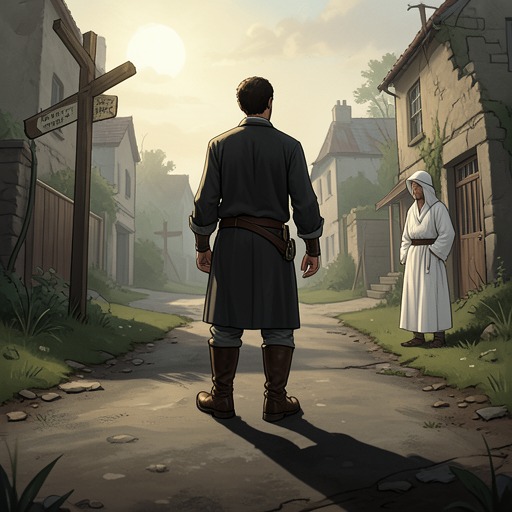
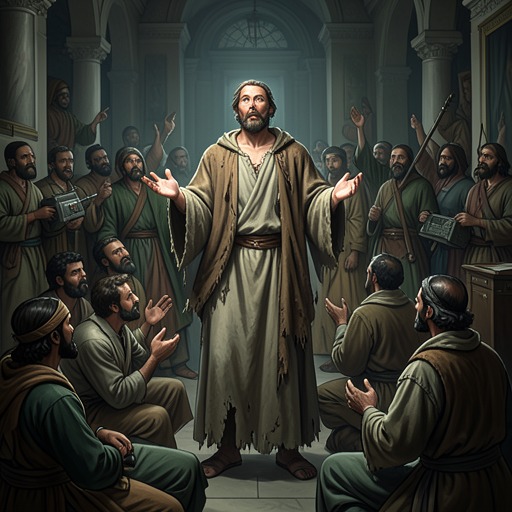
Bartimaeus refuses to leave Jesus Christ alone even when he is ignored and when other people attempt to prevent him from reaching the source of healing. This opposition establishes the central conflict of the event. His problem is not only blindness; it is also the pressure to become quiet, accept exclusion, and abandon the appeal before receiving an answer.
The narrative emphasizes that his determination produces a concrete result: he receives his sight. The healing therefore functions as more than a report of physical recovery. It is the reversal of a situation in which Bartimaeus has been defined by limitation and blocked access. The same persistence that brings him into the presence of Jesus Christ becomes the means by which his condition changes.
The event is presented within a broader biblical witness to determined prayer. Jacob refuses to leave until he is blessed; Hezekiah prays after being told that he is destined to die and receives fifteen additional years of life; and the church in Acts responds to persecution with prayer, after which great miracles take place. Bartimaeus’s healing thus appears not as an isolated exception but as one instance in a sequence of people who continue seeking God when circumstances, apparent silence, or other people tell them to stop.
Consequences and Continuing Direction
The immediate consequence is restored sight, which changes Bartimaeus’s relation to the world and to Jesus Christ. The book’s related characterization of Bartimaeus states that he receives his sight and follows Jesus Christ. His healing therefore has a directional consequence: it does not end merely in relief from blindness but in continued attachment to the one whom he persistently sought.
This outcome contrasts with the response of people who withdraw from prayer after failure. The book argues that many Christians run away from God because they feel embarrassed, believe they have disappointed Him, or fear that He is angry with them. Bartimaeus represents the opposite movement. He does not conceal his need or retreat when his first appeal appears unsuccessful. His public insistence makes need into action and turns obstruction into an occasion for faith.
Narrative and Thematic Significance
Bartimaeus’s healing serves as a compact illustration of the book’s principle of refusing to give up on deliverance. The book later states that people seeking freedom should refuse to leave God alone, use the Word of God and the name of Jesus Christ, believe that the Lord wants them free, stand their ground, and refuse to abandon their deliverance. Bartimaeus embodies the first and governing principle: he keeps reaching toward Jesus Christ until the answer arrives.
The story also establishes a contrast between worsening circumstances and persistent pursuit. The woman with the issue of blood has spent all she possesses and is described as having become worse rather than better, while a newborn girl in another testimony has only an 11 percent chance of living and continues to decline despite prayer. Against these scenes of deterioration, Bartimaeus represents the moment when persistence breaks through an apparently closed situation. His blindness is not allowed to become the final meaning of his life; through continued appeal, it becomes the setting for a testimony of healing.
In the book’s rhetorical structure, Bartimaeus is both a biblical witness and an implied pattern for readers. His story moves from need, through resistance, to healing, and then toward following Jesus Christ. The event consequently asks readers to interpret apparent neglect or opposition not as proof that divine help is unavailable, but as a test of whether they will continue to call, seek, and press forward.