
Two Brothers and a Drug Ring
DopesickThis thread follows Thomas Jones III’s loyalty to Ronnie Jones as family support collides with repeated criminal choices and a long prison sentence.
increasing Bearing strength in each event
 decreasing
Bearing strength in each eventdecreasingUnequal Paths

Unequal Paths
Brothers in one household
Ronnie Jones and Thomas Jones III grew up amid economic instability and changing family circumstances. Thomas remembered Ronnie as bright and capable, but also quick to disregard authority and prone to conflict.
A complicated attachment
The brothers’ differences did not erase their affection. Thomas understood Ronnie’s intelligence and could see how frustration and impatience shaped his decisions.
Their relationship supplies a family perspective missing from the public image of a drug-ring leader. Thomas saw both the person he loved and the pattern that repeatedly harmed him.
Help After Prison

Help After Prison
A brother offers support
Thomas gave Ronnie money to buy a laptop and helped him get on his feet. He hoped his brother could use his technical training and find a stable job.
Impatience returns
Ronnie grew frustrated with the pace of advancement and felt his criminal record limited his prospects. Thomas urged him to value employment and wait for better opportunities, but Ronnie wanted more immediate success.
The difference in their approach became a recurring source of disappointment. Thomas could provide help, but he could not make Ronnie accept the slow work of rebuilding.
Suspicion and Distance

Suspicion and Distance
A concealed life
Ronnie told relatives that he was pursuing computer repair and other legitimate business plans. Thomas became uneasy when his brother appeared to have expensive vehicles inconsistent with the business he described.
The cost of not knowing
Thomas admitted that he did not want to know every detail. The family’s trust allowed Ronnie to maintain a separation between his public account and his criminal activity.
Their closeness could not prevent the deception. It left Thomas to reconsider earlier conversations after the scale of Ronnie’s heroin dealing emerged.
A Sentence Reaches Home

A Sentence Reaches Home
A severe consequence
Thomas learned that Ronnie had received a long federal sentence after rejecting an earlier plea arrangement. He had warned his brother that refusing to listen could leave him facing a much harsher outcome.
Loyalty in conflict
Thomas remained connected to Ronnie even while recognizing the choices that had led to prison. His loyalty did not require him to deny the harm Ronnie’s network caused.
The sentence made family love coexist with anger and helplessness. Thomas could continue to care about his brother without being able to undo what had happened.
Family Without Excuse
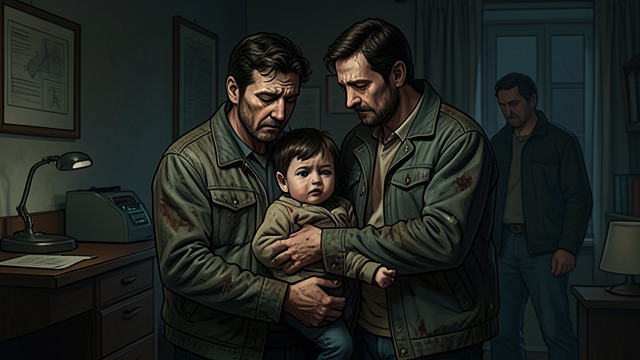
Family Without Excuse
A continuing bond
Thomas described the way family loyalty persists through incarceration. He felt for Ronnie and other people leaving prison, especially when the system offered little help finding work or rebuilding a life.
A wider criticism
He also believed prison often failed to rehabilitate people and could make return to criminal activity more likely. His criticism did not erase his brother’s responsibility for distributing heroin.
The title of Thomas’s song captures the emotional balance: a brother may be wrong and still be family. That bond complicates public narratives that reduce people to either villains or victims.
Childhood and adolescence, before Ronnie’s first prison sentence
2008, after Ronnie returned from an earlier prison term
2010–2012, before Ronnie’s heroin operation became public
2013–2014, when Ronnie received a twenty-three-year sentence
2016–2017, as Thomas reflected on Ronnie’s incarceration
