
Bill Metcalf’s Inherited Mission
DopesickThis thread traces how Bill Metcalf’s childhood experience with his heroin-addicted father shaped his relentless investigation of Ronnie Jones.
increasing Bearing strength in each event
 decreasing
Bearing strength in each eventdecreasingA Childhood Arrest
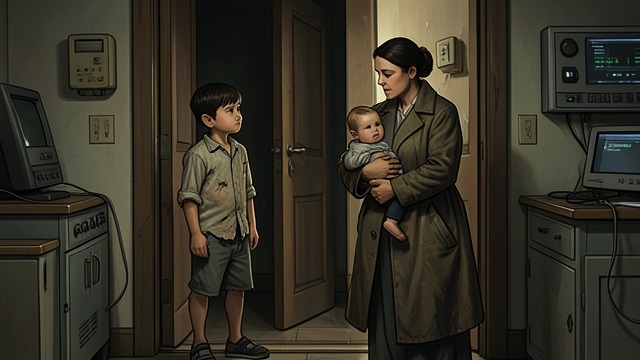
A Childhood Arrest
A family disrupted
Bill Metcalf saw police arrest his father, who was involved in heroin trafficking. Before leaving, his father told the boy that he was now responsible for caring for his mother and sister.
A child’s confusion
Metcalf remembered being more bewildered than prepared for the demand. His mother took the children away with little more than what they had with them.
The episode fixed the consequences of addiction and drug dealing inside his family life. It later shaped how he understood the people and markets he investigated.
A Vow to Be the Cop

A Vow to Be the Cop
A clear identity
Metcalf grew up in poverty and saw addiction’s effects around him. He embraced the anti-drug message of his youth and pursued law enforcement work, identifying with the role of the person who stopped the harm.
Experience deepens the motive
His understanding came from more than slogans. He had seen his father nod off and watched his mother struggle to protect the children, experiences that made drug cases personally charged.
The career choice became a way to impose order on a history that had felt chaotic. That purpose would later pull him toward work that strained his own family life.
The FUBI Pursuit

The FUBI Pursuit
A case becomes personal
Metcalf worked long hours tracking Ronnie Jones and the network bringing heroin into the Shenandoah Valley. He saw the investigation as a chance to disrupt a market harming a community, while his own memories of his father sharpened his determination.
The family cost
His wife and children experienced his absences as the investigation consumed evenings and holidays. His youngest daughter asked whether the task-force office was where he lived.
The pursuit carried both public purpose and private cost. Metcalf’s personal history helped him recognize the damage of drugs, but also made it harder to step away from the case.
A Shared Recognition

A Shared Recognition
Opponents face one another
Metcalf and Ronnie Jones disliked each other from the beginning. The agent saw a dealer exploiting a community; Jones saw an aggressive investigator threatening his family and freedom.
Similar pressures, different choices
Both men had experienced family instability and economic hardship, but they occupied opposite sides of the law. Their similarities did not make their actions equivalent or erase the harm caused by Jones’s distribution.
The encounter unsettled the neat divide between a good investigator and a bad defendant. It showed how biography can illuminate a person without determining what he does.
After the Case
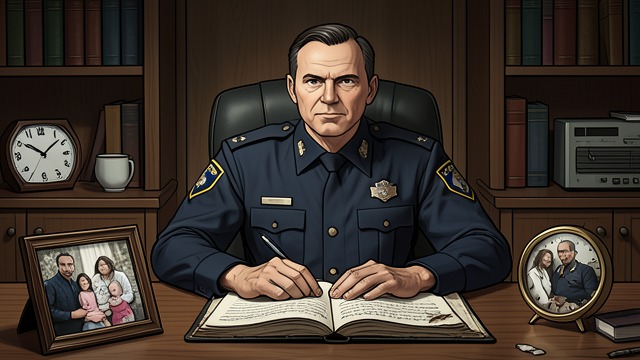
After the Case
A promise to leave the chase
Metcalf recognized that his pursuit of the case had become consuming. He promised his wife he would seek a desk assignment after the investigation, acknowledging that his work had begun to resemble another form of compulsion.
A divided legacy
He helped dismantle a major heroin network but could not stop the larger market or prevent every death. The case offered accomplishment without closure.
His thread parallels the book’s broader question about systems that reproduce the behavior they seek to control. Even the person fighting the drug trade can lose balance to the demands of the fight.
Late 1970s, when Bill Metcalf was a child
1980s–1990s, as Metcalf entered adulthood and law enforcement
2012–2013, as Metcalf pursued the Virginia heroin network
2013–2014, during Metcalf’s encounters with Ronnie in custody
Near the end of the FUBI prosecution, as Metcalf reconsidered his priorities
