
The Hidden Valley Circle
DopesickThis thread follows the interconnected young people in Roanoke County whose shared drug use, deaths, and family networks made the suburban epidemic visible.
increasing Bearing strength in each event
 decreasing
Bearing strength in each eventdecreasingA Quiet Social Network
A Quiet Social Network
Drugs within familiar spaces
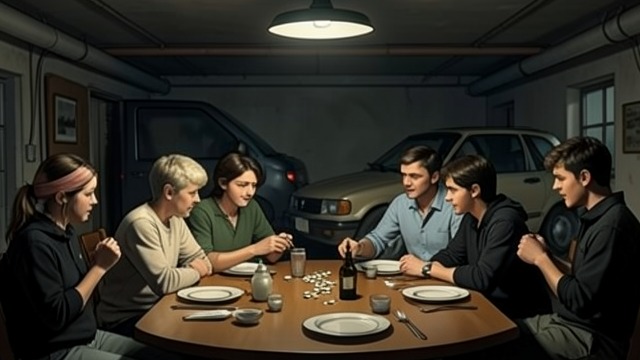
Teenagers in affluent neighborhoods obtained pills from friends, relatives, and medicine cabinets. Parents often saw ordinary school, work, and family routines and did not recognize the extent of the drug activity.
A network forms
Pills passed through peer groups and connected young people who might otherwise have appeared socially secure. The availability of money allowed some to maintain use without the visible theft associated with poorer communities.
The suburb’s affluence concealed the problem rather than preventing it. The crisis developed in basements, cars, and parties long before many adults believed heroin was nearby.
Scott Roth’s Death

Scott Roth’s Death
A hidden addiction exposed
Scott Roth had concealed significant drug use from his mother, Robin. He died after taking heroin supplied through people he knew, making a suburban overdose impossible to dismiss as an urban anomaly.
A mother’s grief
Robin struggled with guilt and anger, wondering how much she could have seen or changed. She preserved sunflowers, memories, and the ordinary details of the son she had lost.
Scott’s death was a warning, but the community did not immediately understand the larger pattern. The circle of young users continued to experience addiction and loss.
Friends Become Bereaved Families

Friends Become Bereaved Families
Loss accumulates
Colton Banks and others in the social circle died, while surviving friends moved among treatment, relapse, and incarceration. Families that had once known one another through school and community life became connected by grief.
Silence begins to break
Parents started speaking publicly and offering help to other families. Shared experience challenged the idea that addiction reflected a uniquely bad household or a lack of care.
The network became a community of mutual recognition. Its members carried different histories, but the same losses made isolation harder to sustain.
The Mothers’ Network

The Mothers’ Network
Private knowledge becomes shared work
Jamie Waldrop, Janine Underwood, Patricia Mehrmann, and others connected families with treatment and support. They used personal contacts, phone calls, and practical help to navigate an overstretched system.
The limits of solidarity
The mothers could accompany people and keep trying, but they could not guarantee a bed or prevent every relapse. Each success was fragile, and each death reopened the grief they carried.
The network transformed the suburban circle from a hidden scene into an informal care system. It demonstrated compassion while exposing how little formal support families had received.
A Name for the Pattern
A Name for the Pattern
The place loses its innocence
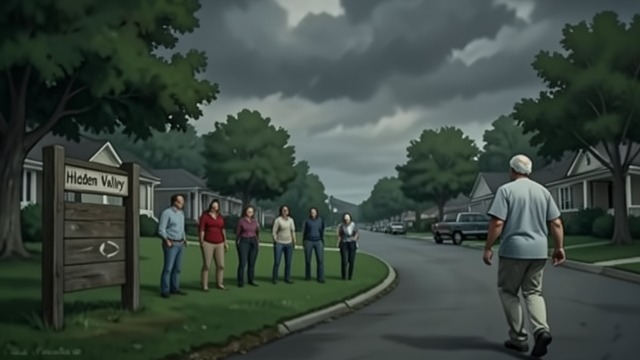
By the end of the book, Hidden Valley’s history includes overdoses, treatment attempts, and survivors still working toward recovery. The neighborhood’s name no longer suggests that families there were protected from addiction.
A wider lesson
The stories demonstrate that wealth and education do not eliminate vulnerability. They can delay recognition and purchase temporary treatment, but they cannot remove dependence or guarantee access to effective care.
The suburban thread reframes the national crisis as shared rather than marginal. Its losses challenged the boundary between “those people” and “people like us.”
Mid-to-late 2000s, as pills circulated among suburban teenagers
April 2010, when Scott died after using heroin
2012–2014, as more young people died or entered prison
2015–2017, as parents built informal support and referrals
Near the epilogue, as families remembered the remaining circle
