
The Canaries and the Warnings
DopesickThis thread traces how early warnings from rural health workers were dismissed, then recognized as forecasts of a national crisis.
increasing Bearing strength in each event
 decreasing
Bearing strength in each eventdecreasingLocal Evidence Appears
Local Evidence Appears
A pattern takes shape
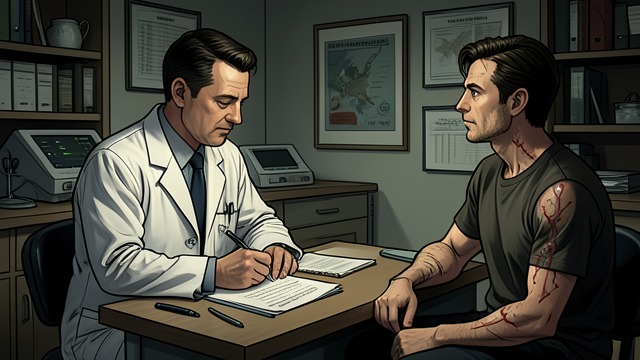
Richard Stallard heard that OxyContin was being sold illicitly, while Art Van Zee began seeing patients with signs of injection and dependence. Overdose counts rose sharply in the region.
Early observers connect the dots
Sue Cantrell and other health workers understood the cases as a new public-health problem, not merely a collection of individual crimes. Their warnings came from direct observation of patients and families.
The evidence existed before national attention. The challenge was persuading institutions to treat local experience as a signal rather than an exception.
A Sentinel Warning

A Sentinel Warning
A physician raises the alarm
Art Van Zee wrote to Purdue Pharma describing misuse, overdose, abscesses, and the possibility that the region was an early warning area. He compared the danger to communities that had seen the first signs of HIV.
A corporate response falls short
The company sent forms and redirected attention toward undertreatment of pain. At a public meeting, its representative disputed the claim that OxyContin’s abuse was the central issue.
The exchange revealed a conflict over what counted as credible evidence. The doctor saw the consequences in his patients; the company emphasized a different interpretation of the problem.
Local Warnings Go Unheard
Local Warnings Go Unheard
The problem is passed along
Public-health officials referred concerns to other agencies, while the drug’s harms crossed the boundaries between health, law enforcement, and social services. No single institution accepted responsibility for the whole problem.
Families speak directly
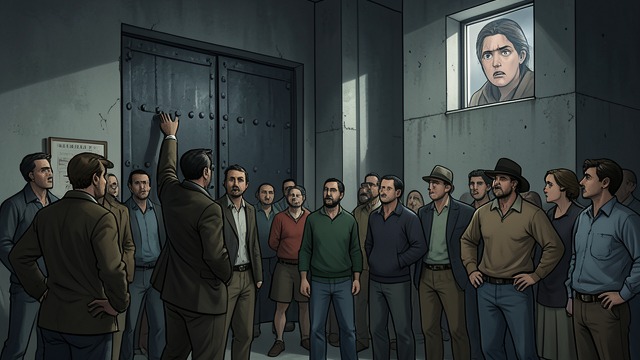
Community meetings brought hundreds of residents to hear about overdoses and addiction. Purdue offered a grant and framed its response around diversion, but local advocates questioned whether the company was addressing the cause of the crisis.
The disconnect allowed the epidemic to grow while institutions debated jurisdiction. The book treats this fragmentation as a cause of delay, not a neutral administrative detail.
The Crisis Spreads North

The Crisis Spreads North
Similar outbreaks recur
Reports from Maine, Virginia, and later suburban communities described prescription misuse, theft, heroin use, and overdose. Local observers recognized familiar patterns in places separated by distance and culture.
Warnings gain attention slowly
The epidemic became more visible when affluent suburban families and prominent local figures were affected. Rural warnings had been accurate, but their political weight changed only as the crisis moved into new communities.
The canary metaphor captures both foresight and neglect. Communities on the front lines had already seen what others would later call a new emergency.
An Unfinished Warning
An Unfinished Warning
Lessons travel unevenly
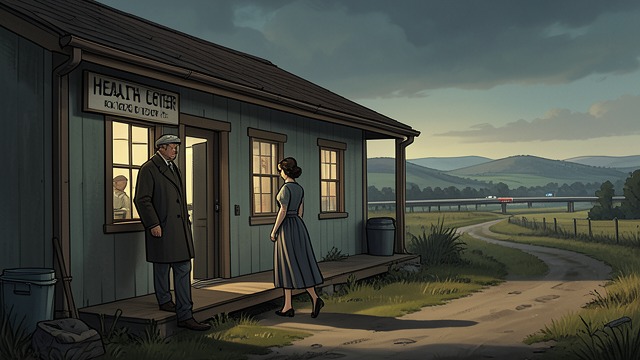
Health workers described rural Virginia as a place that had experienced later developments elsewhere in advance, including addiction, HIV risk, and foster-care consequences. Their knowledge could inform prevention if outside communities listened.
The next warning matters
Advocates argued for early treatment, syringe exchange, naloxone, and meaningful economic investment. They worried that communities would wait for visible deaths before taking action.
The book ends by asking whether the nation can learn from places it once ignored. The warning is not over simply because awareness has increased.
1997–1999, as overdoses emerged in Southwest Virginia
2000, as Art Van Zee wrote to Purdue Pharma
2000–2001, as Virginia officials and Purdue debated the crisis
2000s–2012, as opioid harm reached other rural areas and suburbs
2016–2017, as advocates urged other communities to learn from Appalachia
