
The Language That Makes Violence Ordinary
Down Cemetery RoadThis thread traces the euphemisms and official formulas that make political violence sound manageable, and the moments when their human consequences become impossible to ignore.
increasing Bearing strength in each event
 decreasing
Bearing strength in each eventdecreasingWar as a Market

War as a Market
Casual arithmetic
Gerard Inchon describes war as a stimulus for contracts, employment, and economic activity, speaking as though the human cost belongs outside the calculation. His language turns death into a distant variable while the dinner guests argue over what a conflict means.
The nearby blast
The explosion down the road abruptly brings catastrophe within earshot. The contrast between Gerard’s confident abstractions and the damaged house makes the dinner-table discussion seem less like realism than a way of avoiding the people who pay for political decisions.
A Gas Leak That Holds
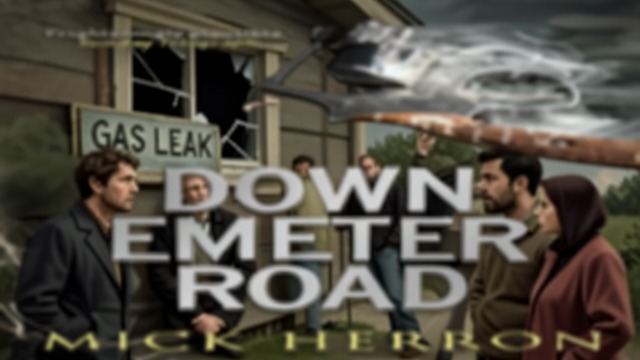
A Gas Leak That Holds
A reassuring label
The explosion is publicly described as a gas leak, a familiar explanation that makes the destruction sound accidental. The phrase gives officials and neighbors a ready-made account while hiding that the blast was deliberately arranged.
The work of concealment
Howard treats the explanation as something to maintain through controlled information and local reassurance. The language does not repair the destroyed home or restore the dead; it simply reduces the event’s political meaning enough for ordinary life to resume.
Neutralized on Paper
Neutralized on Paper
A word without a body
Crane uses the word “neutralized” in a report about a killing, choosing a bureaucratic term that obscures who died and how. The phrase is useful precisely because it makes violence sound like a completed task rather than an injury to a person.
Euphemism as permission
The Department’s official vocabulary lets its agents discuss removal, containment, and cleanup without naming murder directly. Yet the narrative repeatedly returns to bodies and grief, exposing the gap between the neat report and the reality the language is designed to hide.
The Dark Heart’s Rule
The Dark Heart’s Rule
Secrecy framed as protection
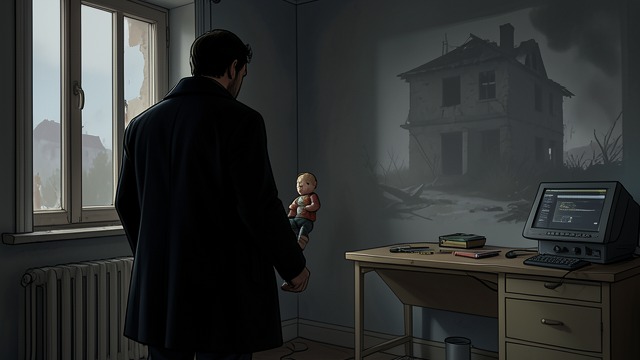
Howard explains that a democracy keeps its hidden violence out of sight because the public supposedly does not want to know what happens at the margins. He presents concealment as a service that preserves social stability rather than as an evasion of responsibility.
The missing consent
Sarah hears the argument against a background of poisoned soldiers, a bombed home, and a kidnapped child. The claimed public preference for ignorance cannot substitute for the people’s consent, and the language of protection begins to resemble another instrument of control.
Accidents as Policy

Accidents as Policy
Violence dressed as contingency
Howard offers to make Sarah’s life appear untouched by the crisis, then turns his gun on her when she will not accept the terms. His actions reveal the violence beneath the institutional promise to make troubling events disappear.
Consequences made visible
Sarah survives by wounding Howard, and the supposed accident can no longer remain a purely verbal convenience. The ending exposes the doctrine’s moral structure: the state’s calm language depends on people being made to disappear, while those threatened by it must decide whether to resist.
At Sarah’s dinner party, on the night of the bombing
The days following the explosion
After Axel Crane’s island operation
Late in the story, as Howard explains the Department’s purpose
At the final confrontation in the woods
