
People Reduced to Pieces
Down Cemetery RoadThis thread examines how institutions and operatives reduce human beings to targets, records, and game pieces, while personal attachments repeatedly disrupt that logic.
increasing Bearing strength in each event
 decreasing
Bearing strength in each eventdecreasingA Board of Blips
A Board of Blips
People as operational markers
Amos Crane imagines the operation as a board populated by blips: Downey, the child, and the agents surrounding them. This abstraction gives him a way to plan without dwelling on the lived experience of those he places in danger.
The abstraction breaks
When Crane visits Dinah, her frightened silence and physical smallness briefly confront him with the child behind the strategic marker. He retreats into the language of guarding a parcel, revealing that his awareness of her humanity is real but deliberately subordinated.
A Child Used as Bait
A Child Used as Bait
Strategy built around a child
Howard’s side keeps Dinah hidden because they expect Michael Downey to come looking for her. The child’s presence is treated as leverage in an operation whose real aim is to control a former soldier and contain the truth about the experiment.
Care inside coercion
Deedee tries to protect Dinah and asks what will happen after the operation, but receives no meaningful assurance. The contrast exposes the moral cost of strategy: people on the ground form human responsibilities that the planners prefer to leave outside the plan.
The Board Changes Shape
The Board Changes Shape
A plan redirected
Once Michael reaches the Farm and takes Dinah, the operation no longer proceeds according to the orderly expectations of its planners. Howard tries to interpret the escape as another manageable movement, while Crane redirects his attention toward pursuit and revenge.
The limits of abstraction
Each new decision creates consequences that cannot be contained within the original plan: guards die, witnesses arrive, and the child moves through danger. The game metaphor persists, but its pieces are people capable of acting beyond the rules assigned to them.
The Farm as Disposal
The Farm as Disposal
A place designed for disappearance
The Farm’s remote location makes it useful for holding people who have nowhere else to be put. Its history and isolation embody an institutional preference for removing problems from public view rather than answering for them.
Human consequences surface
When Zoë and Sarah enter the building, they encounter dead guards and a wounded woman rather than an abstract security problem. The bodies turn the hidden facility into a material record of what the operation’s language has tried to make inconsequential.
The Child’s Recognition
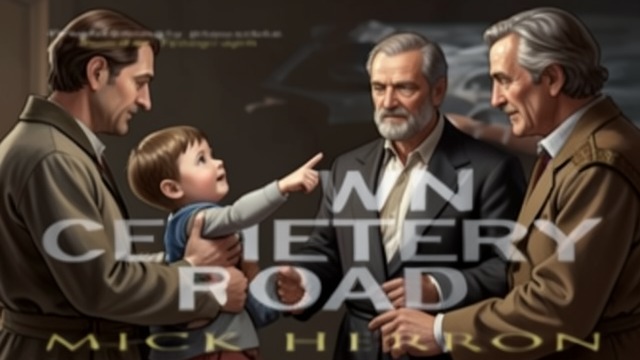
The Child’s Recognition
A small voice interrupts the game
When Dinah identifies the arriving man as the person she has seen before, her simple recognition cuts through the competing claims of agents and rescuers. The child does not speak in strategic terms; she responds to a face that has become part of her experience.
Persons beyond the board
Sarah holds Dinah while the adults negotiate guns, threats, and escape. The scene restores the child’s immediate needs to the center of events, challenging the habit of treating her as leverage, proof, or a future problem to be managed.
After the Singleton house bombing, during the Department’s response
During Dinah’s secret captivity at the Farm
After Michael takes Dinah from the island
Near the climax, after Howard reaches the island
At the final chapel confrontation
