Howard
Down Cemetery RoadHoward is the Department’s uneasy fixer: the official expected to contain the consequences of covert violence after field operatives have already acted. He understands the machinery of cover-up and can improvise with it, but he is neither insulated from its dangers nor fully in control of the people he is meant to supervise. As the crisis widens, his work moves from managing a suburban bombing to tracking Sarah Trafford and negotiating with her at gunpoint, exposing the human cost of the institution he serves.
Position and Character
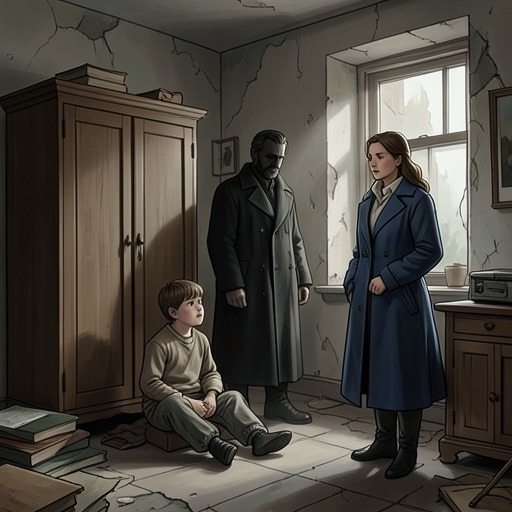
Howard first appears in an office whose improvised furnishings and air of concealment suggest the kind of business conducted there. He is summoned by a superior whose identity he has never learned; in his own thoughts he calls the man C, because the initial seems to suit a very short word. Howard is substantially younger than C, but his sparse hair and strained features make him look older, as though pressure has become part of his appearance. He waits while C stands at the window, then absorbs a dressing-down over the suburban explosion.
His position is subordinate but not simple. Howard reports to C, yet he is also responsible for dealing with the practical aftermath of decisions made elsewhere. He tells C that The Department had been given broad authority, while C insists that permission to act did not amount to permission to start a war or cause barely controlled explosions in populated areas. Howard does not answer every accusation; his silence and careful replies convey a man accustomed to working within rules that are elastic until something goes visibly wrong.
The narration gives him a dry, guarded temperament. After the reprimand, he swears fluently for more than a minute without displaying an emotion on his face, then smiles politely at the receptionist, who mistakes him for someone in forensic accounting. His private anger survives beneath an unremarkable public manner. He thinks C should come down from his office and see what street-level work involves: there, plans meet traffic, confusion, and whatever agents are available. The contrast makes Howard’s cynicism practical rather than merely rhetorical. He resents being blamed for failures he did not initiate, while continuing to perform the task of making those failures survivable for the institution.
The Bombing and the Problem of Dinah
Howard says that the first he knew of Axel Crane’s explosion was after it had happened. By then, he has to defend what he considers indefensible and arrange the cover-up after the fact, a job he likens to trying to make jelly in a sieve. He confirms that locals have been pacified with a gas-leak explanation. The official account may settle immediate questions, but it cannot undo the event or guarantee that the people affected will forget it.
The surviving child, Dinah Singleton, is the harder problem. C asks what is being done with her, and Howard can offer only that they are working on it. Walking through a London park afterward, he recognizes why an infant is more difficult to erase than an adult: acquaintances may explain an adult’s disappearance by inventing a new life or a change of direction, but a child cannot plausibly be assumed to have chosen to vanish. That difference makes the proposed cover story vulnerable to persistent questions and to people who might come looking.
Howard knows the police and local press appear to support the fix, and expects an inquest to close the matter. He also understands that appeals to national security can make the public swallow a great deal. Yet he is not convinced that using Dinah as bait is wise. Amos Crane sees her survival as an opportunity: the child remains on the board and might draw Michael Downey out. Howard is more cautious, aware that the plan could attract someone other than Downey and that Axel Crane is prone to treating a shallow grave as the fastest answer to a problem.
His response is characteristically procedural. He mentally lists three tasks: check on Dinah, establish warning signals in case events go wrong, and remind Amos Crane that he is not conducting a private war. The list demonstrates Howard’s ability to translate danger into administrative steps, but his hesitation about confronting Amos also marks the limit of that competence. He briefly entertains the idea of threatening to put Amos on car-pool duty, then recognizes that Amos is too frightening to challenge so casually. The list is useful; the authority it assumes is much less certain.
Managing the Crane Brothers and Their Superiors
Howard’s relationship with the Crane brothers is shaped by a mismatch between formal responsibility and actual control. Amos Crane holds the reins, but the bombing was Axel Crane’s field decision. Howard communicates that distinction upward even as he knows it will not absolve the Department. C warns him that the country is prepared to take up arms to prevent Downey from going public and that this possibility must not be discussed. The secrecy Howard is charged with protecting is therefore not just a local cover story; it reaches into the Department’s response to the larger operation and its consequences.
The cost of working around Amos is apparent in Howard’s thoughts about the Farm. Helicopter visits there have ended because of budgetary restrictions, a decision Howard is associated with. Amos imagines dropping him into the ocean in retaliation. Howard is not present for the fantasy, but its inclusion establishes how little leverage a bureaucratic decision gives him over an armed operative who sees it as a personal affront. Amos’s memo about Oxford further displays the gap between field action and official language: he deliberately uses the word neutralized, knowing Howard objects that a journalist can translate it as killed. In the same report, Axel is credited with killing the detective. The euphemism makes the report more manageable on paper, but its underlying violence remains legible.
After Axel dies, Howard is at the house where it happened with local police and Amos Crane. He asks whether this is the loose end Axel had supposedly dealt with, and whether Sarah Trafford is the same woman involved in the earlier failure. Later, Howard finds a crumpled copy of the letter sent to the Ministry by the detective Sarah Trafford hired. The letter confirms that her inquiry has not simply disappeared. He tells Amos that they need a plan; Amos says he is thinking, and Howard presses him to think faster. Their exchange shows Howard trying to restore operational control, but also needing the very man whose conduct has helped produce the crisis.
Howard challenges Amos again after he discovers that Mark Trafford is implicated in wrongdoing. The news does not make the immediate problem simpler; it adds another complication to a situation already defined by killings, compromised cover stories, and competing loyalties. When Amos invokes his grief for Axel, Howard does not deny it. Instead, he insists that the Department does not operate for Amos’s sole benefit. Axel’s failure, Howard argues, should be examined for lessons rather than converted into a personal campaign of revenge. He warns Amos that going off alone and spilling unnecessary blood will end his career and could put him beside Axel. The warning is both an attempt at restraint and a blunt reminder that the Department can discard its own agents.
The Department’s Fixer Under Pressure
Howard’s authority is tested physically as well as institutionally. Amos attacks him badly enough that Howard is left on the floor, struggling to swallow and breathe normally and briefly believing he may die. After six years working for The Department, he has become used to many kinds of violence, but not violence directed at himself. Even in the immediate aftermath, his mind turns to the paperwork the incident will cause someone else. That response is comic in its administrative reflex, but it also reveals how thoroughly his work has trained him to process danger as a problem to be recorded and contained.
He considers calling Security twice, but each time loses his nerve. He knows that Amos is unlikely to cooperate and that ordinary security staff may not be able to subdue a trained Crane. Howard also recognizes the agency’s hypocrisy: he had felt relief when Axel was killed, in part because he could imagine that The Department might eventually have approved an official accident to remove him. He is glad that decision was taken out of his hands, even while accepting that his own institution has contemplated the same kind of violence it now tries to manage. His fear of Amos is therefore mixed with the knowledge that the Department’s normal procedures would not make him innocent.
C later brings Howard back into the same office, before the same desk and the same view of traffic, but a new mark on the wall records the violence that has reached even this enclosed administrative space. C has heard about the altercation and calls Amos an animal. More importantly, the tally of dead civilians has grown, and C fears that Amos’s pursuit of Michael Downey will create another conspicuously violent death. He orders Howard to bring Amos home and remove him from the job, while warning that there must be no body left behind. The command makes the Department’s priorities plain: stop the uncontrolled operation, but preserve its own capacity to make a person disappear.
Howard is also given limits rather than a clean solution. C expects Amos to head toward the island, and warns that if he finds Downey before they reach it, he will leave a mess across the landscape. On the island, by contrast, the violence can be washed away and forgotten. Howard is instructed to stop Amos from reaching the group too soon, but if Amos reaches the island first, he is to be allowed to do his job and then prevented from leaving. C describes him as a pit bull that has tasted blood, an image that captures the Department’s contradictory arrangement: it uses dangerous agents, then discovers that their violence cannot be switched off at will.
Tracking the Pursuit
Howard’s later actions combine improvisation with the same instinct for control. When he tells Zoë Boehm that Dinah Singleton is not Michael Downey’s biological child but is definitely Thomas Singleton’s, he is relaying the result of blood tests. The disclosure arrives amid an urgent appeal for help because Dinah is dying. Howard adds that Michael Downey is dying too, from an illness contracted in the desert, and describes it as long-term but fatal. His manner is disoriented, yet the information reframes the danger surrounding the child: the people trying to protect or recover her are not operating with unlimited time.
On the journey, Howard accepts that he and the others may be used as bait. He assumes they will lead Amos Crane to Michael Downey and hopes to arrange matters so that everyone ends up in one place, giving him a chance to get the drop on whoever remains standing. He hopes that person will not be Amos. The plan shows both tactical calculation and the narrowness of his prospects: he is not confident he can prevent the confrontation, only that he might influence where and how it occurs.
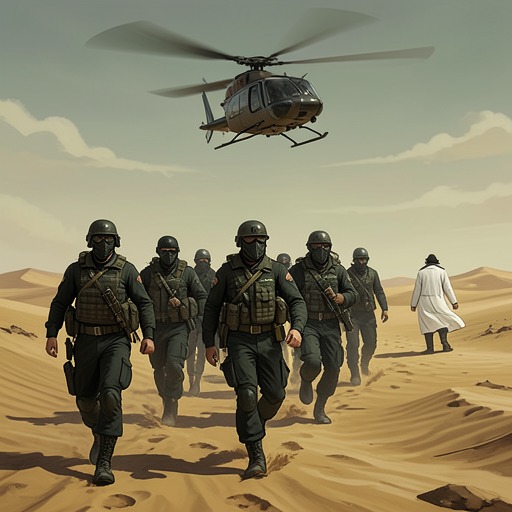
He does not need to follow the group in the conspicuous helicopter. Instead, he knows that Sarah Trafford is holding a bear and uses it as the signal for a tracking system. After the helicopter drops him near his car, he opens a laptop from his briefcase and sets its range to a two-mile area. On the display, the laptop is point A and the bear is point B. The system gives him a position but not a usable road route; he has to unfold a map across the passenger seat and mentally place himself on the grid. As point B starts moving, he realizes that he needs someone who has operated the equipment before. The detail makes his surveillance resourceful but imperfect: technology extends his reach without making him a competent field tracker.
In a later deception, Howard is involved in making a figure appear convincingly dead. The rationale is that the deader the body looks, the less carefully it will be checked. His cheerful reference to rigor mortis belongs to the same practical, darkly comic method: he treats the performance of death as another tool for manipulating attention. The ruse echoes the wider culture of the Department, where appearances are not incidental but part of the work of controlling what other people believe has happened.
Confrontation with Sarah Trafford
Howard finally addresses Sarah Trafford directly, distinguishing himself from the crimes she has uncovered. He tells her that what happened to her friend in the past had nothing to do with him or with his immediate group, insists that the deaths of the boy soldiers were crimes, and says those responsible were punished. His defense is carefully bounded: he does not deny the killings or the concealment, but places them outside his own responsibility and presents his role as dealing with their aftermath.
When Sarah points out that nobody ever knew the boy soldiers were killed, Howard treats secrecy as the central point rather than as an additional injustice. He argues that people do not necessarily want to know everything about what happens in the margins of a democracy, and defines his job as clearing up what the public does not see. The distinction is revealing. To Howard, concealment is not simply a lie told for personal advantage; it is an institutional service that prevents hidden violence from becoming a public crisis. His practical language turns the suppression of truth into a form of maintenance.
He then explains the consequences if Sarah uses her gun against him. Even if he is killed, he says, the Department will remain and will respond by causing major accidents to the people connected to her: Michael Downey, Dinah Singleton, Mark Trafford, Wigwam, and others she has encountered. The threat extends beyond Sarah herself, making personal resistance appear to endanger an entire network of people. Howard frames the choice as one between accepting the situation and provoking a larger emergency. In that final pressure, his role as fixer and the Department’s logic become inseparable: he does not need to promise that the institution is just, only that its retaliation will outlive him. His resourcefulness has brought him to the center of the confrontation, but it cannot make the system he serves safe for the people caught in its reach.