Information clampdown and gas-leak cover story
Down Cemetery RoadThe Information clampdown and gas-leak cover story are two parts of the same governing method: officials manufacture a plausible public account while restricting access to facts that could undermine it. The gas-leak explanation is meant to quiet local scrutiny after the Singleton house is destroyed; the wider clampdown protects secrets whose exposure could implicate the state in wartime violence. Together, these measures show how an official story is maintained not by persuasion alone, but by controlling who may investigate, what may be reported, and what consequences follow if the silence is broken.
The local cover story
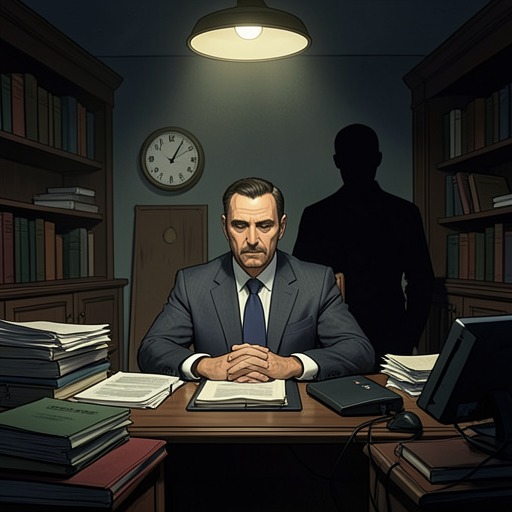
The first task is to make the destruction of the Singleton house appear ordinary. When C asks whether the local people have been pacified, Howard answers that it was a gas leak and that matters are settled. Asked whether journalists are looking for a story, Howard repeats the explanation and assures C that it will hold. The repetition matters: the account is presented not as a conclusion reached through inquiry, but as a line that must be maintained until it becomes the publicly accepted version.
The plan relies on more than a statement to the press. Howard expects the police and local journalists to accept the gas-leak account, while an inquest is supposed to close off further questions. He acknowledges that the arrangement is not universally welcome, but places it under the protection of national security: people will swallow a great deal in its name. The official fix therefore combines an apparently mundane cause with institutional closure. The inquest supplies the appearance of a process; the gas leak supplies its conclusion.
The child’s safety is discussed within this same practical register. C asks whether Axel Crane has harmed her, and Howard says she is fine. Howard’s private checklist likewise begins with checking on the child, followed by arranging warning signals and reminding Amos Crane that he is not conducting a private war. These details reveal both the limits and the priorities of the cover-up: officials are concerned that the child’s presence may attract attention, while also trying to contain the unpredictable violence of Axel Crane. Howard worries that an infant cannot simply be assumed to have disappeared by choice, and that people may come looking. The cover story must therefore withstand more than journalistic curiosity.
From a local explanation to a national clampdown
The controls widen when C turns from the cover story to the danger posed by Michael Downey. After asking Howard whether he has read about the impending war, C insists that the country is prepared to take up arms to prevent Downey from going public. Howard is warned not even to mention that possibility if he expects his career to continue. The exchange makes disclosure itself a matter of national security: the state is willing to contemplate war rather than permit a particular account of its conduct to reach the public.
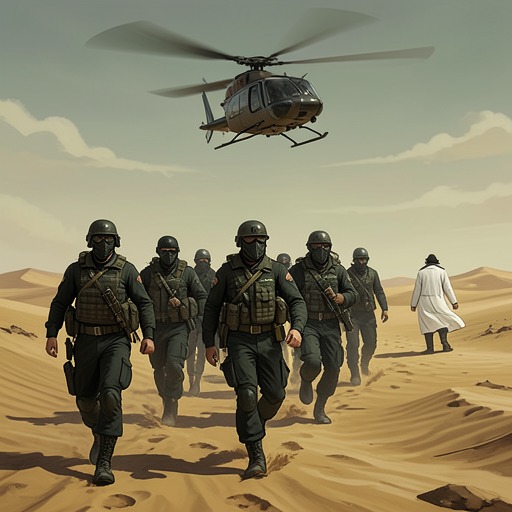
A separate exchange between Joe Silvermann and Sarah Trafford shows how the clampdown reaches beyond senior officials. Joe explains that a policeman disclosed information about Thomas Singleton’s reported death in a helicopter crash near Cyprus, in which six soldiers and the crew died. Within two hours of speaking with Joe, the policeman called to urge him to forget their meeting and even offered his donation back. The officer could not explain the order, but described an information clampdown, said leaks would be plugged, and feared for his pension. Joe’s warning that the story would not appear in the papers turns an abstract policy into a chain of personal pressure: even a source who has already spoken is made to reconsider doing so.
The secret behind the silence
The danger of disclosure is not merely reputational. In a later argument, a speaker addressing Howard points out that Michael Downey is both a war criminal and, officially, already dead. The contradiction exposes the fragility of the state’s account: a man declared dead cannot readily be allowed to testify about what he witnessed. The speaker connects Downey’s possible survival to the war and to the risk that the public might learn British forces wanted live targets for a chemical weapon. The prospect of sanctions and retaliatory violence is invoked to explain why the truth must remain hidden.
This defense frames secrecy as protection from consequences, but its details expose the underlying cause of those consequences. The feared disclosure concerns the government’s responsibility for a chemical experiment involving Iraqi boy soldiers, not an enemy’s invention of a false accusation. The argument therefore turns national security into a shield against accountability: the state presents the danger of exposure as a danger to the country, while the concealed conduct is itself the source of the political risk.
Enforcement and moral cost
The logic of the clampdown is stated most plainly when an official tells Sarah Trafford that people do not want to know what happens in the margins of democracy. Suppression is described as a job: the public’s ignorance is treated as a service, and cleaning up means ensuring that nobody learns what happened to the boy soldiers. Sarah’s objection that a child was used does not alter this reasoning; the response is that the child is all right. The insistence on her immediate safety narrows the moral question, substituting reassurance about one survivor for an answer about the wider operation.
The threat that follows makes clear what happens when containment fails. If Sarah does not put down the gun, the speaker warns, the department will remain after him and will cause major accidents to Michael Downey, the child, Sarah’s husband, Wigwam, and anyone else with whom she has had contact. The euphemism turns political retaliation into mishap, echoing the gas-leak explanation: in both cases, violence or coercion is concealed beneath language that makes events seem ordinary or inevitable. The threatened escalation—from one person’s death to danger for an entire circle—shows how the policy reaches beyond the original secret to discipline witnesses and their associates.
The cover story and the clampdown thus form a continuum rather than separate tactics. A gas leak, an inquest, a frightened policeman, a threatened career, and the prospect of major accidents all serve the same end: to prevent the public account from catching up with what the state has done. The method is effective in the short term because it makes silence appear safer than truth. Its moral cost is that the people most exposed to the hidden violence are also denied the power to name it.