Michael’s rescue of Dinah from the island
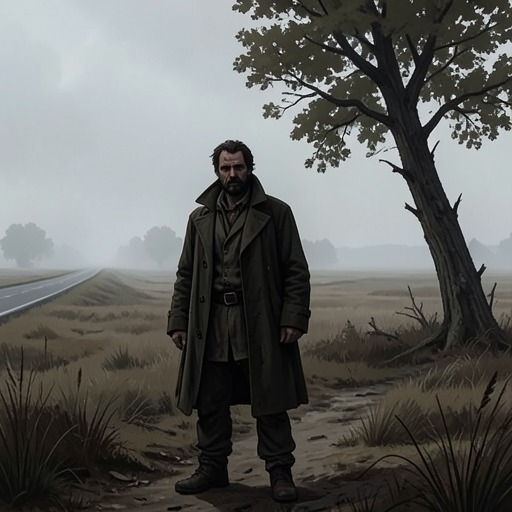
Down Cemetery RoadMichael Downey’s rescue of Dinah from the island turns a government operation meant to draw him out into a violent escape—and brings its hidden purpose into view. He arrives by motorboat, kills the guards, and takes Dinah away; afterward, officials confront not only his escape but the possibility that he can expose a state crime they have worked to conceal.
The operation and its stakes
The island forms part of an effort to control what Michael Downey might reveal. Earlier, C warns Howard that the country is prepared to take up arms to prevent Downey from speaking publicly. The warning makes the stakes larger than a pursuit of one man: the government is willing to contemplate war rather than permit disclosure.
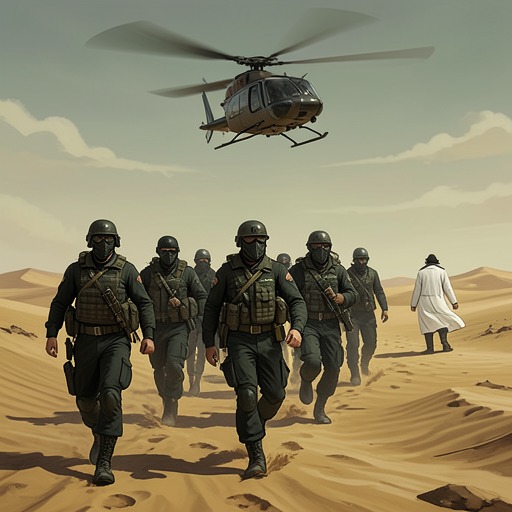
The reason for that fear emerges in Howard’s later account of the military operation. Britain is at war alongside its allies, and an official revelation that British forces were responsible for using a chemical weapon on live targets would undermine the country’s public claim to be protecting democracy. Howard points to the possibility of sanctions and retaliatory missiles, but his language also exposes the underlying political calculation: the state’s concern is not only the harm done to its victims, but the consequences of the world learning who caused it.
Downey is officially dead, making any account from him especially dangerous. Howard tells his colleague that Downey is technically dead and that the government can prove it; the contradiction between official status and living witness is part of the machinery of concealment. The risk has also changed since Downey’s earlier escape with Thomas Singleton. He is no longer alone: he has Sarah with him, and the prospect of a witness who can speak from outside the military setting makes the present confrontation harder to manage.
The rescue
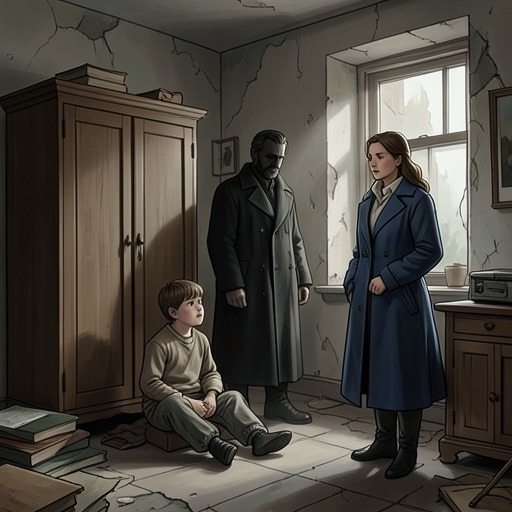
Sarah was being used as bait to induce Downey to come to the island. When she accuses an official of that plan, he concedes that she was bait, while insisting that she was not meant to be hurt. The distinction offers little comfort: the plan treated her safety as something officials could promise while deliberately making her vulnerable to the consequences of their scheme.
By the time Howard arrives, the attempt to control Downey has already failed. Brian reports that Downey came early that morning by motorboat. He killed the guards, took Dinah, and left. The men watching the house could have captured him, Brian says, but Howard had not wanted that outcome. The mission’s purpose had changed, though Howard does not explain to Brian that Amos Crane was responsible for the change.
The rescue is therefore not a simple success in which a child is brought to safety without cost. Dinah is taken from the island, but the operation has put Sarah in danger and left dead guards behind. Brian says the men left Dinah in the kitchen, where Downey may have thought the situation was a trap, yet he took her anyway and returned to his boat. The watchers only learned what had happened after another man called them; the abrupt arrival of further passengers compounded the confusion at the scene.
Aftermath and moral cost
The escape revives an earlier pattern that the officials should have anticipated. Sarah reflects that the last time Downey was put on the island, he left bodies behind him, and she wonders why anyone expected a different outcome now. Her judgment connects the immediate killings to the government’s repeated choice to create dangerous conditions and then treat their violent consequences as surprises.
Watching the sea’s wake disappear, Sarah thinks of the way water erases a white scar and contrasts that visible healing with pollution that cannot be seen. The image extends to Downey: she considers not only the toxic explosion in the desert but what kind of damage could make a person kill whoever stood in his way. Her response is weary disgust, not a clean celebration of rescue. Dinah has been taken away from the island, but the escape leaves Sarah confronting both the violence surrounding Downey and the violence built into the state’s attempt to capture him.
Secrecy and consequence
Howard later defends the government’s concealment as a form of cleanup. He tells Sarah that those responsible for the killings of boy soldiers were punished, but insists that the public never knew because people do not want to learn what happens at the margins of democracy. In his account, secrecy is not an unfortunate by-product of the operation; it is the job itself. Sarah challenges the logic by pointing out that the government used a child. Howard answers that Dinah is all right, treating her survival as proof that the choice was acceptable.
The threat that follows makes the consequences of the rescue plain. If Sarah kills Howard, he says, the department will remain and move into overdrive: Downey, Dinah, Sarah’s husband, her old friend Wigwam, and anyone else she has been in contact with could suffer what he calls major accidents. The warning echoes C’s earlier insistence that the government would do whatever was necessary to stop Downey from going public. The rescue has removed Dinah from the island, but it has not ended the state’s power to pursue or silence those connected to her. Its decisive reversal is that Downey escapes with the child, while the people responsible for the trap retain both their secrecy and the means to threaten everyone around him.