Patriot Bomb
Down Cemetery RoadPatriot Bomb names a military ideal and the lethal experiment pursued in its name: a weapon imagined to kill an enemy without harming the forces that deploy it. Its promise of selective violence disguises a brutal reality in which soldiers were exposed to a chemical agent and treated as experimental subjects.
Name and Intended Promise
The name reaches Michael Downey through stories he heard during the war, rather than through any claim that a finished weapon already existed. He describes Patriot Bomb as the sought-after answer to a military problem: a weapon that could destroy the enemy while leaving friendly troops untouched. The phrase carries the confidence of a technological solution, but Downey immediately qualifies it. He does not think such a weapon exists yet; what matters is that some people have not stopped trying to make one.
That gap between aspiration and reality is central to the expression. Patriot Bomb sounds like a finished capability, and its patriotic name suggests protection of one’s own forces. Yet the stated objective is not simply to protect soldiers: it is to make killing selectively possible. The supposed distinction between those exposed to the weapon and those spared by it becomes especially unstable when the soldiers themselves are made part of the test.
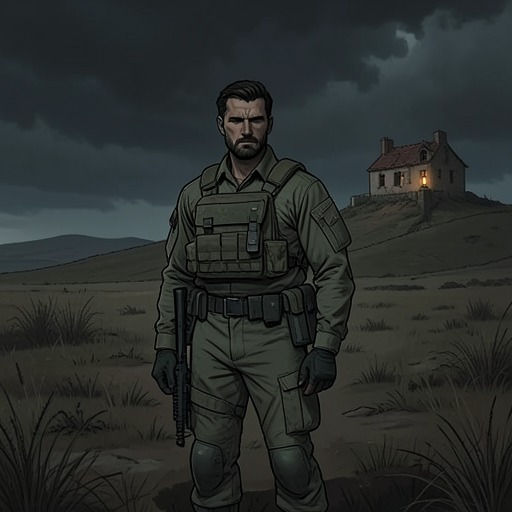
The experiment associated with the name was not a conventional bomb in Downey’s account. He says the men were guinea pigs, exposed to a chemical agent while covered with a substance intended to protect them. The language of testing therefore sits beneath the weapon’s grand promise: before it could be trusted to distinguish friend from enemy, its effects were being measured on human beings.
Exposure and Human Cost
Downey’s account places the experiment amid an operation involving child soldiers. He and another man had tried to speak with the boys, who knew almost no English; one wounded boy, whom Tommy Singleton had shot, lay in the truck while the men bandaged his leg. The helicopter that arrived opened fire. Downey later understood that the attack and the chemical exposure were part of a test, not an ordinary battle: the men had been painted with a substance meant to protect them, then subjected to the agent whose effects were being assessed.
The weapon’s violence did not arrive as a clean, instantaneous blast. Downey remembered a sound like breaking glass and air that seemed to turn muzzy, followed by an immense, continuing pain that made him feel as though his skin were being scorched away. Tommy Singleton grabbed him and tried to stop him from looking at what was happening. Downey’s fragmented recollection conveys the gap between a technical trial and the bodies inside it: even as he suffered, part of his mind struggled to understand what he was being told not to see.
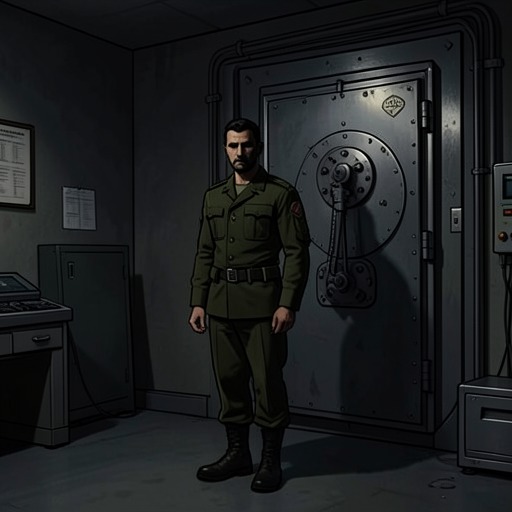
The aftermath extended beyond the exposure itself. Downey showed Sarah red, irregular weals across his stomach, marks he compared to the camouflage of an unfamiliar beast. He said that six men were held together, subjected to blood tests and to a machine resembling a brain scanner but designed to examine the whole body. Their handlers did not speak to them; Downey described being reduced to an experimental result, with his humanity disregarded. After he glimpsed a window and recognized that he was in England, the group was moved again.
The experiment’s consequences were later described through its failed protection rate: immunization worked for only seventy per cent of the men. The survivors were sent to The Farm, where officials expected them to remain until cancers caused by the nerve-bomb took hold, after which they would be discarded. Their escape interrupted that plan, but did not undo the injuries or the state’s attempt to convert them into expendable data.
Secrecy and the Politics of the Weapon
The Patriot Bomb experiment became a threat not only because of what it did to the men, but because their survival made the test—and the officials behind it—possible to expose. C warned Howard that the country was prepared to take up arms to prevent Michael Downey from going public. The risk was sharpened by the official account: Downey was technically dead, even as he remained alive to describe an experiment in which soldiers had been used as test subjects. The state’s public posture of war therefore depended on suppressing evidence of its own conduct.
The political danger lay in the contrast between the language of national virtue and the use of living targets for a chemical weapon. C anticipated that disclosure would make the country appear culpable rather than noble, and could bring sanctions or retaliatory attacks. His warning places the bomb inside a wider apparatus of secrecy: the experiment’s victims were not merely injured and studied, but turned into an unresolved liability whose testimony might disrupt the official story.
The Department’s logic is later made explicit in Howard’s defence of concealment. He argues that the public does not want to know what happens at democracy’s margins, and treats his own work as clearing up after events that cannot always be prevented. When Sarah challenges him over the children and the use of Downey, he shifts responsibility onto Downey and insists that the Department had wanted to bring him back into its fold. He also threatens that if Sarah uses her gun, the institution will manufacture fatal “accidents” for her, Downey, Dinah, Mark Trafford, Wigwam, and others connected to them. The bomb’s promised discrimination between friend and enemy thus finds a political counterpart in the Department’s distinction between what may be done and what may be publicly acknowledged: secrecy protects the institution, while the people exposed to its violence remain expendable.
Moral Contradictions and the Name
The weapon’s promised selectivity is shadowed by a history in which the boundary between legitimate target and expendable person repeatedly shifts to suit those in power. At Crows' Hill, Michael Downey and Tommy Singleton had helped shoot three Iraqi prisoners; later, Howard invokes Downey’s past to present him as a violent maniac rather than a credible witness. Yet Howard also claims the soldiers responsible for the prisoners’ deaths were punished, while the Department’s secrecy ensured that the killings remained unknown. The same institution that condemns violence when it can be used against a survivor treats its own concealment as necessary housekeeping.
Howard’s claim that Downey volunteered for the experiment offers another defence, but it does not alter what the experiment did: the men were exposed to a chemical agent, their bodies examined, and their humanity set aside. Against that record, the name Patriot Bomb carries an irony the official explanations cannot resolve. Its promise of protecting one’s own forces rests on treating some lives as instruments and then controlling what can be said about the cost. The phrase therefore names not only an imagined weapon, but the moral partition that makes its development seem acceptable: protection for those counted as one’s own, and silence for those made to bear the consequences.