Sarah Trafford’s medicated stupor
Down Cemetery RoadSarah Trafford’s medicated stupor is the condition through which shock, marital care, and diminished autonomy become entangled. After Joe Silvermann’s death, a doctor gives Sarah a small blue tablet to calm her, and Mark Trafford soon makes taking pills part of her daily routine. The medication brings relief, but it also dulls her urgency and judgment; in retrospect, Sarah sees the very means used to keep her domesticated as part of what enabled her escape with Michael Downey.
The First Tablets
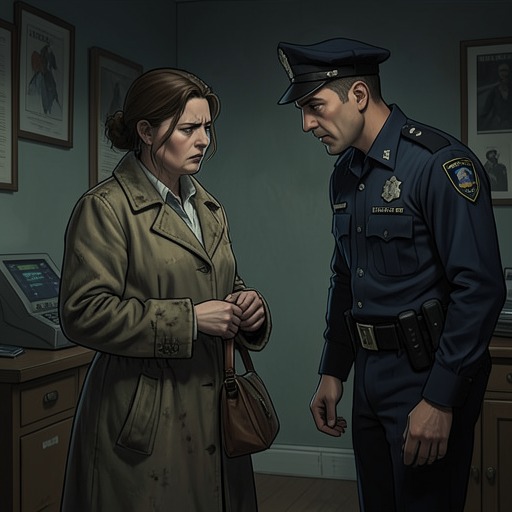
After finding Joe’s body and enduring custody and harsh questioning, Sarah is overcome by exhaustion and tears. An unfamiliar man gently guides her into a chair, listens as she recounts what she can remember, and makes her tea. He seems to her to be a doctor. When she has finished, he gives her a small blue tablet and a glass of water, offering reassurance that she will be all right. The scene presents the pill as an act of care, but Sarah is not simply comforted: she notices the man’s soothing manner and feels a flash of anger before the feeling gives way to tiredness.
His explanation that the tablet is ninety-eight per cent herbal does not reassure her. The precision of the claim sharpens her skepticism, even as she swallows the pill without water, her mouth still full of tears. She waits for its effect. The expected physical transformation does not arrive in any clear way, but the panic gradually recedes, and she is left calmer. The distinction matters: the pill does not resolve the circumstances that have overwhelmed her; it changes how urgently she feels them.
Mark takes over the practical care. He sends Sarah upstairs to bathe and rest, then tells her she has been under a lot of stress and asks her to take another pill before he leaves for work. She takes it because of the kindness in his voice. She sleeps, wakes before the alarm, and feels better, although the underlying situation remains. Her appetite has not returned: even the muesli she had anticipated eating seems unappealing, and she cannot remember her last meal. The easing of anxiety therefore coexists with continuing physical and emotional disruption.
A Routine That Blunts Alarm
The medication becomes a repeated pattern: blue pills at night to ease Sarah’s fright and red pills on waking to quiet her shaking. They work, but their importance shifts. They also become reminders of the world she will face if she stops taking them. As the days pass, that world grows fuzzy at the edges. Sarah attributes this either to the aftermath of shock or to a tranquillized stupor, and the calm makes it easier for her to accept the explanation that troubles her least. A surviving, skeptical part of her occasionally questions what the pills are helping her believe, but that doubt is weak and intermittent. Mostly, she ignores it and gets by.
During this period, Simon Smith manages her problems, and police contact becomes minimal. Sarah signs a statement claiming that the cocaine found in her possession came from Joe, that she had bought drugs from him twice, and that they had met in a pub. Simon assures her that cooperating will effectively end official interest in her. The account connects Sarah’s impaired state to a consequential act: she complies with a false statement while under pressure and in the midst of the medication routine. At the same time, the pills accompany a different movement of memory. Her nights are long and dreamless, while on waking she increasingly revisits her student days and the aftermath of her accident. Those hospital memories feel unusually fresh, as if the current regime has opened a door into an earlier part of her life.
Discovering Whose Pills They Are
The routine becomes especially revealing on the twelfth morning after the crash, fourteen days after Joe’s death. Mark warns that he will be late home, and Sarah worries that she will be without her nighttime blue pill. The prospect produces concern rather than full panic, but it is enough to prompt her to look for the medication. She finds two plastic tubs in Mark’s bedside cabinet. Both are labelled with Mark’s name, not hers, above a doctor’s signature and medical wording she cannot decipher. Until then, she had not seriously considered whether the pills might be doing her harm as well as good.
Sarah takes the tubs downstairs, intending to check the labels in a medical dictionary, but cannot find the book. She makes coffee at eleven because that is when people have coffee, even though she does not particularly want it; keeping the routine intact offers comfort. Then she studies the tubs. They are so light that she opens them and counts their contents. When the lid of the red-pill tub finally comes free, the pills scatter across the floor like small red marbles. She gathers them, pours out the blue pills, and counts both piles, arranging the tablets in rows because she keeps losing her place. The rows suggest little soldiers or small bombs, images that return to her despite a period in which she has not been thinking about soldiers or bombs.
The counting does not give her an explanation of the medication, but it turns a private routine into something she can inspect: pills in containers, labelled for someone else, taken at set times. Before she can pursue the question further, the doorbell rings. What follows is a break in her memory: Sarah finds herself bent over the kitchen sink, being held from behind while someone presses bunched hands into her stomach and makes her drink very salty water. She cannot remember opening the door. The episode intensifies the sense that her own actions and recollections are no longer fully available to her; the evidence establishes the abrupt loss of memory and the assault, without making the medication itself an explanation for either.
Impairment and Escape
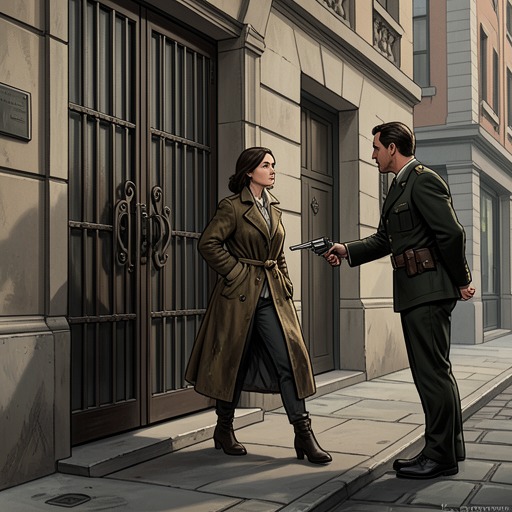
Later, after Rufus’s attack and her flight with Michael Downey, Sarah considers how she came to leave with an armed stranger. She allows that the drugs may have contributed, alongside the numbing effect of the attack and the shock of seeing Rufus’s body hurled across the room. The available choices had been limited and unappealing, but she recognizes that a rational version of herself might have judged running into the dark with a stranger as extravagant. In the moment, however, she accepted the first plan presented and took the first exit offered.
That retrospective reading gives the medication a double consequence. Mark’s purpose, as Sarah understands it, had been to keep her tame and domesticated; yet the tools used for that purpose helped her become compliant with the proposal to leave. She imagines the escape as climbing down a tower on the very chains wrapped around her. The image does not cancel the tablets’ cost: the routine has made Sarah less certain of her own judgment and less responsive to danger. But it marks a reversal in their function. What had softened her resistance and narrowed her sense of the world also helped carry her out of the life in which that subdued state had taken hold.