The Department
Down Cemetery RoadThe Department is a secret organization whose official nonexistence is part of its operating method: it acts through people who do exist, then manages the evidence and consequences left behind. It is tasked with containing political and military embarrassments, but its reliance on field agents who exercise broad discretion makes containment precarious. The bombing of the Singleton home, its false gas-leak explanation, and the Department’s later use of Dinah as bait for Michael Downey reveal an institution that can turn civilian lives into instruments of operational control.
An organization built on secrecy
The Department is described as a secret department that officially does not exist. That contradiction is practical as well as political. Howard recognizes that an organization without an official public identity must nevertheless be staffed, and that staffing it means relying on people such as Amos Crane and Axel Crane. The institution’s invisibility does not remove its need for personnel; it makes their conduct, and the damage they cause, harder to expose through ordinary channels.
The Department’s inherited doctrine is presented through Amos’s memory of his recruitment. A former participant in the assassination of Reinhard Heydrich taught him that democracy could preserve a hidden, dark power in government, provided that power remained concealed rather than being openly used to terrorize and command. Political killings, under this reasoning, were to be disguised as accidents. A minor royal’s supposed fall in the shower could be absorbed into public mourning and then forgotten, while a more destabilizing scandal remained buried. For Amos, the lesson was not a discovery so much as a vocabulary for work he already understood: concealment protects the public appearance of order, while allowing violence to proceed behind it.
Authority, delegation, and the field agent
The Department’s operations rest on a fraught division between desk supervision and field authority. When a senior official challenges Howard over whether the Department had permission to start a war, Howard answers that it had been given carte blanche. The explanation does not settle who was responsible for the bombing: the decision to use a bomb was Axel’s field decision, while Amos was directing the operation from the bunker. Amos later insists that the agent in the field has the last word. That principle gives an operative room to act, but also gives the organization a convenient way to divide authorization from execution.
The bombing makes the costs of that arrangement visible. Howard says the operation had been made to look like an accident and explains that a direct killing would have created further problems because the target was already technically dead. The explosion nevertheless killed an innocent woman, and the child survived. The Department then relied on the gas-leak story to pacify local residents and contain press interest. C’s rebuke of Howard makes clear that a cover story does not make a densely populated suburban explosion a controlled operation. The need for extensive repair is itself evidence that the field decision exceeded what the institution could cleanly manage.
Cover-up as administrative work
The Department’s responsibility does not end when an operation is over. Howard is left to deal with the aftermath of Axel’s explosion: check on the child, establish warning signals in case further problems arise, and remind Amos that the operation is not a private war. He is also expected to steady the public account through the police, local press, and inquest. The institutional routine is therefore both operational and bureaucratic: agents create the crisis, and officials attempt to make it look settled.
Amos has his own way of managing that bureaucracy. After the explosion, he handles the arrangements to get the child out of hospital and put a lid on the story, while also letting Howard believe Howard has been responsible for the work. Amos understands that credit can calm Howard. The maneuver shows that concealment operates within the Department as well as outside it: information and responsibility are managed among colleagues, not just withheld from the public. Howard knows that Axel’s unpredictable actions leave him with the unglamorous task of preventing curiosity after the event, but his knowledge does not give him reliable control over either brother.
Crows’ Hill and the disposable soldier
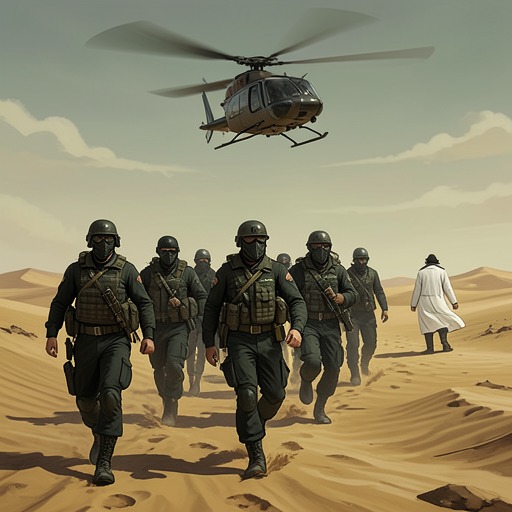
The Department’s history is bound to the military record of Michael Downey and Thomas Singleton. At Crows’ Hill, the two soldiers and others shot three Iraqi prisoners taken from a compound where a torture chamber had been discovered. The soldiers could themselves have been punished, but the war was popular and officials did not want the killings to disrupt the public mood. Instead, the matter was fixed. The soldiers were removed from Crows’ Hill and kept in close confinement; later, they were used for special services and eventually handed over to the Department as officially dead men and unresolved embarrassments.
The institution’s treatment of them becomes still more stark in the account of the nerve-bomb experiment. Immunization had worked for only seventy per cent of the soldiers, but the Department continued to regard the remaining outcome as worth tracking. The survivors were sent to The Farm, a facility inherited from the era of germ warfare, to wait for cancers to develop before they were discarded. Their official deaths removed them from ordinary public and legal notice while leaving them subject to the Department’s control. When they escaped, the break from confinement became another problem for the organization—and the reason Amos expected Downey to come looking for Dinah.
Strategic control and its limits
The Department’s handling of Dinah follows the same logic of managing people as operational assets. Amos sees her survival after the bombing as an opportunity: she remains on the board and can be used with care. His calculation is that Downey will put the child first, so holding her will draw him out. Howard doubts the plan’s safety, particularly because an infant’s disappearance is harder to explain away than an adult’s; people may invent reasons why an adult has vanished, but they are more likely to come looking for a child. The difference between Amos’s strategic confidence and Howard’s concern exposes the human risk hidden by the language of planning.
As Downey remains at large, the Department’s senior officials also recognize that its agents have become liabilities. Howard is ordered to remove Amos from the pursuit and prevent him from reaching the island ahead of Downey; if Amos gets there first, the instruction is to keep him from leaving. The order treats the island as a place where the resulting violence can be contained and forgotten, but the warning about Amos as a blooded pit bull acknowledges that the organization may no longer be able to trust the agent it once relied on. The Department’s defining weakness is thus inseparable from its method: it preserves deniability by giving covert agents latitude, then discovers that the same latitude can make them—and the consequences of their actions—impossible to control.