The Farm
Down Cemetery RoadThe Farm is a low stone complex cut into the rock of a remote island off Scotland’s west coast. Once associated with secret military research, it later became a place to contain people the authorities had no intention of releasing. Its buried rooms, empty upper spaces, and distance from ordinary human traffic make it more than a setting: the building embodies a system that can hide its prisoners and then treat their disappearance as a solution.
Setting and architecture
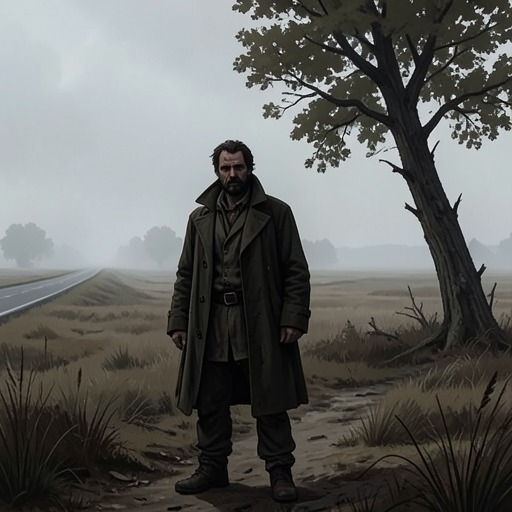
The Farm stands on hard, scrubby ground on an island about a mile and a half long, shaped like a banana in an aerial photograph. Salt wind and noisy birds work across its terrain; sheep skulls remain among the gorse and tough shrubs, though the last shepherd left years ago. In a hollow on the southern side, the remains of a bothy amount to little more than thoughtfully arranged stones, with neither electricity nor plumbing. The island’s barrenness is not picturesque refuge. It makes habitation feel temporary and human presence expendable.
The Farm itself is larger than the ruined bothy but similarly austere. Its low stone structure sits in a depression, or in a hollow dynamited out of the rock, and much of it lies underground. A roof is visible from the path, but rooms extend beneath the surface and are carved into the island’s stone. Amos Crane thinks of an ancient church: a secret cave where people once gathered for worship while listening for soldiers. The comparison catches the building’s older atmosphere of concealment, but the Farm’s original design served a different fear. Its builders looked both to the sky, from which bombs might fall, and to the rock, which offered protection.
From secret facility to prison
The Farm’s original purpose is never fully established. Amos Crane associates it with something dangerous, imagining men in protective clothing handling volatile liquids, and understands it as a remnant of an earlier era of germ warfare. He does not know what equipment was used there or what became of it after the site closed. He speculates that machinery was dismantled and discarded, while the substances produced there could not simply have been thrown into the sea without consequences for marine life. The distinction matters: the facility’s past is partly material and partly buried, and Crane’s conjectures do not amount to a complete account.
The island’s surroundings carry a separate record of military experimentation. Another island nearby was the site of a small bomb detonation in 1942. When scientists returned there in 1981, they had first undergone seven and a half months of injections; birds feeding on sheep remains were found dead. This episode establishes the hazardous history of the wider seascape, but it is not identified as an experiment conducted at The Farm itself.
After the Farm’s original use ended, the building became a largely empty complex of underground rooms, useful to the authorities precisely because it was isolated. A person could scream without being heard by passers-by, or try to signal with a fire without anyone seeing it. Crane’s understanding of the place is brutally practical: when officials no longer know what to do with their prisoners, they can leave them behind and return later. His imagined endpoint is the prisoners’ bones, cleaned away by salt wind and birds. The remote setting thus supports not merely secrecy but a plan in which neglect can finish what direct violence began.
The soldiers and official disappearance
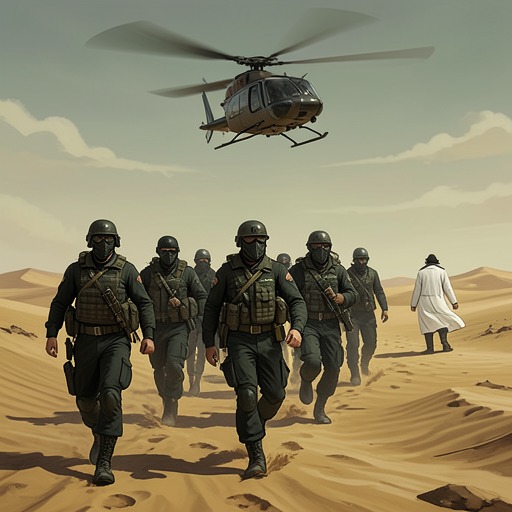
The Farm becomes a prison for surviving soldiers whose public identities have already been erased. After the killings at Crows’ Hill, the men were kept in close confinement; later, they were recruited collectively for special services. Once that work was over, the Department took them into its custody. The soldiers were officially dead, their disappearance covered by the report that they had died in the helicopter crash near Cyprus.
Their transfer to The Farm served a further, colder purpose. The soldiers had been exposed to a nerve bomb, and the authorities remained interested in how long its effects would take to kill them. Immunization had worked in only seventy per cent of cases, but the failure did not make the outcomes worthless as data. The plan was to keep the men at The Farm until their cancers took hold and then dispose of them. They escaped before that could happen. The site therefore belongs to the aftermath of the experiment as much as to its history: it is where the people left alive by a failed intervention were confined while their deaths were anticipated and recorded.
A survivor later recalls being moved with the others to an island off Scotland’s west coast. The men had been told repeatedly that they would soon go home, with the delay attributed to a few matters that still needed sorting out. One guard, who had grown friendly with Thomas Singleton, eventually told him that the men were supposed to be dead already. The promise of a return home gave way to the realization that the guards were armed not simply as a precaution and that the cells were not protecting the prisoners. The Farm’s isolation gives physical force to this deception: the men can be kept out of sight while the world accepts that they no longer exist.
A place of renewed confinement
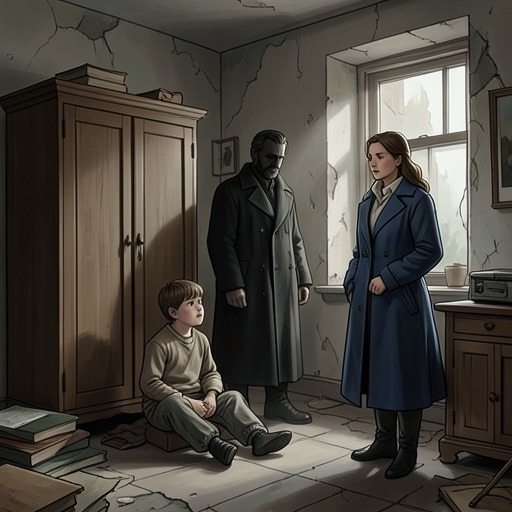
The Farm continues to hold prisoners after the soldiers’ escape. When Amos Crane reaches it, he finds Dinah Singleton downstairs with a nurse named Deedee in one of the former cells. He has brought Dinah a teddy bear, and the gesture briefly interrupts the building’s institutional history: an agent who has come to an isolated detention site has to work out how to approach a four-year-old child. Yet the room remains a former cell, and the child is still being kept at The Farm. The bear offers a small kindness inside a place designed for confinement; it does not change the circumstances of her captivity.
The Farm’s apparent emptiness is tested again when Sarah Trafford and Zoë Boehm enter the building. In the kitchen, they find a dead man in a blue cotton T-shirt, with a large dark bloodstain across his chest. Zoë recognizes that he has been shot and is dead, while also registering that neither woman has been shot. Beyond the kitchen, the level appears almost uninhabited: two tidy, monastic-looking bedrooms and a living room with an uncomfortable, untidy sofa and an unswept fireplace. There is no visible sign of a child, and no other body on that level. The domestic details do not make the place feel lived in; instead, they suggest a temporary occupation that has left little trace. The stairs downward remain unexplored, keeping the possibility of what lies below in view.
Narrative significance
The Farm links secret research, administrative cover-up, and bodily confinement in a single physical space. Its underground rooms were designed with survival from bombing in mind, yet later shelter people whom the state has made officially dead and expects to die from the effects of an experiment. The protection offered by rock is therefore inverted: what once might have preserved life becomes a means of hiding those lives from public view.
The building also makes abandonment concrete. The ruined bothy, the discarded traces of an unknown military past, the cells, and the nearly empty rooms belong to different stages of the island’s use, but each bears the mark of a place left behind. The Farm’s remoteness lets institutions turn a person into a problem that can be stored, deferred, or erased. The survivors’ escape and the later discovery of a body disturb that apparent control, exposing the site not as a sealed solution but as a place where concealed violence can still leave evidence.