Denver
Dr. DeathDenver serves as a short-lived but consequential waypoint in the investigation: a place where an elusive artist may have worked beyond the reach of ordinary records, and where Grant Rushton later lived under a dead child’s identity before police attention caught up with him. These threads bring art, anonymity, and violence into the same geography, but the available evidence does not establish that Zero Tollrance and Rushton were the same person.
Denver and the Zero Tollrance Trail
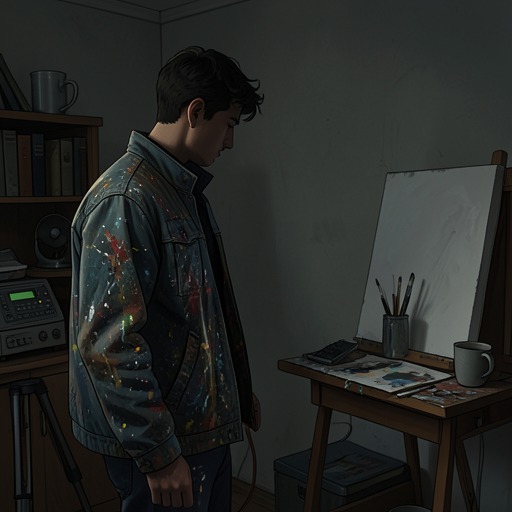
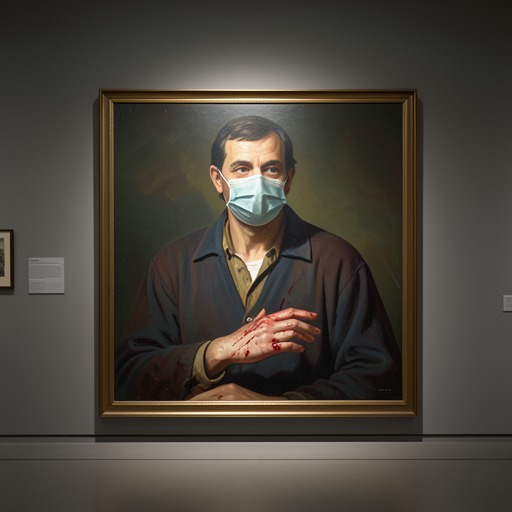
A Colorado article about Zero Tollrance prompts Alex Delaware and Milo Sturgis to investigate whether the artist could be connected to Donny Salcido Mate. Their inquiries produce little confirmation. No one in Denver recognizes Tollrance, and police there have no record of him. The building used for his show had no lease: he was reportedly squatting in a large industrial shell, a place described as crowded with people living on society’s margins. Even the basic question of whether he actually lived there remains unanswered.
The critic who reviewed the show recalled an unkempt, bearded man who did not speak during their encounter. Rather than answer questions, Tollrance pointed to his canvases and walked away. The critic took him for mentally unstable and classified the work as outsider art. A gallery owner and the critic alike considered representational drawing a weakness within the art world’s hierarchy, an assessment that frames Tollrance’s supposed lack of polish as both an aesthetic judgment and a reason to dismiss him.
The exhibition itself left a thin documentary trace. The critic could not explain how he had learned about it; Tollrance might have faxed an announcement, but that possibility could not be verified. Attendance was small, no paintings sold, and the critic never heard from the artist again. He did not know what became of the canvases. Denver therefore offers neither a firm identity nor a lasting art-world record—only a show, a vacant building, and memories too incomplete to settle who its subject was.
The Unconfirmed Donny Salcido Mate Possibility
The Denver account becomes suggestive when set beside the possibility that a bearded vagrant chased away elsewhere might have been Donny Salcido Mate. Alex Delaware raises the resemblance as a possibility, not a conclusion. Donny’s mother had said that he was living on the street by the time of the inquiry, and his arrest came four months after the show. That chronology leaves room for him to have traveled east, found an empty building, and pursued art there, but it does not place him in Denver.
The proposed connection carries another uncertainty: Donny’s mother had not mentioned any artistic ability and did not want to discuss him. Her silence offers no corroboration, just as the critic’s recollection supplies no name or biographical detail. The investigation asks whether Donny painted an image of his father being cut apart and then acted it out, but Denver’s scant evidence cannot answer that question. Its value is circumstantial: it supplies a plausible setting for an unverified theory while preserving the gap between resemblance and identification.
Rushton’s Denver Identity
A separate reconstruction places Grant Rushton in Denver after a long period in which his movements could not be established. He was living there as Mitchell Lee Sartin, supposedly a student at Rocky Mountain Community College majoring in biology. A fingerprint backtrack connected Sartin to Rushton. The identity had been taken from a real Mitchell Sartin, who had died twenty-two years earlier as an infant in Boulder. A graveyard identity gave Rushton a name that local checks did not expose as false.
The false identity carried him into ordinary routines. Rushton applied for security work and had his fingerprints taken; the security firm checked local felony files, where his prints did not appear, but did not compare them with Navy records. He was hired to patrol a pharmaceutical company at night and attended classes by day. He lasted one semester and earned straight A’s, taking life sciences as well as a human-figure-drawing course. Former classmates remembered him as a gifted doodler, especially in cartoons that mocked teachers and other authority figures. He did not work for the school paper or join an organization, leaving little institutional trace beyond his enrollment and employment.
Disappearances and the City’s Blind Spots
During Rushton’s semester, two female students disappeared. One was later found dead in the mountains, sexually abused and mutilated; the other remained missing. Denver police questioned Rushton among several people because he had been seen talking with one of the women in the college cafeteria the day before she vanished. The contact produced only a routine interview, and investigators saw no reason to pursue further checks. Rushton did not reenroll and left the city.
The contrast between the two Denver trails is sharp. Tollrance is difficult to locate because the city’s records and witnesses yield almost nothing; Rushton briefly appears inside recognizable systems—a college, a security firm, and a police interview—but his stolen identity and unconnected records let him pass through them. In both cases, Denver is less a settled home than a temporary cover: a place where an individual can be present without becoming legible. The city’s narrative significance lies in that incomplete visibility, which allows possibilities to gather while leaving crucial identities and movements unresolved.